





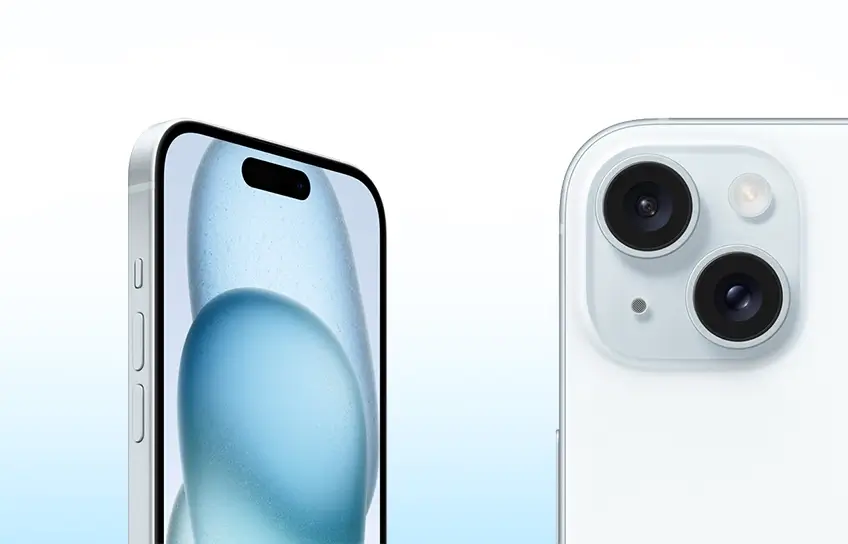
Apple has never been shy about going big. With each new iPhone cycle, the company gives buyers a choice: stay compact or go large. The iphone 15 plus sits right in the middle of that conversation, offering a 6.7-inch screen and a price tag of $899 without asking you to pay the premium attached to the Pro Max.
But here is the real question that most reviews skip over: does bigger actually make this phone better, or does it just make it heavier? After spending a serious amount of time with this device, the answer is more nuanced than a simple yes or no.
iPhone 15 Plus Full Specifications
| Category | Details |
| Launch Date | Announced September 12, 2023. Released September 22, 2023 |
| Operating System | iOS 17, upgradable to iOS 26.1 |
| Display | 6.7-inch Super Retina XDR OLED, HDR10, Dolby Vision |
| Resolution | 1290 x 2796 pixels, 460 ppi, 19.5:9 ratio |
| Screen Protection | Ceramic Shield glass |
| Brightness | 1000 nits (HBM), 2000 nits (peak) |
| Refresh Rate | 60Hz |
| Chipset | Apple A16 Bionic (4nm) |
| CPU | Hexa-core (2×3.46 GHz Everest + 4×2.02 GHz Sawtooth) |
| GPU | Apple GPU (5-core graphics) |
| RAM | 6GB |
| Storage Options | 128GB, 256GB, 512GB (no card slot) |
| Main Camera | 48MP, f/1.6, 26mm wide, dual pixel PDAF, sensor-shift OIS |
| Ultrawide Camera | 12MP, f/2.4, 120-degree field of view |
| Front Camera | 12MP, f/1.9, PDAF, autofocus |
| Video Recording | 4K@24/25/30/60fps, 1080p up to 240fps, Dolby Vision HDR |
| Dimensions | 160.9 x 77.8 x 7.8 mm |
| Weight | 201g |
| Build | Glass front, glass back, aluminum frame |
| SIM | Nano-SIM + eSIM (International) / Dual eSIM (USA) |
| Water Resistance | IP68 (up to 6 meters for 30 minutes) |
| Battery | 4383 mAh Li-Ion |
| Wired Charging | 20W, PD2.0 (50% in 30 minutes, charger not included) |
| Wireless Charging | 15W MagSafe, 7.5W Qi |
| Wi-Fi | Wi-Fi 6 (802.11 a/b/g/n/ac/6), dual-band |
| Bluetooth | 5.3, A2DP, LE |
| NFC | Yes |
| USB | USB Type-C 2.0, DisplayPort |
| Navigation | GPS, GLONASS, Galileo, BDS, QZSS |
| Sensors | Face ID, accelerometer, gyro, proximity, compass, barometer |
| Colors | Black, Blue, Green, Yellow, Pink |
| Starting Price | $899 / £899 |
Design and Build

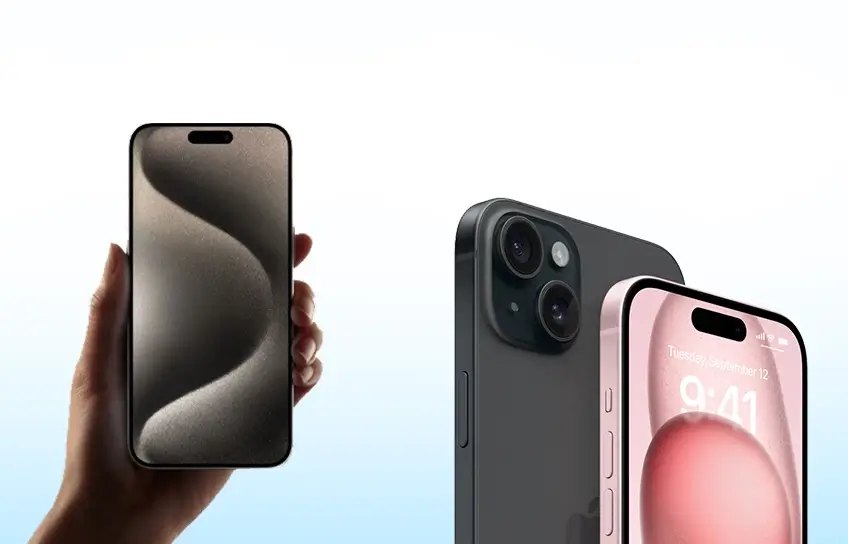
One of the first things people worry about with a larger phone is whether it will feel awkward to hold. If you have read through a handful of apple iphone 15 plus reviews before landing here, you will notice most of them agree on one thing: this phone is surprisingly comfortable given its size.
Apple softened the edges of the aluminum frame compared to the previous generation. That one change makes a noticeable difference in how the phone feels in your hand during long sessions.
Talking about iphone 15 plus dimensions, the phone measures 160.9 x 77.8 x 7.8mm and weighs 201 grams. It is not a lightweight device, but the weight feels balanced rather than top-heavy.
The frosted matte glass back resists fingerprints better than most phones in this category. It also carries an IP68 rating, meaning it can handle a dip up to six meters deep for up to 30 minutes. For a phone you are likely carrying everywhere, that kind of durability matters.
The color options lean toward muted pastels, which some people will love and others will find a little too restrained. Black, blue, green, yellow, and pink are all available. If you prefer something bold, you may find yourself wishing Apple had pushed the palette a bit further.
USB-C Port
For years, Apple kept its iPhones locked to the Lightning connector. The iphone 15 plus changes that by switching to USB-C, and if you already use a MacBook or iPad, this means one cable can now handle all three devices. It is the kind of practical upgrade that saves you from rummaging through a drawer full of mismatched cables, especially when traveling.
Display
When it comes to iphone 15 plus screen size, the 6.7-inch Super Retina XDR OLED panel is genuinely one of the best reasons to choose this phone over the standard iPhone 15. Colors are rich and accurate, blacks are deep, and the peak brightness of 2,000 nits makes it easy to use even in direct sunlight. Watching HDR content on this screen is a real pleasure, with highlights that pop without looking artificial and shadow detail that holds up well.
Apple also brought the Dynamic Island to the Plus for the first time. This pill-shaped cutout replaces the old notch and integrates with the software to show useful information at a glance, whether that is a timer counting down, music controls, or a live delivery update. It is not a feature you will think about constantly, but once you get used to it, going back to a notch feels like a step backward.
Refresh Rate
Here is where things get genuinely frustrating. The iphone 15 plus refresh rate is capped at 60Hz, and at $899, that is a hard pill to swallow. Most Android competitors in this price range, and even some budget options, have offered 90Hz or 120Hz for years.
A smoother refresh rate makes scrolling feel more fluid and gaming more responsive. Apple reserves its 120Hz ProMotion display for the Pro models, which is a limitation that feels out of place on a phone at this price.
If you have never used a high refresh rate display for an extended period, you may not miss it. But if you have, the difference is hard to unsee.
Camera
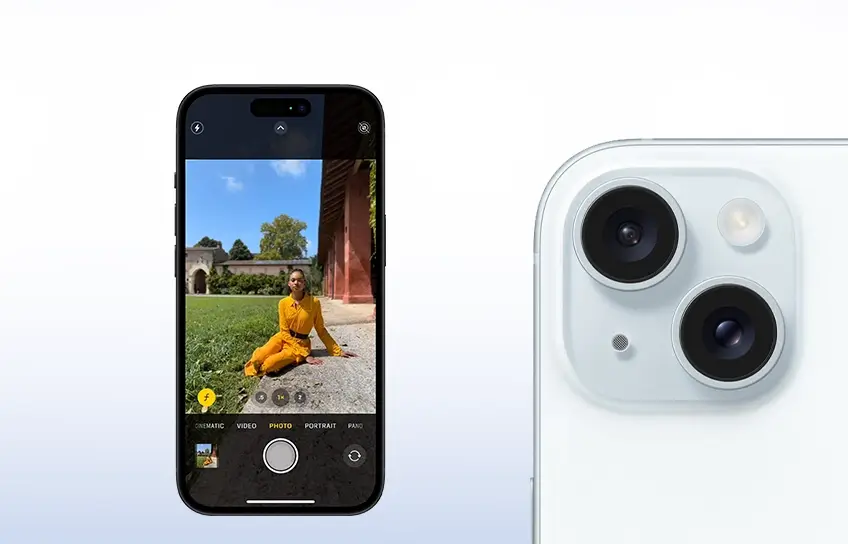
Looking at the iphone 15 plus camera specs, you get a 48MP main sensor with an f/1.6 aperture, a 12MP ultrawide with a 120-degree field of view, and a 12MP front camera with autofocus. The jump from 12 to 48 megapixels on the main lens is not just a numbers game.
The higher resolution sensor enables pixel binning technology, which combines data from multiple pixels to produce cleaner, more detailed images, particularly in low light. Standard shots are output at 24 megapixels by default, striking a good balance between detail and file size.
The 2x zoom option, which Apple describes as optical-quality, is more impressive than expected. It pulls from the center of the main sensor and delivers results that are genuinely close to what a dedicated telephoto lens would produce at that range. For everyday use, portraits, and social media, this camera handles itself very well.
Video Quality
Video is where the iPhone 15 Plus punches above its weight class. Recording at up to 4K at 60 frames per second, with excellent optical image stabilization, the footage is clean, stable, and detailed in a way that most Android phones still struggle to match consistently. Cinematic Mode adds a portrait-style blur to video, and while it is limited to 4K at 30fps, the results look polished with minimal effort.
Camera Limitations
There is no telephoto lens. If zooming in beyond 2x is important to you, that limitation will come up regularly. Some Android phones at a similar or lower price, including the Xiaomi 14, include a dedicated telephoto camera, which gives them a versatility edge in that specific area. Additionally, features like ProRes video recording and Log capture are reserved exclusively for the Pro models.
Performance
The iphone 15 plus processor is the A16 Bionic, built on a 4nm manufacturing process. It is technically one generation behind the A17 Pro found in the 15 Pro models, but that distinction matters far less in daily use than it might seem on paper.
This chip handles everything from heavy multitasking to graphically demanding games without hesitation. Benchmark scores consistently place it ahead of flagship Android competitors from the same period.
Alongside that chip, the iphone 15 plus ram sits at 6GB, keeping multiple apps running smoothly in the background without constant reloading. Storage options start at 128GB, with 256GB and 512GB also available.
If you are considering the iphone 15 plus 128gb as your entry point, think carefully first. Higher-resolution photos and 4K videos eat through that space quicker than expected, and there is no card slot for expansion.
Battery Life
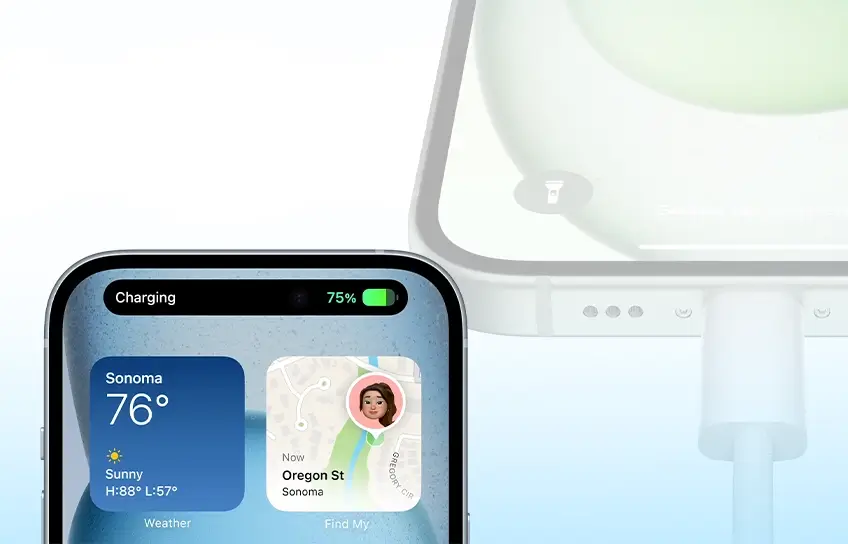
If there is one area where bigger is unambiguously better on this phone, it is battery life. The larger chassis allows for a 4,383mAh battery, and the combination of that capacity with the efficient A16 chip and the modest 60Hz display produces stamina that is genuinely outstanding.
Real-world testing has shown the phone running through 18-plus hour days with significant screen-on time and still having meaningful charge remaining by midnight. In structured tests, it outperforms not just other iPhones but most Android competitors as well, achieving over 16 hours of web browsing and more than 11 hours of continuous video streaming on a single charge.
Charging Speed
The battery life is exceptional. The charging speed is not. Apple’s 20W wired charging gets you to roughly 50% in about 30 minutes, and a full charge takes close to two hours.
No charger is included in the box, just a USB-C cable. Wireless charging via MagSafe runs at 15W, while standard Qi runs slower. Compared to Android rivals offering 65W or higher, Apple is clearly behind the curve here.
Software and Updates
The iPhone 15 Plus arrived in September 2023, and knowing the iphone 15 plus release date matters for planning purposes. Apple typically supports its iPhones with software updates for around six years from launch.
That longevity is a strong value argument, especially compared to Android alternatives that often receive fewer years of guaranteed updates.
Running iOS 17 out of the box, the experience is polished and intuitive. Standby Mode turns the phone into a smart display when charging in landscape orientation, interactive widgets add flexibility to the home screen, and the overall ecosystem integration is seamless if you already use other Apple products.
One important consideration: the iPhone 15 Plus does not support Apple Intelligence, the AI-powered features introduced in iOS 18. That functionality is limited to the iPhone 15 Pro models and the entire iPhone 16 lineup due to chip requirements. For buyers who care about on-device AI features, this is a meaningful gap worth factoring into the decision.
When you put together all of the iphone 15 plus specs, including the 6.7-inch OLED display, A16 Bionic chip, dual camera system, IP68 rating, and multi-day battery life, you get a picture of a phone that covers most of the bases very well, even if it does not lead the pack in every single category.
Pros and Cons
Pros
- Best-in-class battery life
- Bright, vivid 6.7-inch OLED display
- Strong 48MP camera with great low-light performance
- Excellent 4K video stabilization
- USB-C for easier cable management
- A16 Bionic chip handles everything smoothly
- IP68 water and dust resistance
Cons
- Only 60Hz display at this price
- No telephoto lens
- Slow 20W charging, no charger in the box
- No Apple Intelligence support
- USB 2.0 speeds, unlike the Pro models
Conclusion
The honest answer is: sometimes. The iPhone 15 Plus gets a lot of things right. The battery life alone makes a compelling case for this form factor, and the display, build quality, and camera performance are all genuinely good. For anyone coming from an older iPhone or stepping into Apple’s ecosystem for the first time, this phone delivers a well-rounded experience at a price that undercuts the Pro Max by $300.
Where bigger does not automatically mean better is in areas like charging speed, refresh rate, and camera versatility. A larger phone does not fix those limitations, and in a market full of strong Android alternatives, those gaps are worth weighing carefully before committing.
If you are set on iOS, want a large screen, and care more about battery endurance than raw camera zoom or screen smoothness, the iPhone 15 Plus is a genuinely excellent choice. If any of those trade-offs sound like deal-breakers, it is worth spending some time comparing before making the final call.


