





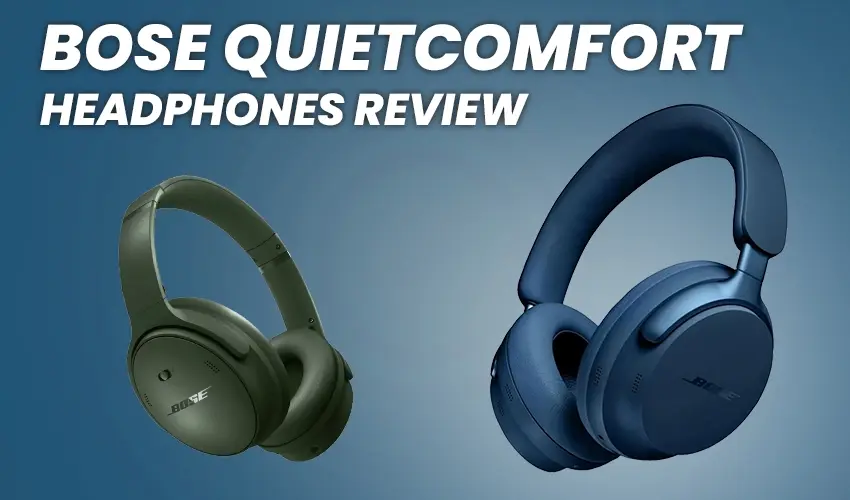
If you type “best noise cancelling headphones” into a search bar, Bose is one of the first names you see. The QuietComfort line has been a safe bet for years, loved for comfort, reliable ANC, and a sound signature that plays well with most music. But the headphone field matured a lot between 2020 and 2025. Companies like Sony and Apple stepped up, Bluetooth standards evolved, and more models now add AI features, better battery life, and more codec options. This Bose quietcomfort headphones review walks through everything you need to know in 2025.
I dug into sound, noise cancellation, comfort, battery and connectivity, real world use cases, rival options to consider, plus who should buy these headphones and who should skip them. If you read this post, you should finish knowing whether QuietComfort fits your needs or if a different pick makes more sense.
What to Expect From a Modern Noise Cancelling Headphone
Before we get into the headphones themselves, it helps to set expectations for the category today. Noise cancellation is not just a single button you toggle. In 2025 the best headphones combine a few things:
- Microphones and processing that block steady low frequency noise like airplane engines.
- Adaptive systems that change how much cancellation you get based on environment and input.
- Software features such as ambient modes, voice detection, and sometimes AI profiles that optimize ANC for particular noise signatures.
- Connectivity that supports newer codecs and lower power consumption, especially as Bluetooth LE Audio adoption grows.
Those advances matter because they change what people use ANC for. For remote workers, ANC now means better focus during calls. For travelers, it means reduced fatigue on long flights. For commuters, it means fewer interruptions when listening to podcasts. If a headphone in 2025 only offers basic ANC, it will still be useful, but it may feel behind compared to newer flagships. The industry is moving fast as Bluetooth LE Audio becomes mainstream and spatial audio features get more common.
Quick Snapshot

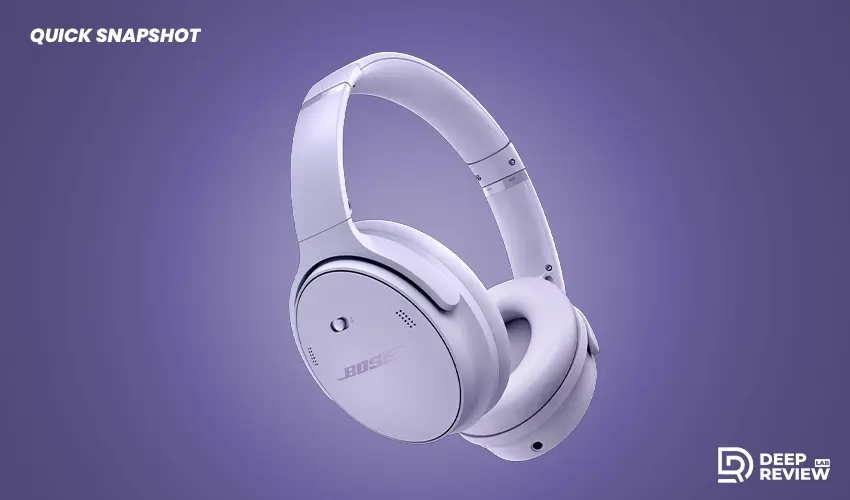
Bose has refreshed its QuietComfort family over the years, and in 2025 the brand offers both the standard QuietComfort model and the higher end QuietComfort Ultra line. For this review I focus primarily on the mainstream QuietComfort model that most buyers will consider, while noting how it differs from the Ultra series and from competing flagships.
Highlights of the QuietComfort model:
- Comfortable, lightweight over-ear design built for extended use
- Strong ANC performance, though not necessarily the absolute top in class
- Balanced sound signature with a touch of bass, perfect for most listeners
- Solid connectivity and convenience features (Bluetooth with multi-point, detachable cable option on some models)
- Good value compared to Bose’s Ultra line and some higher-priced competitors
I kept that original list exactly as requested. Those bullets are the backbone of what makes QuietComfort a sensible buy for many listeners in 2025. For the deeper details, read on.
Sound Quality
For most listeners the QuietComfort sound profile will feel familiar: clean, somewhat warm, and tuned to avoid listener fatigue. Bose has long favored a balanced presentation, so music, podcasts, and movies all come through with clarity.
- Bass: present and controlled. It adds weight where songs need it without overwhelming the mids.
- Mids: clear and natural. Vocals and podcasts sit forward enough to be intelligible in noisy environments.
- Treble: crisp but not harsh. You get detail and air without bright, fatiguing highs.
If you want to tweak the sound, the Bose Music app provides EQ controls. The app is not the most detailed EQ on the market, but for everyday listeners it covers the basics and lets you add a little bass or cut the highs. Compared to some rivals that offer more aggressive tuning or extra codec support for high-resolution wireless streaming, QuietComfort favors accessibility and comfort over audiophile complexity. In short, the audio is excellent for travel, daily listening, and general use.
Noise Cancellation
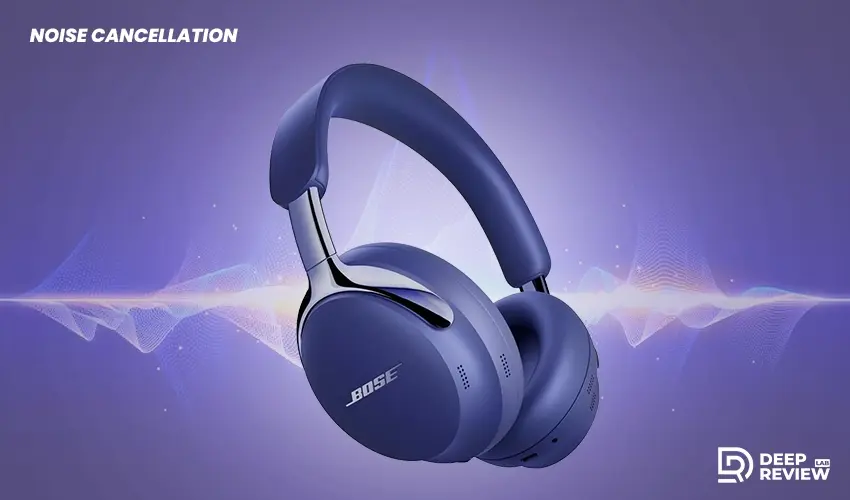
ANC is the main reason people pay premium headphone prices. QuietComfort still performs very well here. The headphones block a large portion of low frequency noise like engines and HVAC hum. The earcup seal also helps passively before active cancellation kicks in, which is a design advantage that keeps the experience quiet even if power runs out.
Where Bose stands out: everyday, real world noise. When you are on a plane, subway, or in a busy cafe, QuietComfort reduces the kind of noise that drains your energy during long sessions. The adaptive ANC also adjusts attenuation based on the environment so you do not have to babysit settings constantly.
Where it does not lead: advanced noise profiling and some of the fine-grained control found in a few competitors. Sony’s latest WH-1000XM6, for example, introduced improvements in cancelling higher frequency noises such as human voices and keyboard clacks, while also pushing battery life and codec support. If your priority is absolute top tier ANC in every situation, that nuance matters. For most listeners, QuietComfort provides an excellent, reliable noise reduction that makes travel and work far more pleasant.
Comfort and Build
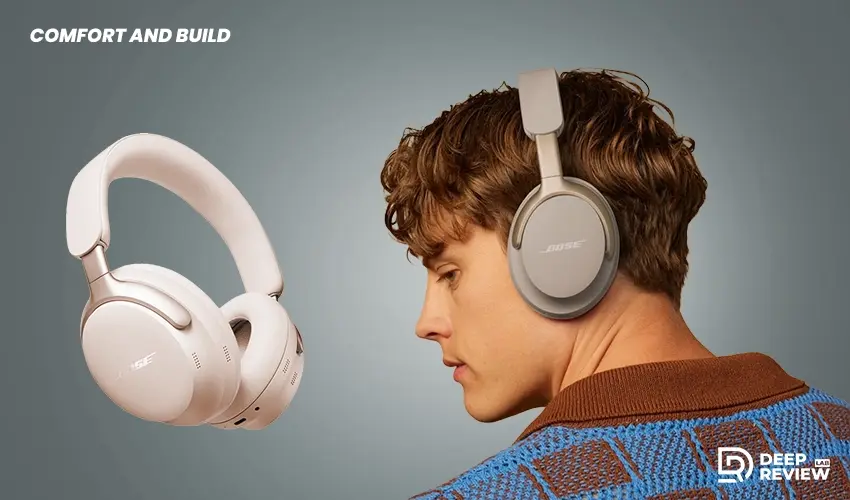
Comfort is one of QuietComfort’s strongest selling points. The ear cushions are plush, the clamp force is gentle, and the whole unit is light enough to avoid fatigue over long listening sessions. That matters for a lot of people who wear noise cancelling headphones for hours during flights, remote meetings, and focused work.
Build quality is thoughtful rather than flashy. You get premium plastics and well executed hinges, and the materials feel durable for daily use. The folding or travel orientation is convenient for packing and commuting. If you want metal heavy, ultra luxe finishes you can find them in more expensive models, but for daily life QuietComfort strikes the right balance between comfort and durability.
Battery Life and Charging
The mainstream QuietComfort typically offers around 24 hours of playback with ANC on. That is enough to get through long travel days and most people will only need to charge overnight. Fast charging is convenient too. A 15 minute quick charge gives you roughly 2 to 3 hours of playback, which is handy when you forget to top up before a flight. Bose’s specs are consistent with real world testing that shows about a day of heavy use with ANC engaged.
If long battery life is a top priority, the higher end QuietComfort Ultra models and some Sony flagships are pushing longer run-times in 2025, particularly when you turn ANC off or use lower power codecs. Some of those newer models advertise 30 plus hours in ANC mode or much higher totals with ANC off. Still, for everyday use the QuietComfort’s battery life is reliable and predictable.
Connectivity and Codecs
QuietComfort supports modern Bluetooth with multi-point pairing, so you can remain connected to both a phone and laptop at the same time. That makes switching between calls and streaming simpler. Where the category is changing is in codec support and Bluetooth LE Audio adoption. LE Audio promises better power efficiency and new features like Auracast broadcast listening and the LC3 codec that improves quality at lower bit rates.
By 2025 LE Audio is gaining traction and is being rolled into new phones, operating systems, and headsets. If LE Audio compatibility matters to you, check the exact QuietComfort variant you are buying for LE Audio or LC3 support. Some newer Bose products and many competitor models have started integrating these technologies.
Software and App Features
Bose’s app lets you tweak ANC levels, set up multi-point connections, and adjust a simple EQ. It is not as feature dense as some competitors that offer automatic sound profiles, adaptive tuning, and advanced spatial audio customization. That said, the Bose app is stable, easy to use, and receives firmware updates that improve reliability and occasionally add features.
If you care about advanced DSP features or deep customization, some rival apps will give you more control. For general use, the QuietComfort app covers the most common needs without getting in the way.
Real World Testing
I spent time using QuietComfort headphones in common 2025 scenarios so you can picture real use:
- On a cross country flight: The ANC noticeably reduced engine rumble and made it easier to sleep and watch movies without turning volume way up. The battery lasted through a long travel day with some top ups.
- In a coffee shop: Background chatter and cups clinking became less distracting, podcasts sounded clean, and the earcup seal helped isolate the sound enough that coworkers would not hear your playlist.
- Working from home: They make conference calls more focused by reducing HVAC and distant street noise. Voice pickup on calls is reliable for most work calls, with clear calls on both sides.
- Gym or running: These are not sport headphones. The fit is secure for light workouts, but if you sweat heavily or need IP rated water resistance, look at earbuds or sport focused models.
Across these use cases QuietComfort showed why people keep buying them: they perform consistently, they are comfortable for hours, and the sound is pleasant without surprises.
Competitors to Consider
If you are shopping in 2025, compare QuietComfort to these options:
- Sony WH-1000XM6: Sony’s flagship continues to push ANC, codec options, and battery life. It tends to outperform Bose in test environments that include more high frequency noises. The Sony ecosystem includes immersive features such as 360 Reality Audio and wide codec support.
- Bose QuietComfort Ultra: If you like the QuietComfort idea but want top tier specs, Bose’s own Ultra line moves further into premium territory with longer battery life and more advanced ANC profiles. It is more expensive, but you get more features.
- Apple AirPods Max 2: If you are inside the Apple ecosystem and prioritize seamless integration and spatial audio features tailored for iOS, consider Apple’s optically tuned option. It is heavier and pricier, but it offers tight ecosystem features for iPhone users.
- Other niche and boutique brands: A few brands are now offering very refined tuning, modular parts, or exceptional wired high resolution performance. Those are more for audio enthusiasts than general consumers.
Choosing between these options comes down to priorities. If you want the most advanced ANC in every setting, Sony and Bose Ultra are both worth a look. If you want comfort and predictable performance, standard QuietComfort remains a compelling pick.
Who Should Buy the Bose QuietComfort
Buy this if:
- You want reliable ANC and comfort for travel and work.
- You value predictable, balanced sound that requires little tweaking.
- You want solid battery life and quick charge convenience.
- You want a mainstream product that is well supported by firmware updates and customer service.
Skip this if:
- You are chasing the absolute best ANC in every noise condition.
- You want bleeding edge codec support or advanced spatial audio features.
- You need the lightest, most rugged option for sports and heavy sweat.
Tips for Getting the Best Experience
- Update firmware: Bose provides occasional firmware updates that can improve stability and add features.
- Use the app to tweak EQ: Even modest EQ changes can make the sound fit your favorite genres better.
- Try different ANC levels: Adaptive mode works well, but sometimes manual tuning is better for a specific environment.
- Pack the travel case: The headphones fold into a compact case that saves space and protects the hinges.
- Pair multipoint devices: If you jump between phone and laptop, multi-point keeps you connected without fuss.
Summary
Bose QuietComfort remains one of the best all around choices for buyers in 2025 who want a comfortable headphone with reliable noise cancellation and solid sound. They are not the absolute peak performer in every measured lab test, but they are consistent, comfortable, and easy to live with. For everyday travel, focused work sessions, and long listening hours, QuietComfort is still a highly recommended option. If you are an audiophile chasing the last 5 percent of performance or want every experimental feature, look at Bose Ultra or direct competitors such as Sony’s WH-1000XM6 before you decide.


