





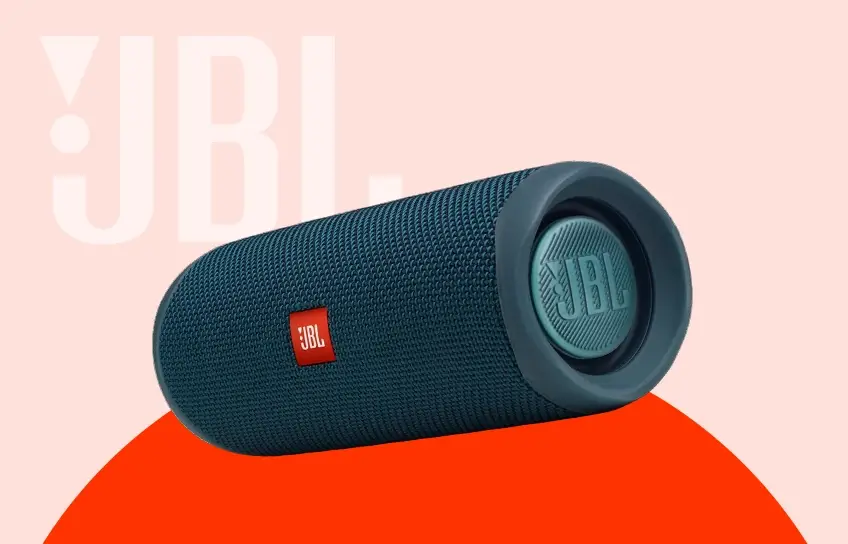
The jbl flip 5 launched in August 2019 and quickly became one of the most recommended portable Bluetooth speakers under $100. In 2026, it is still on sale, still being searched, and still showing up in buyer comparisons against newer models.
That raises a fair question: is it genuinely still worth the money, or has it just coasted on old reputation? This jbl flip 5 review gives you a straight answer based on what it actually delivers today, not when it launched.
JBL Flip 5 Specifications
| Specification | Details |
| Release Date | August 2019 |
| Price (Original MSRP) | $89.95 USD |
| Dimensions | 18.1 x 6.9 x 7.4 cm |
| Weight | 540 g (1.19 lbs) |
| Driver | Single 44x80mm racetrack driver, 20W |
| Frequency Response | 65Hz – 20kHz |
| Bluetooth Version | 4.2 |
| Bluetooth Codecs | SBC only |
| Water Resistance | IPX7 (1m for 30 min) |
| Battery Capacity | 4,800 mAh |
| Battery Life (Claimed) | Up to 12 hours |
| Battery Life (Real-World) | 9–10 hours |
| Charging Port | USB-C |
| Charge Time | Approx. 2.5 hours |
| Microphone | No |
| Aux Input (3.5mm) | No |
| App Support | JBL Portable (iOS & Android) |
| Multi-Speaker Pairing | PartyBoost (not Connect+) |
| Colors Available | 11+ color options |
What Made the Flip 5 So Popular in the First Place

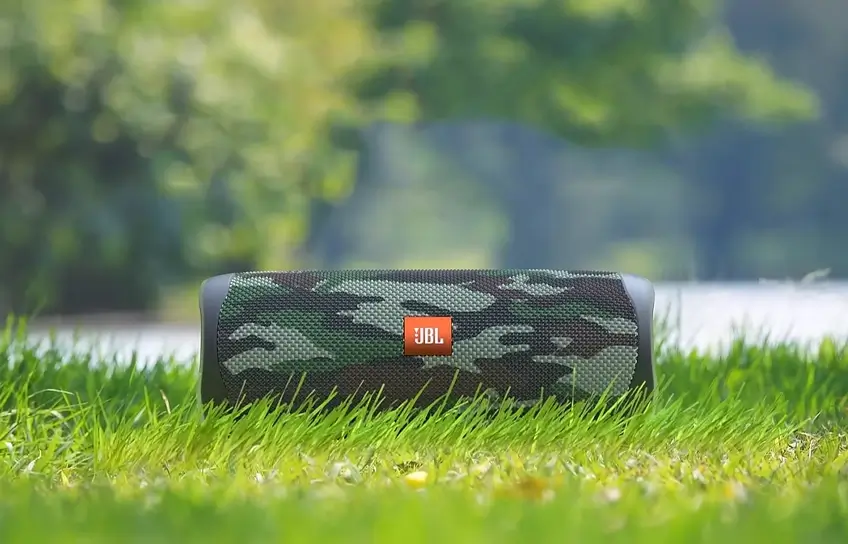
The jbl flip 5 release date was August 2019, and it hit a sweet spot that many speakers in its class missed. It was portable without feeling cheap, waterproof without being bulky, and it sounded better than most people expected for the price. JBL upgraded the driver from its predecessor, moving to a single oval racetrack-style driver with passive bass radiators on both ends. The result was a fuller, richer low end than you would reasonably expect from a speaker this size.
The jbl flip 5 waterproof certification was a big part of its appeal. The IPX7 rating means the speaker can be submerged in up to one meter of water for up to 30 minutes and keep right on playing. Whether you are sitting by the pool, hiking in unpredictable weather, or just singing in the shower, it handles all of that without complaint. The fabric-wrapped body, rubber-capped ends, and sturdy overall construction add up to something that genuinely feels built to last.
Add to that a USB-C charging port, a compact cylindrical shape that fits in a water bottle pocket, and a jbl flip 5 price that launched well below $130, and you had a product that was genuinely hard to argue against for anyone who wanted a rugged everyday speaker.
How Does It Hold Up in 2026?
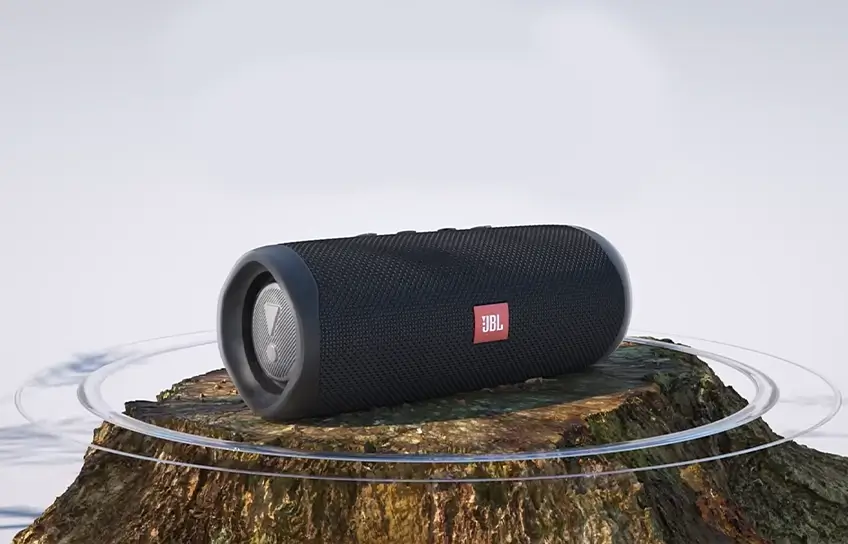
The jbl flip 5 speaker still delivers on its core promise. It sounds good for casual outdoor listening, charges over USB-C, and fits comfortably in any bag. The build quality remains solid, and the battery delivers around 9 to 10 hours of real-world playback, which is enough for a full day out.
There are a few areas where its age starts to show. The Flip 5 runs on Bluetooth 4.2, which is noticeably older than the 5.1 you get on the Flip 6. It also only supports the SBC codec, meaning there is no AAC or aptX for higher-quality audio streaming. If you have ever tried watching a video on your phone with this speaker, you have probably noticed the audio sync lag. It is not ideal, and there is no wired workaround since the 3.5mm input was removed with this generation.
There is also no microphone, so hands-free calls are off the table. And the in-app EQ through the JBL Portable app is quite basic, giving you just a three-band adjustment with not much room to fine-tune the sound. If you are the type of person who likes to dial in your audio precisely, this will feel limiting.
Sound Quality
For the kinds of situations this speaker was designed for, the sound quality is still genuinely enjoyable. The bass response is warm and present without feeling overblown. Mids are slightly recessed, which can make vocals feel buried in busy tracks, but for pop, hip-hop, or anything with a strong low end, it sounds lively and engaging. Highs are decent but not crisp, and the speaker loses some clarity at very high volume.
Your music taste matters here. If you mostly listen to bass-forward genres like hip-hop, EDM, or R&B, the Flip 5 will satisfy you without any tweaking. If you lean toward acoustic music, jazz, or classical, the slightly recessed mids mean guitars, strings, and vocals can feel a little thin and pushed back in the mix, especially outdoors where ambient noise fills in the low end. It is not unlistenable by any means, but listeners who prioritize vocal and instrument clarity will notice the limitation more than casual listeners will.
It is worth noting that the Flip 5 is a mono speaker. JBL made the switch from the dual-driver stereo setup of the Flip 4 to a single racetrack driver here, which was actually a smart move. Two drivers that close together rarely produce convincing stereo separation anyway, and the single larger driver gives you better bass depth and a more consistent sound across listening positions.
Battery Life and Charging
The jbl flip 5 battery life is rated at 12 hours by JBL, but in real-world use at moderate volume levels, you are more likely to land somewhere between 9 and 10 hours. That is still plenty for a beach day, a long hike, or a backyard gathering. Charging is handled via USB-C, which takes around 2.5 hours to go from completely flat to fully charged. This remains a practical and convenient setup, even by 2026 standards.
JBL Flip 5 vs. Flip 6: Is the Upgrade Worth It?
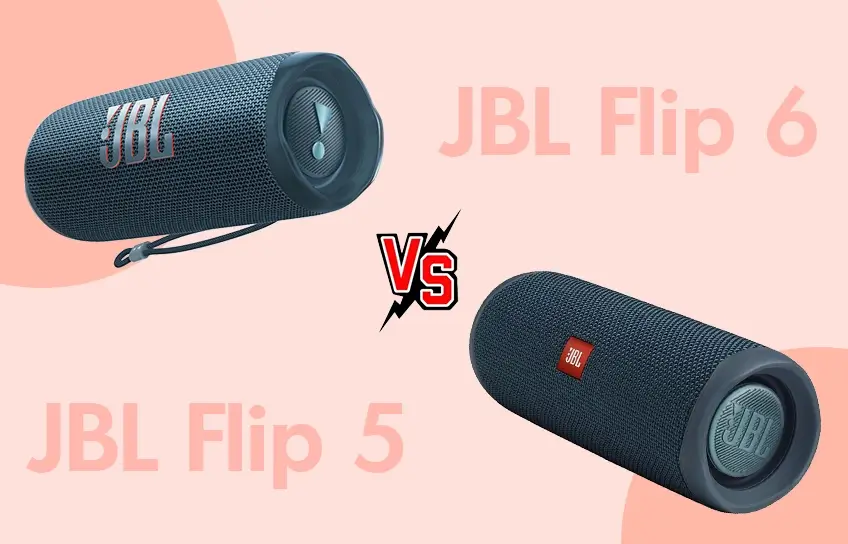
This is the comparison most buyers are weighing right now. Looking at the jbl flip 5 specifications, you get Bluetooth 4.2, a 20-watt driver, IPX7 waterproofing, USB-C charging, and a 4,800 mAh battery in a 540-gram body. The Flip 6 improves on several of those numbers. It carries an IP67 rating, which adds dust resistance on top of the waterproofing, and it uses Bluetooth 5.1 for a stronger, more reliable connection. The driver configuration was also updated for better clarity in the high end.
However, the Flip 6 typically costs more, sometimes by $30 or more depending on where you shop. Real-world battery life is roughly the same between the two. And the core experience of carrying a compact, rugged Bluetooth speaker wherever you go is nearly identical. If you can find the Flip 5 at a significantly reduced price, which is quite common at this point, the value equation shifts noticeably in its favor.
One practical thing to keep in mind is the PartyBoost compatibility. The Flip 5 uses JBL’s PartyBoost system to link multiple speakers together, but it is not compatible with the older Connect+ system used by the Flip 4. If you are pairing speakers, they need to be from the same generation. A Flip 5 pairs well with a Charge 5, for example, but not with a Flip 4.
Who Should Still Buy the Flip 5 in 2026?
If you are buying your first jbl flip 5 bluetooth speaker and want something rugged, waterproof, and easy to carry around without spending a lot of money, this remains a very solid choice. At its current discounted price, it offers a level of build quality and sound that is difficult to match in this range. It handles the beach, the backyard, the shower, and the hiking trail without any fuss.
It also suits buyers who want something they can hand to kids, toss in a beach bag, or leave outdoors without worrying about damage. There are only four buttons to learn, pairing takes under 10 seconds, and the IPX7 rating means spills and splashes are a non-issue. For that kind of low-maintenance, reliable everyday use, it is genuinely hard to beat at its current price.
If you already own a Flip 5 and it is working fine, the case for upgrading is thin. Moving to the Flip 6 gets you dust resistance and a more stable Bluetooth connection, but the sound difference in real-world use is subtle, and the battery life is almost identical. Unless you regularly use your speaker in dusty environments like construction sites or sandy beaches where dust gets forced into the housing, the Flip 5 covers everything the Flip 6 does at a lower price.
Are There Better Alternatives at This Price?
A few alternatives are worth knowing about before you decide. The Bose SoundLink Flex sits in a similar price range and is worth considering if voice clarity matters more to you than bass punch. The Flex tends to produce more balanced mids and cleaner vocals, while the Flip 5 leans harder into low-end warmth. The Flex also edges ahead on real-world battery life and has a more omnidirectional sound spread, which works better in open outdoor spaces. Neither has an aux input.
The UE Boom 3 is another option that often comes up in the same conversation. It carries an IP67 rating and actually floats in water, which is a practical bonus. The battery and volume output are similar to the Flip 5, though it uses older micro-USB for charging rather than USB-C, which is a noticeable drawback by today’s standards.
If your budget stretches a bit further and you want something with significantly more power and battery life, the JBL Charge 5 is worth considering. It shares the same cylindrical design philosophy but is larger, louder, lasts up to 20 hours, and can even charge your other devices via USB-A. It is a different kind of speaker, more for stationary use than tossing in a backpack, but it is a step up in every measurable way.
JBL Flip 5 Pros and Cons
Pros
- IPX7 waterproof — handles pools, rain, and showers
- Compact and lightweight — fits in a bag or cup holder
- Solid bass for its size, thanks to passive radiators
- USB-C charging — fast and universally compatible
- Durable fabric and rubber build — genuinely tough
- Available in 11+ colors, including a custom design option
- PartyBoost support to link multiple JBL speakers
Cons
- Older Bluetooth 4.2 — weaker than newer models
- SBC codec only — no AAC, aptX, or high-quality audio
- No microphone — cannot take calls or use voice assistants
- No 3.5mm aux input — Bluetooth only
- Noticeable audio lag when watching videos
- Basic 3-band EQ in app — limited sound customization
- Mono output only — no stereo separation
Final Verdict
Seven years on, this speaker has held up better than most products at its original price point. The build quality is still excellent, the waterproofing works as advertised, and the sound is more than adequate for the casual outdoor listening it was designed for. Its weaknesses, older Bluetooth, no high-quality codecs, no microphone, are real but predictable given when it was made.
At full price, the Flip 5 faces real competition from the Flip 6 and other newer options. But at the discounted prices it commonly sells for in 2026, it offers a combination of build quality, waterproofing, and sound that most speakers at the same price simply cannot match. Buy it knowing what it is: a rugged, no-nonsense outdoor speaker that does exactly what it promises, without pretending to be more.


