





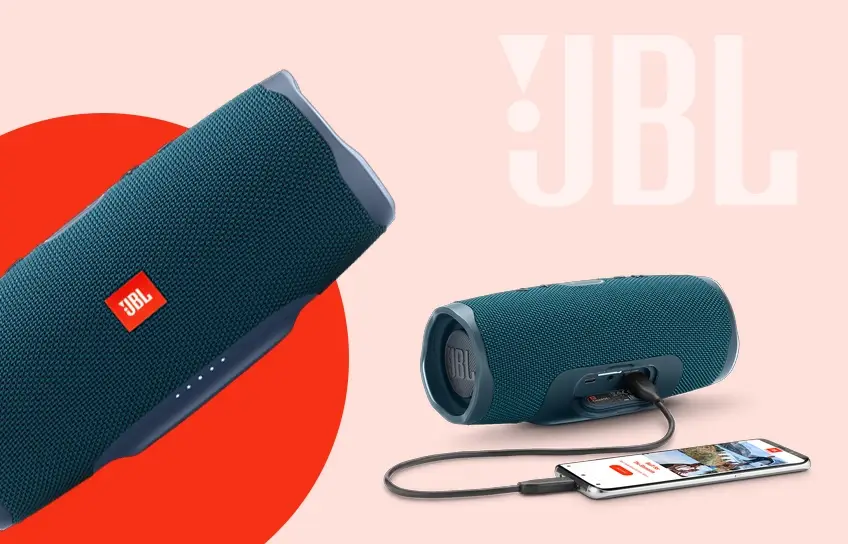
There are hundreds of Bluetooth speakers on the market today, and most of them promise the world. But very few actually deliver a combination of solid sound, rugged build, long battery life, and a price that does not make you wince. That is exactly why the jbl charge 4 became such a popular choice when it first launched, and why people are still searching for it years later.
It sits right in the sweet spot of the portable speaker market, not too small to sound thin, and not so big that you dread carrying it. The question buyers are now asking is a fair one: does this speaker still hold up in 2026, or have newer options left it behind?
JBL Charge 4 Specifications
| Specification | Details |
| Bluetooth Version | 4.2 |
| Driver | Single full-range driver (50mm x 90mm) |
| Power Output | 30W RMS |
| Frequency Response | 60Hz to 20kHz |
| Battery Capacity | 7,500mAh (27Wh Lithium-ion Polymer) |
| Battery Life | Up to 20 hours (varies by volume) |
| Charge Time | Approx. 4 hours via USB-C |
| Waterproof Rating | IPX7 (1 meter, up to 30 minutes) |
| Wireless Range | Up to 30 feet (10 meters) |
| Dimensions | 220 x 95 x 93mm |
| Weight | 965g (approx. 2.1 lbs) |
| Ports | USB-C (charging in), USB-A (device charging out), 3.5mm AUX |
| Multi-Speaker Pairing | JBL Connect+ (up to 100 speakers) |
| Microphone | None |
| Colors Available | 10+ color options |
A Design That Still Feels Solid

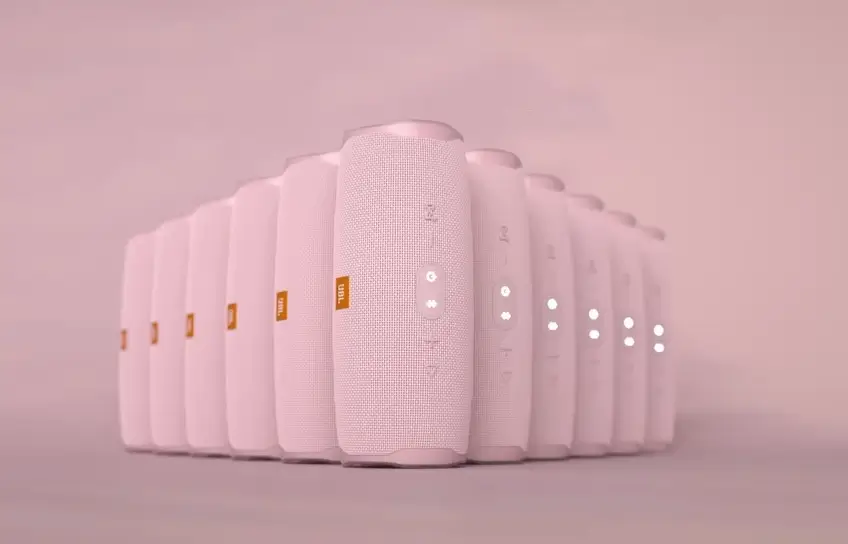
The cylindrical body is wrapped in a tough, rubberized mesh fabric that resists scuffs and scratches well over time. The exposed passive radiators on each end are not just a visual choice. They work alongside the main driver to push out more low-end response, and they are durable enough to survive the bumps that come with regular outdoor use. JBL has used this design across its Charge lineup for years because it holds up.
At 965 grams, the weight is noticeable if you are hiking with it. A daypack with this speaker inside will remind you it is there after a few miles. For car camping, backyard use, beach days, or weekend trips where you are not walking long distances, the size is perfectly manageable. It fits in most bags without issue and is easy enough to carry in one hand.
Waterproofing Built for Real Use
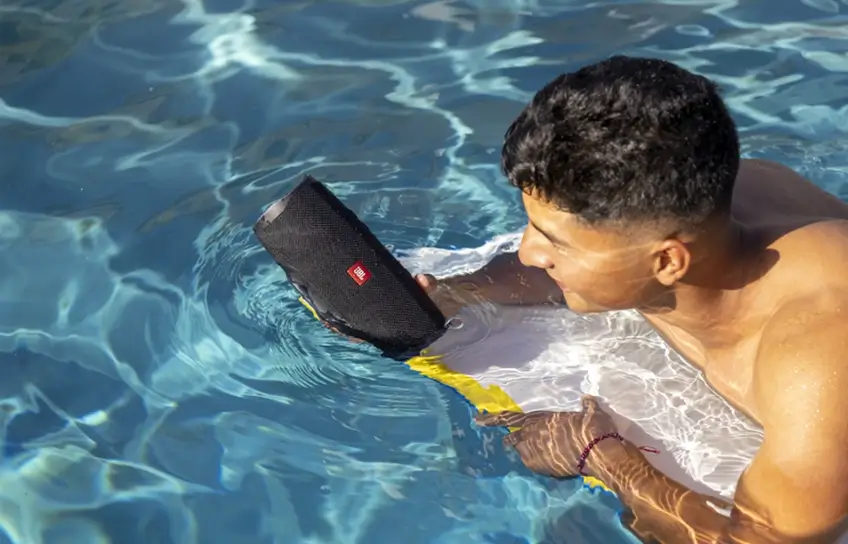
The IPX7 waterproof rating means the speaker can be submerged in up to one meter of water for 30 minutes. In practical terms, that covers pool splashes, rain, dropped-in-a-cooler scenarios, and accidental dunks off a dock. It also floats, so if it goes overboard it will stay on the surface rather than sinking. That detail matters more than it sounds when you are near water with no easy way to retrieve something from the bottom.
The charging ports and aux input are protected behind a rubberized flap on the back. It seals tightly when closed, but you need to make sure it is properly shut before taking the speaker near water. If the flap is even slightly ajar, the water protection is compromised. It is a simple habit to build, but worth being aware of from day one.
How Does It Sound?
The speaker runs a single full-range driver paired with dual passive radiators, outputting 30 watts RMS. The low end is the strongest part of the sound. On bass-heavy tracks like hip-hop or electronic music, the kick drum and sub-bass lines come through with genuine weight and control.
Individual bass notes stay distinct even as the volume climbs, which is what separates a well-tuned low end from one that just rumbles. If you play something like a Kendrick Lamar or Drake track at high volume, the bass hits land with real impact without smearing into each other. The mid-range is where the speaker shows its only meaningful limitation.
On busy recordings with prominent bass lines and layered instrumentation, vocals get pushed back in the mix. A track like Fleetwood Mac’s Go Your Own Way or any classic rock song with a driving rhythm section will see Stevie Nicks or similar lead vocals sitting slightly behind the guitars and drums rather than upfront where they belong. For pop, hip-hop, and electronic genres this rarely matters. But if your listening is mostly acoustic, folk, jazz, or any style where the voice carries the song, you will notice the trade-off regularly.
The highs perform well and stay clean under pressure. Cymbals, acoustic guitar strings, and higher-register piano notes come through with clarity and without any harshness. On an orchestral or acoustic track, the upper frequencies have enough presence to keep the sound from feeling muffled. Even at maximum volume, distortion is minimal and the speaker holds together better than most portable speakers at this price point. It gets genuinely loud for its size, easily filling a medium room at around half volume, with enough headroom left for open outdoor environments where background noise would otherwise drown out a smaller speaker.
Getting the Best Sound from Placement
The speaker is directional, projecting sound from the front face where the JBL logo sits. Pointing it toward your seating area rather than at a wall makes a clear audible difference. If you want to boost bass response, try standing it vertically on one of its ends on a hard surface like a table or countertop. The surface helps radiate low frequencies more efficiently than when the speaker sits horizontally on fabric or grass.
Battery Life and Charging
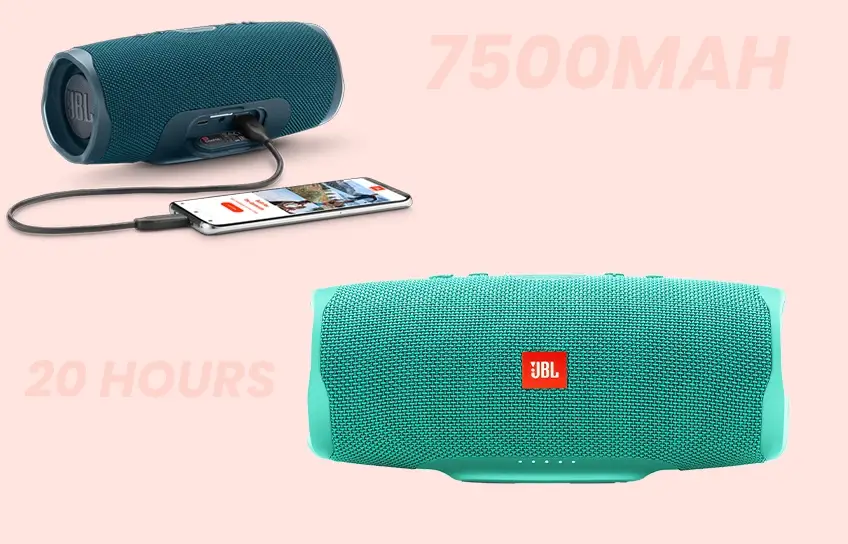
JBL advertises up to 20 hours of playtime. Real-world testing at moderate volume levels typically lands between 13 and 20 hours. The gap comes down to how loud you run it and whether you are using the USB-A port to charge a phone or tablet at the same time, which draws down the battery faster. Even at the lower end of that range, 13 hours covers a full outdoor day without needing a top-up.
Charging uses USB-C, a genuine improvement over the micro-USB port on the previous model. A full charge takes around four to five hours. Five small LED indicators on the base show remaining battery when you tap the power button, giving you a reliable read without needing an app or screen.
Connectivity and Controls
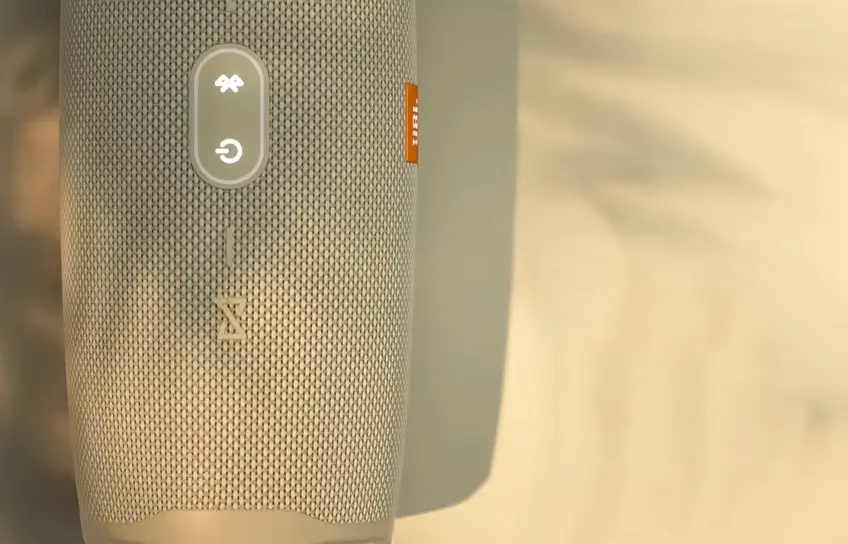
Pairing is simple. Power on the speaker, press the Bluetooth button, and it appears in your device settings within seconds. The Bluetooth 4.2 connection holds steadily up to around 30 feet and does not drop in normal indoor or outdoor conditions. The physical buttons on top cover power, volume, play and pause, Bluetooth pairing, and JBL Connect+.
They have a firm, satisfying click and are easy to press accurately. The one practical issue is that none of the buttons are backlit, so at night or in dim settings you have to feel around to find the right one by memory. There is no built-in microphone, which removes speakerphone functionality entirely. Phone calls go through your device instead.
For buyers who rely on a speaker for hands-free calls while working outdoors, in a garage, or in a workshop, this is a real limitation that is worth knowing before purchasing. A 3.5mm aux input is available on the back for wired playback, useful when you want to preserve phone battery or when Bluetooth is not an option.
Pairing Multiple Speakers with JBL Connect+
Connect+ lets you link multiple compatible JBL speakers to play the same audio simultaneously, which is useful for covering a larger space or running sound across different areas of a home or yard. The key limitation is compatibility. Connect+ only pairs with other Connect+ speakers.
It does not work with older JBL models using the original Connect standard, and it does not pair with newer JBL speakers running Party Boost. If you already own other JBL speakers and plan to link them, confirm which system each one runs before assuming they will connect.
Who Is This Speaker Best For?
This speaker is a strong fit for people who spend time outdoors and want audio that can keep up. The waterproofing handles the environments where most speakers fail, and the volume output works well in open spaces where sound dissipates quickly.
Beach trips, campsites, backyard gatherings, and pool days are all situations where this speaker delivers without requiring any special handling. Indoors it works well for living rooms and kitchens, though the bass-forward tuning makes it a better match for pop, hip-hop, rock, and electronic music than for genres where vocal clarity is the priority.
Is It Still Worth Buying in 2026?
The speaker has been discontinued, which means retail stock is limited and shrinking. At a significant discount, the value case is straightforward. The waterproof build, 13 to 20 hours of real battery life, and powerful sound output for the size are qualities that hold up even against newer competitors in this price range.
At or near its original retail price, the calculation changes. The JBL Charge 5 costs more but brings a meaningful upgrade in protection, moving from IPX7 to IP67, which adds full dustproofing alongside the water resistance. It also runs Bluetooth 5.1 for a stronger connection at greater range. The trade-off is that the Charge 5 drops the 3.5mm aux input entirely. If you rely on a wired connection, that matters. If you do not, the Charge 5 is the better long-term buy at full price.
For alternatives from other brands, the Sony SRS-XB32 competes closely on sound and adds LED lighting if atmosphere matters to you. For buyers who prioritize portability over volume, the JBL Flip 5 is significantly lighter, still waterproof, and a better travel companion for situations where you actually carry the speaker long distances, though it will not fill large outdoor spaces the way this speaker can.
Pros and Cons
Pros
- IPX7 waterproof and floats in water
- Powerful 30W output with strong, controlled bass
- Up to 20 hours battery life on a single charge
- USB-A port doubles as a power bank for your devices
- USB-C charging is fast and modern
- Rugged build that handles outdoor conditions well
Cons
- Vocals can get masked by bass on busy tracks
- No built-in microphone, so no speakerphone support
- Buttons are not backlit, hard to find in the dark
- At 965g, too heavy for long-distance hiking
- Connect+ is not compatible with older JBL Connect or newer Party Boost speakers
- Discontinued, so retail stock is limited
Final Thoughts
The waterproof durability, long battery life, and powerful bass-forward sound are still competitive enough to make this speaker relevant today. The mid-range vocal limitation is real and predictable, the lack of a microphone is a genuine trade-off for anyone who needs hands-free calling, and the weight rules it out for listeners who plan to carry it long distances.
But for outdoor use, casual everyday listening, and buyers who find it at a discounted price, it remains one of the more capable portable speakers you can pick up without spending a lot.


