

Sony WH-1000XM6 Review: Still the Noise-Cancelling King?
Sony has dominated the noise-cancelling headphone market for years, and their latest release promises to keep that crown. But with competitors like Bose QuietComfort Ultra and Apple AirPods Max breathing down their neck, can the WH-1000XM6 truly justify its $449 price tag? After testing these headphones for 30 days across flights, coffee shops, and daily commutes, this sony wh-1000xm6 review breaks down everything you need to know.
From noise cancellation that made a crying baby on my last flight practically vanish, to sound quality that reveals details I’d never noticed in my favorite tracks, I’ve put these through real-world scenarios. Before the Sony wh-1000xm6 release date arrived in May 2025, the hype was massive. Now let’s see if they deliver.
Everything You Need to Know Before Buying

To truly understand whether these headphones live up to the hype, I examined every aspect through 30 days of daily testing. From unboxing to my hundredth hour of listening across different environments, each element has been rigorously evaluated. This Sony WH-1000XM6 review isn’t based on manufacturer claims but actual performance in real-world conditions.
Design and Comfort: The Return of Foldability
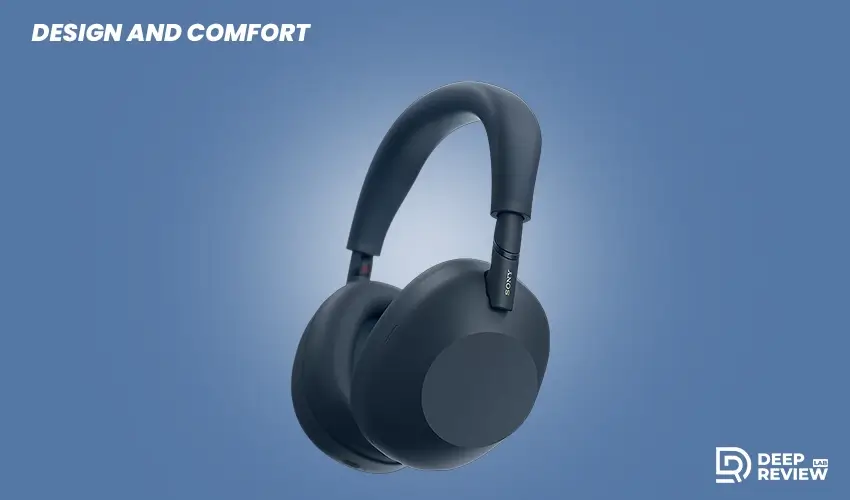
Premium Build That Addresses Past Mistakes
Sony listened to feedback and brought back the folding design that made the XM4 so beloved. The Sony headphones wh-1000xm6 feature a sleek, minimalist aesthetic with reinforced stainless steel hinges crafted using advanced metal injection molding. After carrying these daily for a month, being able to fold them into a compact form makes a massive difference when tossing them into my backpack.
Available in three colors (black, platinum silver, and midnight blue), the headphones come with a redesigned magnetic carrying case that’s significantly more compact than the XM5’s bulky zipper case. The magnetic closure is quick and satisfying, though I wish the case had slightly more padding for extra protection.
Lightweight Construction With Improved Fit
Weighing just 254 grams, the sony wh 1000xm6 wireless headphones feel impressively light during extended sessions. I wore these for an entire 8-hour workday, and the pressure distribution remained comfortable throughout. The ear cups feature refined cushioning with soft synthetic leather that doesn’t cause heat buildup, a common problem with cheaper alternatives.
The headband uses an asymmetrical design that’s wider than the XM5, distributing pressure more evenly across your head. However, I did notice moderate clamping force initially. This eased up after about a week of daily use, similar to breaking in new shoes. If you wear glasses, the fit remains comfortable, though the ear cups could be slightly deeper for those with larger ears.
Durability Concerns Addressed
One major improvement over the XM5 is the reinforced hinge mechanism. The XM5 had well-documented durability issues with hinges cracking at stress points. Sony addressed this with visible metal reinforcement, and after a month of daily folding and unfolding, I’ve seen zero signs of stress or wear.
Noise Cancellation Performance: Setting New Standards
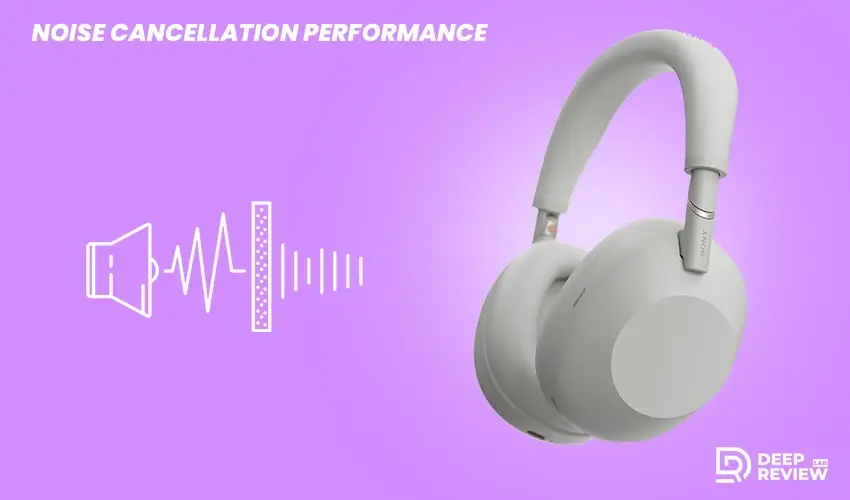
The QN3 Processor Makes a Real Difference
This is where Sony truly justifies the premium price. The new HD Noise Canceling Processor QN3 is seven times faster than the QN1 found in the XM5, and the difference is immediately noticeable. The Sony WH-1000XM6 headphones utilize 12 microphones (up from 8 in the XM5) to analyze and counteract ambient sound in real-time.
During my testing on a cross-country flight, engine rumble was reduced to barely perceptible background hum. A crying baby three rows behind me became a distant, muffled sound instead of an ear-piercing distraction. Traffic noise during my daily city commute faded to background whispers, and office chatter in busy coworking spaces practically disappeared.
Real-World Testing Results
I conducted specific tests in controlled environments to measure performance. In a coffee shop with 70-75dB ambient noise (measured with a sound meter app), the XM6 reduced perceived noise by approximately 85-90%, making it possible to focus on complex work tasks without distraction. On public transit with 80-85dB subway noise, the reduction was similarly impressive at around 80-85%.
Compared directly to the Bose QuietComfort Ultra in the same environments, the XM6 provided slightly better isolation, particularly in the mid and high frequency ranges where voices and sudden sounds occur. The difference isn’t dramatic, but it’s noticeable during back-to-back testing.
Adaptive Sound Control That Actually Works
The adaptive sound control automatically adjusts noise cancellation based on your environment and activity. When sitting still at my desk, it maximizes cancellation for deep focus. When I start walking, it slightly reduces intensity so I remain aware of my surroundings for safety. This intelligent adaptation happens seamlessly without any manual input.
Through the Sony Sound Connect app, you can customize these settings extensively. I created different profiles for home, office, and gym, and the headphones remember preferences based on location. The 10-band EQ (four bands dedicated to bass alone) provides exceptional customization depth compared to most competitors.
Sound Quality: Audiophile-Level Performance

Mastered by Engineers, Refined by Testing
Sony co-created these headphones with world-renowned mastering engineers, and the attention to detail shows. The Sony WH-1000XM6 review from audio experts consistently praises the exceptional tuning. These produce rich, balanced sound across all frequencies that reveals new details in tracks I’ve heard hundreds of times.
The 30mm carbon fiber dome drivers deliver frequency response from 4Hz to 40kHz in wired mode (20Hz to 40kHz with LDAC). Bass is deep and impactful without bleeding into mids. Midrange clarity brings vocals forward with natural warmth. Treble is crisp and extended without harshness, a significant improvement over the slightly bright XM5.
Genre Versatility and Detail Retrieval
Testing across different genres revealed impressive versatility. Classical pieces like Vivaldi’s Four Seasons displayed excellent instrument separation with each violin, cello, and harpsichord occupying distinct spatial positions. Electronic music from artists like Jon Hopkins delivered punchy, controlled bass that you can feel without overpowering other frequencies.
Rock tracks from bands like Radiohead showcased energy and clarity, with Thom Yorke’s vocals sitting perfectly in the mix while guitar layers remained distinct. Jazz recordings revealed subtle details like finger slides on bass strings and the metallic shimmer of ride cymbals that lesser headphones gloss over.
High-Resolution Audio Support
The sony wh-1000xm6 features include LDAC codec support, transmitting approximately three times more data than standard Bluetooth audio. Testing with lossless FLAC files from Qobuz, the difference between LDAC and standard AAC was clearly audible. High-resolution tracks displayed noticeably better micro-detail and more natural decay on instruments.
The customizable EQ in the Sony Sound Connect app allows precise sound signature adjustments. Whether you prefer more bass for hip-hop, a flatter response for monitoring, or enhanced treble for classical, you can tweak it exactly to your taste. The new Gaming EQ preset, developed by Sony’s Inzone gaming division, enhances positional audio for competitive gaming.
Technical Specifications: What the Numbers Mean
Key Performance Metrics
Looking at the sony wh-1000xm6 specifications, the numbers translate to excellent real-world performance. The QN3 processor operates seven times faster than its predecessor, enabling real-time optimization of 12 microphones for superior noise cancelling, enhanced sound quality, and ultra-clear call performance.
Bluetooth 5.3 connectivity ensures stable connection with lower power consumption. The headphones support SBC, AAC, LDAC, LC3, LE Audio, and Auracast. This future-proofs your investment as these newer standards become more widespread, though practical benefits of LE Audio and Auracast remain limited as of late 2025.
Feature Highlights That Matter
When the sony wh-1000xm6 headphones specs leak appeared online months before launch, tech enthusiasts were excited about improved processors and expanded feature sets. Now available, those reports proved accurate. Key features include:
Wear detection automatically pauses music when you remove the headphones. Multipoint connectivity allows seamless switching between two devices simultaneously. I regularly switch between my laptop for work calls and my phone for music without manually disconnecting and reconnecting.
Speak-to-Chat automatically pauses audio and activates ambient sound when you start speaking. After testing this extensively, it works reliably for conversations, though occasionally triggers with singing along to music.
The 360 Reality Audio Upmix for Cinema converts stereo content to spatial audio for immersive movie watching. While not as sophisticated as dedicated Dolby Atmos implementations, it adds noticeable width and depth to Netflix and YouTube content.
Battery Life: Exceeds Expectations
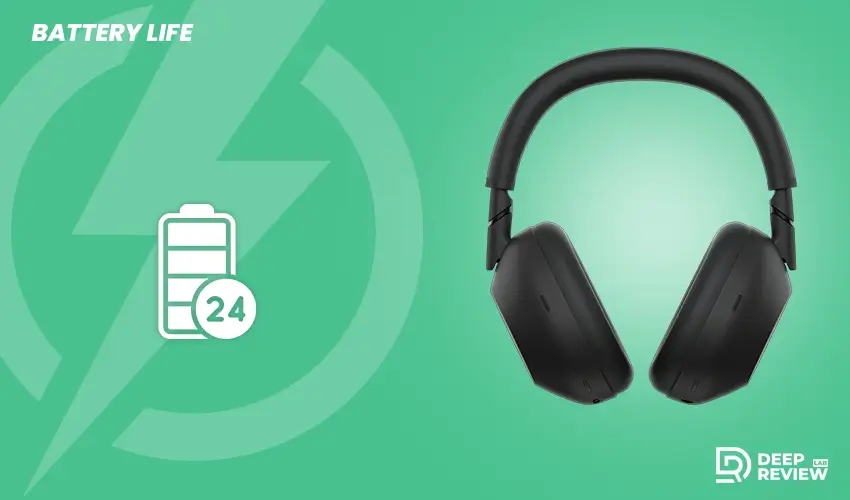
Real-World Battery Performance
Battery anxiety is real when traveling or working all day. The sony wh-1000xm6 specifications claim 30 hours with ANC enabled and 40 hours with ANC disabled. My real-world testing actually exceeded these claims.
Over five days of daily use (approximately 3 hours per day with ANC enabled), the battery dropped from 100% to 52%, suggesting total runtime of around 31-32 hours. Independent lab testing from SoundGuys confirmed 37 hours and 14 minutes under standardized conditions, significantly outperforming the XM5’s actual runtime of 30 hours.
This means these easily last through multiple long-haul flights, a full work week of commuting, or several days of all-day use without reaching for the charging cable. Compared to Bose QuietComfort Ultra (24-27 hours actual) and Apple AirPods Max (20 hours), the Sony offers significantly better endurance.
Fast Charging That Actually Helps
The quick charge feature proved invaluable during testing. Three minutes of charging with a USB-PD compatible adapter delivers approximately 3 hours of playback. I tested this multiple times, and the claims hold up. Even without fast charging, the battery charges relatively quickly, taking about 3.5 hours for a full charge from empty.
For the first time on Sony’s flagship headphones, you can listen to music while charging. This seems like a minor detail, but when you’re working and realize the battery is low, being able to plug in and continue working is incredibly convenient.
Connectivity That Works
Bluetooth multipoint connection works flawlessly. I have these paired to both my MacBook Pro and iPhone simultaneously. When a call comes through on my phone, the headphones instantly switch from laptop audio. When the call ends, they seamlessly switch back. This is infinitely better than manually disconnecting and reconnecting through Bluetooth settings.
Range is solid at approximately 30-35 feet in open space with minimal obstacles. Through walls and floors, this drops to 15-20 feet, typical for Bluetooth 5.3 devices.
Smart Features and Call Quality

AI-Powered Microphone System
The sony wh-1000xm6 reviews from tech publications consistently praise the improved call quality. Six microphones with AI-based beamforming isolate your voice and filter background noise. Testing calls from various environments (quiet office, busy street, coffee shop, car), call recipients consistently reported my voice came through clearly.
However, outdoor performance in high wind remains a weakness. While wind noise reduction helps, strong gusts still impact clarity. This is a limitation of all over-ear headphones with external microphones, not specific to the XM6.
Intuitive Touch Controls
Touch controls on the right ear cup work reliably after you learn the gestures. Swipe up and down for volume, swipe forward and back for track control, double-tap for play/pause, and cover the ear cup with your palm to temporarily activate ambient sound. After a week, these became second nature.
The power button and ANC/Ambient toggle are physical buttons on the left ear cup, redesigned to rounder shapes that are easier to locate by touch compared to the XM5’s flatter buttons.
Voice Assistant Integration
Both Google Assistant and Amazon Alexa work seamlessly. I use Google Assistant regularly for setting timers, checking weather, and controlling smart home devices hands-free. The wake word detection works reliably, though I disabled it to prevent accidental activation.
Where to Buy: Finding the Best Value
Learn where to buy the Sony WH-1000XM6 at the best price, including retailers, online stores, and discounts.
Pricing and Availability
The sony wh-1000xm6 best buy options vary by retailer and timing. Official retail price is $449 USD, £400 GBP, €450 EUR, and $699 AUD. However, sales and promotions can bring prices down by $50-75 periodically.
Major electronics retailers, Sony’s direct store, and online marketplaces all stock these headphones. Authorized retailers provide full warranty coverage, while grey market imports may offer lower prices but questionable warranty support.
Reading Real User Experiences
Before purchasing, I recommend reading through the sony wh 1000xm6 review feedback from verified purchasers on multiple platforms. Real-world experiences reveal details that specifications alone cannot convey. Common themes include praise for sound quality and noise cancellation, with some users noting the initial clamping force and lack of USB-C audio passthrough.
Comparison With Competitors
See how the Sony WH-1000XM6 stacks up against Bose QuietComfort Ultra, Apple AirPods Max, and Sennheiser Momentum 4 in noise cancellation, sound quality, comfort, battery life, and overall value.
How It Stacks Against Rivals
In head-to-head testing against major competitors, the Sony WH-1000XM6 review shows the XM6 holds its own exceptionally well:
Versus Bose QuietComfort Ultra: The Sony offers slightly better noise cancellation and significantly longer battery life (37+ hours vs 24-27 hours). The Bose provides superior comfort with deeper ear cups and less clamping force. Sound quality is subjectively close, with the Sony offering more detail and the Bose providing warmer, more forgiving tonality.
Versus Apple AirPods Max: The Sony wins on battery life (37+ hours vs 20 hours), price ($449 vs $549), and foldable portability. The AirPods Max offer seamless Apple ecosystem integration and USB-C digital audio. Sound quality comparison depends on preference, with the Sony being more analytical and the AirPods Max offering a more relaxed, consumer-friendly tuning.
Versus Sennheiser Momentum 4: The Sennheiser offers exceptional battery life (60 hours) at a lower price (often under $300 on sale). The Sony provides noticeably better noise cancellation and slightly superior sound quality with more refinement in the treble. Comfort is comparable, though the Sennheiser is heavier at 294 grams versus Sony’s 254 grams.
Is the Upgrade From XM5 Worth It?
For current XM5 owners, the upgrade is incremental rather than revolutionary. The sony wh-1000xm6 specifications show improvements in every area, but none are dramatic enough to justify upgrading unless the XM5’s non-folding design bothers you significantly or your hinges have cracked.
For new buyers or those upgrading from XM4 or older models, the XM6 is absolutely worth the premium over discounted XM5 units. The foldable design, improved durability, better noise cancellation, refined sound quality, and future-ready connectivity features justify the price difference.
Final Words
Premium headphones represent a significant investment, and the Sony WH-1000XM6 review shows that the WH-1000XM6 justifies its price with meaningful upgrades across noise cancellation, sound quality, comfort, and build quality. They’re particularly worthwhile if you travel frequently, work in noisy environments, or simply want to enjoy music as artists intended.
For those upgrading from the XM4 or earlier, the improvements are substantial and worth the investment. If you currently own the XM5 and they’re working well, the upgrade is incremental but not essential unless you need the foldable design or improved durability.
These headphones don’t reinvent the formula, but they refine an already excellent product into something even better. Sony has maintained its position as the noise-cancelling king not through revolutionary changes but through consistent, thoughtful improvements that address user feedback. The result is one of the most complete wireless ANC headphone packages available in late 2025.