


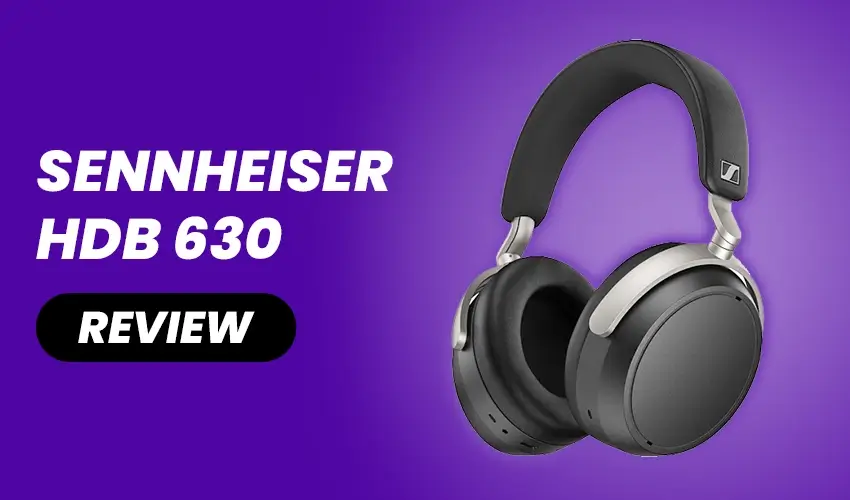
Wireless headphones have come a long way, but finding a pair that truly satisfies audiophile standards while offering modern convenience remains challenging. Most options sacrifice sound quality for features, or vice versa. The Sennheiser HDB 630 enters this space with an ambitious goal: delivering studio-grade audio in a wireless, noise-cancelling package that doesn’t compromise on either front.
After extensive testing with the Sennheiser HDB 630, I found these headphones accomplish something rare in the wireless market. They bring genuine high-fidelity sound to a category dominated by bass-heavy consumer tuning. Whether you’re a critical listener seeking accuracy or someone who simply wants their music to sound its best, these headphones deserve your attention.
Design and Build Quality

The HDB 630’s design prioritizes understated professionalism over flashy aesthetics. Sennheiser focused on functional construction with quality materials, though the plastic-heavy build may surprise some at this price point.
What You Notice First
Sennheiser made deliberate choices with the HDB 630’s appearance. There’s no flashy branding or attention-seeking colors. Instead, you get understated matte black cups complemented by silver accent pieces. The design language speaks to professionals and enthusiasts rather than trend-followers. The headphones fold flat through generous cup rotation, making them travel-friendly.
A premium hard-shell case provides solid protection without adding excessive bulk to your bag. The materials lean heavily on quality plastics rather than metal. For a $499 headphone, this choice might surprise you. Competitors at this price often incorporate more metal elements for perceived premium value.
Comfort and Fit
Comfort matters tremendously for any headphone you’ll wear for hours. The HDB 630 handles this responsibility well. Thick padding on the headband spreads pressure evenly, and the soft ear cushions feel pleasant against your skin even after extended sessions. At 313 grams, these sit heavier than many alternatives. You’ll notice the weight initially, though good balance prevents it from becoming problematic.
The clamping force finds a sweet spot between secure positioning and comfortable pressure. However, the ear cup openings measure smaller than you’d expect for over-ear headphones. If you have larger ears, you might find them pressing against the padding instead of resting comfortably within the space. This affects both comfort and sound quality over time.
Sound Quality and Performance

The HDB 630 delivers neutral, accurate sound that reveals music as artists intended. Bass stays tight and controlled, midrange shines with natural vocals, and treble offers detail without harshness across all genres.
Audio Character
Most wireless headphones boost bass and treble for immediate impact. The HDB 630 takes the opposite approach, tuned for accuracy rather than artificial excitement. Low frequencies arrive tight, controlled, and articulate. You hear individual bass notes clearly rather than mushy rumble. Sub-bass extends satisfyingly deep when needed, but nothing feels exaggerated. If you’re switching from bass-heavy headphones, the bass might seem lean initially. Bass lovers can boost things using the parametric EQ.
The midrange showcases proper tuning at its best. Vocals sound remarkably natural and intimate, with texture and subtle inflections clearly audible. Acoustic instruments deliver realistic timbre. Both male and female vocals shine without sounding unnaturally forward.
Treble delivers detail and sparkle without harshness. Cymbals shimmer with natural decay, and high-frequency elements provide air and space. The tuning avoids dulling highs or pushing them into sibilance. What impresses most is the cohesion. Complex arrangements remain easy to follow without frequency ranges fighting for attention.
Soundstage and Imaging
The HDB 630 performs admirably in creating spatial impression, especially for closed-back designs. Using standard Bluetooth provides respectable width and depth without music feeling trapped inside your head. Switching to the included BTD 700 dongle noticeably enhances soundstage. Instruments gain clearer positioning, and presentation becomes more three-dimensional.
Imaging precision lets you pinpoint instrument locations within the mix. In orchestral pieces, you can identify different sections and track individual instruments as they interact. Rock and pop recordings reveal clear separation between elements panned left, right, and center.
Dynamic performance handles both quiet passages and loud crescendos convincingly. The headphones maintain composure across volume swings, contributing to realistic and engaging presentation.
Specifications Table
| Feature | Specification |
| Driver Size | 42mm dynamic transducers |
| Frequency Range | 6 Hz to 22 kHz |
| Bluetooth | 5.2 with aptX Adaptive, aptX HD |
| Battery Performance | 60 hours per charge |
| Weight | 313 grams |
| Charging | USB-C with fast charging |
| Noise Control | Active Noise Cancellation |
| What’s Included | BTD 700 dongle, premium case, USB-C cable, 3.5mm cable, flight adapter |
| App Features | 5-band parametric EQ, crossfeed, ANC adjustment |
| Retail Price | $499 USD |
Features That Actually Matter

The HDB 630 excels in connectivity with Bluetooth 5.2, aptX codecs, and the included BTD 700 dongle for low-latency gaming. Parametric EQ provides precise control, though noise cancellation trails competitors.
Connectivity Options
Bluetooth 5.2 supports high-quality codecs including aptX Adaptive and aptX HD. In daily use, the wireless connection proves stable and reliable. Your phone can sit in another room without signal drops. The real standout is the BTD 700 USB-C dongle included free. This $60 accessory unlocks enhanced audio quality and low-latency mode for gaming.
Triple-tap the dongle button, and audio delay drops to approximately 30 milliseconds. This makes gaming and video watching perfectly synchronized. It won’t satisfy competitive esports players, but casual gamers and movie watchers will find it works perfectly.
Traditional wired options remain available through included 3.5mm and USB-C cables. This versatility covers virtually any scenario, from wireless casual listening to wired audiophile sessions. One limitation is multipoint connectivity. Using the BTD 700 dongle eliminates the ability to connect to multiple devices simultaneously. Device-switchers might find this inconvenient.
App and EQ Control
Sennheiser finally delivered what audiophiles wanted with genuine five-band parametric equalization. The companion app includes adjustable frequency, gain, and Q values for precise tuning. This isn’t simplified bass and treble sliders. You get real control for matching personal preferences or compensating for individual hearing characteristics.
The interface uses sliders rather than numerical input, making fine adjustments slightly finicky. However, you can instantly A/B toggle your EQ curve to hear changes. Additional features include crossfeed simulation for more natural presentation and adjustable active noise cancellation levels. The app proves genuinely useful rather than token software.
Noise Cancellation Performance
Active noise cancellation exists on the HDB 630 but doesn’t lead its category. The system reduces ambient noise adequately in quieter environments like libraries and offices. However, challenging situations like airplane cabins or busy streets reveal limitations. Sony WH-1000XM6, Bose QuietComfort Ultra, and Apple AirPods Max deliver noticeably superior noise blocking.
The HDB 630’s ANC works respectably but isn’t class-leading. Positive aspects include zero background hiss and significantly better sound quality than competitors. The implementation doesn’t compromise audio fidelity for noise reduction.
Battery Life
Sixty hours per charge with active noise cancellation enabled changes how you think about wireless headphones. This doubles what most competitors offer. You can use these headphones regularly for weeks between charges. Even forgetting to charge them for extended periods rarely leaves you stranded. USB-C charging is standard, and fast charging provides several hours of playback from brief sessions.
Pros and Cons
Pros:
- Truly exceptional sound fidelity rivaling wired audiophile headphones
- Marathon 60-hour battery outlasts nearly all competitors
- BTD 700 dongle bundled adds low-latency gaming capability
- Professional parametric EQ for precise tuning control
- All-day comfort with quality padding materials
- Protective hard case included for travel
- Multiple connection options cover every use case
Cons:
- Noise cancellation underperforms versus Sony and Bose leaders
- Plastic construction feels less premium than price suggests
- Stock bass tuning runs lean for mainstream tastes
- Compact ear openings may squeeze larger ears
- Limited multipoint connectivity with dongle active
Real-World Applications
The HDB 630 suits music enthusiasts and professionals seeking accurate sound with wireless freedom. However, commuters needing superior noise cancellation and bass lovers preferring exciting tuning might find better alternatives elsewhere.
Who Benefits Most
These headphones excel for music enthusiasts valuing sound quality above all else while wanting wireless convenience. If you listen critically and want to hear recordings as artists intended, the HDB 630 delivers remarkably well. Home listening sessions become special with these headphones. They’re comfortable enough for multi-hour sessions, and the sound quality rewards attentive listening. The parametric EQ lets you fine-tune presentation to your room acoustics or personal preferences.
Content creators and audio professionals appreciate having accurate sound reproduction with wireless freedom. You can do serious work when needed, then untether for casual listening without switching equipment. Travelers seeking excellent audio will enjoy these, though the average noise cancellation means you’ll hear more ambient sound than with specialized travel headphones. The generous battery life and included case make them practical for trips despite this limitation.
Where They Fall Short
Commuters prioritizing noise cancellation over sound quality should look elsewhere. Sony and Bose options block environmental noise far more effectively on trains, buses, and planes. Bass enthusiasts might initially find the neutral tuning disappointing.
While the parametric EQ can address this, people preferring exciting, bass-forward sound without tweaking might prefer different tuning approaches. The plastic-heavy construction won’t satisfy everyone at this price point. If you want headphones that feel as premium as they cost, alternatives with more metal components exist.
Final Thoughts
The Sennheiser HDB 630 delivers genuine audiophile sound quality in a wireless package. Exceptional audio performance, 60-hour battery life, and parametric EQ make these ideal for music enthusiasts who prioritize accuracy over everything else.
Yes, the noise cancellation trails Sony and Bose. The build feels plasticky for the price, and stock bass runs lean.But if sound quality ranks as your top priority, the HDB 630 delivers exactly where it matters most. At $499, these headphones suit listeners who want accurate, detailed sound with wireless convenience. Just ensure you’re comfortable with the average ANC and have realistic expectations about build materials.
