


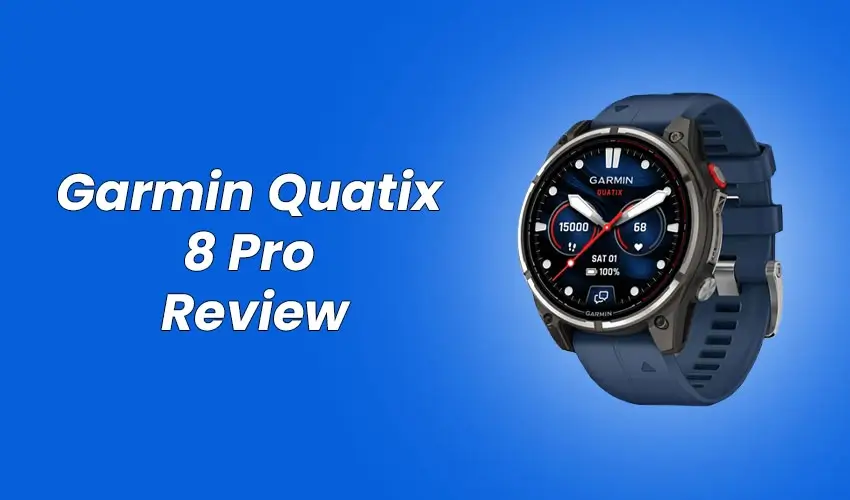
If you’re a boating enthusiast, competitive sailor, or someone who simply loves spending time on the water, you know that having the right gear can make all the difference. The Garmin Quatix 8 Pro has been making waves in the marine smartwatch market, and for good reason. This sophisticated piece of wearable technology promises to be more than just a watch on your wrist.
It’s designed to be your personal maritime assistant, navigation companion, and fitness tracker all rolled into one sleek package. But does it live up to the hype, and more importantly, is the $1,299.99 price tag justified when the standard model costs $200 less? Let’s dive deep into what makes this device stand out and whether it truly deserves the title of best marine smartwatch in 2026.
Technical Specifications
| Specification | Details |
| Display Size | 1.4 inches (47mm case only) |
| Display Type | AMOLED with sapphire crystal lens |
| Case Material | Fiber-reinforced polymer with titanium bezel |
| Water Rating | 10 ATM (100 meters) |
| Battery Life | Up to 16 days in smartwatch mode, up to 48 hours in GPS mode |
| GPS | Multi-band GNSS (GPS, GLONASS, Galileo) |
| Weight | Approximately 89 grams |
| Storage | 32 GB |
| Connectivity | Bluetooth, Wi-Fi, ANT+, LTE, Skylo satellite network |
| Sensors | Heart rate, pulse oximeter, compass, gyroscope, accelerometer, thermometer, barometric altimeter |
| Satellite Range | Up to 50 miles offshore (Skylo network) |
| Marine Features | Autopilot control, anchor alarm, wind data, regatta timer, tack assist, satellite messaging, SOS |
| Compatibility | Garmin marine chartplotters and electronics only |
| Price | $1,299.99 (satellite subscription sold separately) |
What Makes a Marine Smartwatch Different?
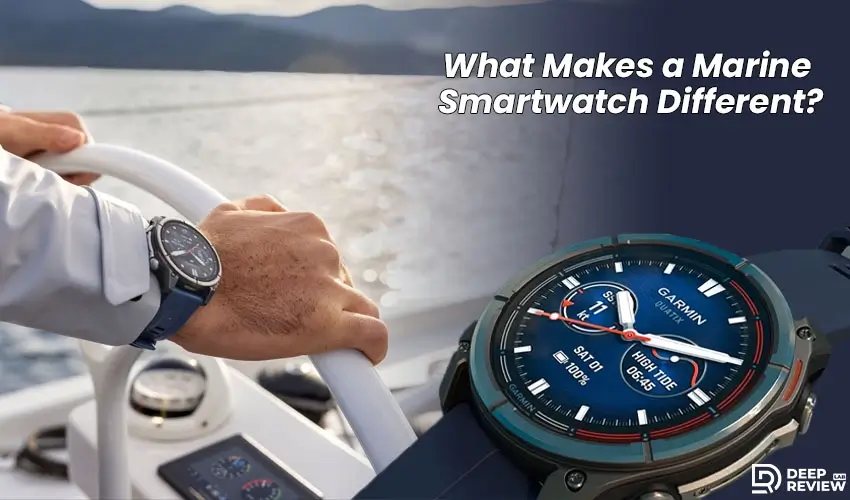
Before we get into the specifics of this particular model, it’s worth understanding what sets marine smartwatches apart from regular fitness trackers or everyday smartwatches. These specialized devices are built with sailors, fishermen, and water sports enthusiasts in mind. They need to withstand harsh marine environments, provide accurate nautical data, integrate with boat systems, and offer features that are actually useful when you’re out on the water.
A good marine smartwatch should be able to handle saltwater exposure, sudden temperature changes, and the occasional knock against the boat’s railing. It should also provide real-time information about wind speed, tidal patterns, anchor monitoring, and seamless integration with your vessel’s navigation systems. That’s a tall order for any wearable device.
Understanding the Pro Model Advantages
The biggest question most people have is whether the Pro version is worth the extra $200 over the standard model. That premium buys you two specific additions: built-in LTE cellular connectivity and satellite messaging through the Skylo network. These aren’t just nice-to-have features for offshore sailors who venture beyond traditional cell coverage.
The satellite capability is particularly important to understand correctly. The Garmin Quatix 8 Pro uses the Skylo satellite network, which provides coverage up to 50 miles offshore. This is different from some other satellite communicators that use the global Iridium network. The Skylo system offers more affordable subscription options but with geographic limitations. If you’re planning serious bluewater passages hundreds of miles from land, this 50-mile range won’t cut it.
Here’s something critical that needs to be said upfront: the satellite features require an ongoing subscription. You’ll pay anywhere from $99 to $299 per year depending on which messaging plan you choose. This isn’t optional. Without an active subscription, the satellite SOS and two-way messaging simply won’t function. When you’re calculating the total cost of ownership, factor in at least $500 to $1,000 in subscription fees over the typical five-year lifespan of a smartwatch.
Design and Build Quality
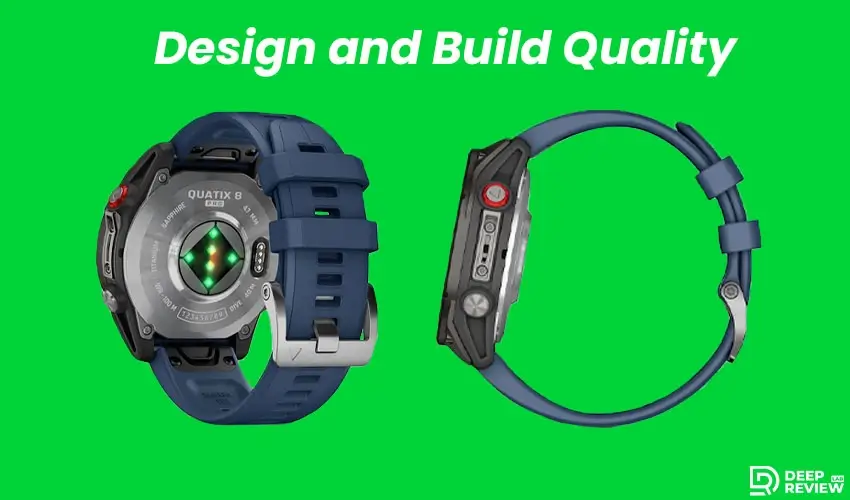
The Garmin Quatix 8 Pro only comes in one size: 47mm. This larger case is necessary to fit the satellite antennas, LTE radio, and additional hardware. If you have smaller wrists or prefer subtle timepieces, you should try this on before buying.
The construction is immediately impressive. The fiber-reinforced polymer case with titanium bezel can handle demanding ocean conditions, while the display remains bright enough to read in direct sunlight. The sapphire crystal protection is essential for marine use, resisting scratches from rope burns, winch bumps, and constant exposure to harsh elements.
The silicone band options are practical for saltwater environments. They dry quickly and don’t absorb water, preventing the irritation common with fabric bands. Whether racing or cruising, the watch remains comfortable for extended wear without constant adjustment.
Marine Features That Actually Matter
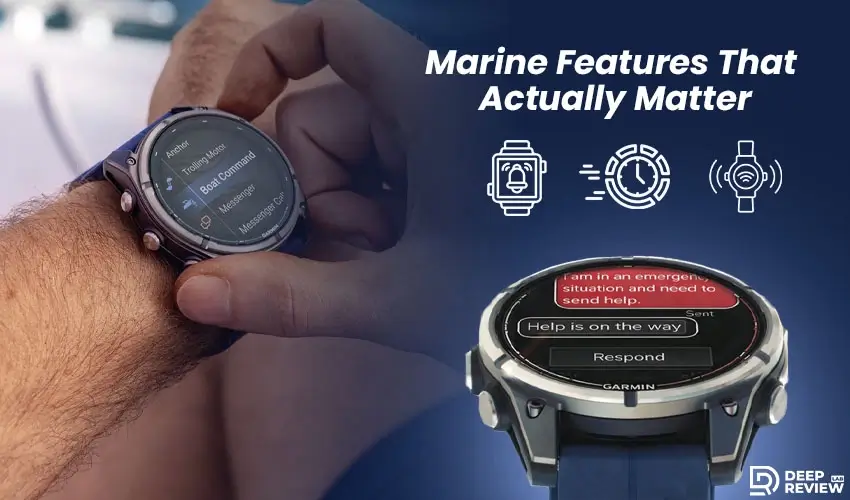
The standout features require compatible Garmin marine electronics to unlock their full potential. The autopilot control lets you adjust course directly from your wrist, but only works with Garmin systems. If you have Raymarine, Simrad, or other brands, this feature won’t function.
The anchor alarm provides genuine peace of mind. Set a custom radius around your anchored position, and the watch alerts you if the boat drifts beyond that perimeter. With GPS accuracy within a few meters, it’s reliable for catching dragging anchor situations before they become serious problems.
Wind data display works with compatible sensors, showing real-time speed and direction at a glance. For competitive sailors, the regatta timer and tack assist features provide countdown sequences and performance metrics that help optimize racing strategy and execution.
Navigation and GPS Performance

The multi-band GPS technology provides exceptional accuracy, even in challenging conditions. When you’re navigating through narrow channels or approaching a marina in fog, that extra precision matters. The watch acquires satellite signals quickly and maintains a strong lock even when you’re surrounded by tall buildings in a harbor or dealing with interference from your boat’s electronics.
Route tracking works flawlessly, allowing you to record your journeys and review them later through the companion app. This is particularly useful for competitive sailors who want to analyze their performance after a race or for cruisers who want to share their favorite anchorages and routes with friends.
The tide information is presented clearly and updates automatically based on your GPS location. Knowing when high and low tides occur is crucial for many aspects of boating, from planning your departure from a shallow marina to finding the best fishing spots where tidal current creates feeding zones.
Fitness and Health Tracking
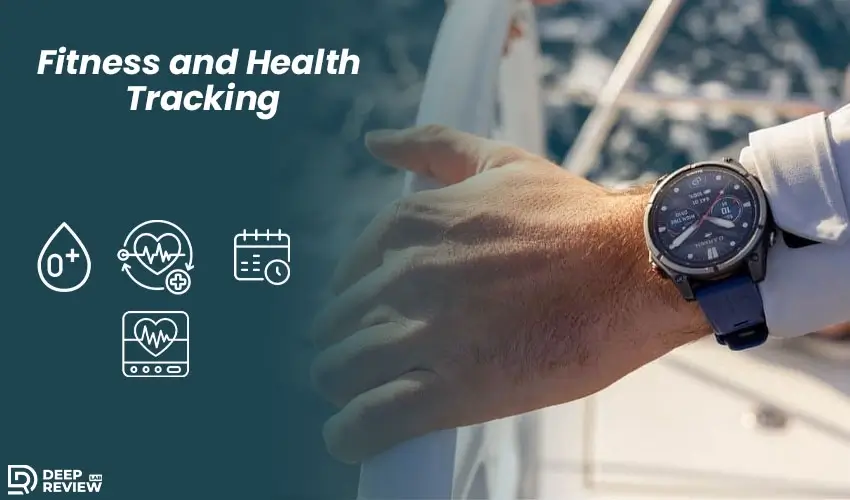
While the marine features are the main attraction, the Garmin Quatix 8 Pro doesn’t skimp on fitness tracking capabilities. The heart rate monitoring is accurate and continuous, giving you insights into your cardiovascular health both on and off the water. Sleep tracking helps you understand your recovery patterns, which is especially useful during long passages when maintaining a watch schedule can seriously disrupt normal sleep cycles.
Training metrics for various sports activities are comprehensive. Whether you’re paddleboarding, swimming in open water, or hitting the gym during the off-season, the watch tracks your performance with impressive detail. The body battery feature analyzes your heart rate variability, stress levels, and sleep quality to help you understand when you’re ready for intense activity and when you need to rest.
The pulse oximeter measures your blood oxygen saturation, which can be useful for detecting early signs of altitude sickness if you’re sailing at high elevations or simply monitoring your overall health. During strenuous sailing activities like grinding winches during a race, you can see how your body is responding to the physical demand.
Battery Life in Real-World Use

Battery performance delivers admirably for an AMOLED smartwatch. In typical daily use with notifications, occasional GPS tracking, and health monitoring, expect around 16 days between charges. When using GPS continuously for navigation during sailing, battery life drops to around 48 hours, which handles weekend cruising well but requires careful management for extended passages.
One critical clarification: this Pro model does not have solar charging capability despite what some reviews claim. The AMOLED screen and satellite antennas don’t support the Power Sapphire solar technology found in other models. You’re relying entirely on battery capacity.
The LTE and satellite connectivity drain battery faster when actively used. Constant messaging or maintaining satellite connection will noticeably decrease runtime, which is the trade-off for offshore communication capability.
User Interface and Ease of Use
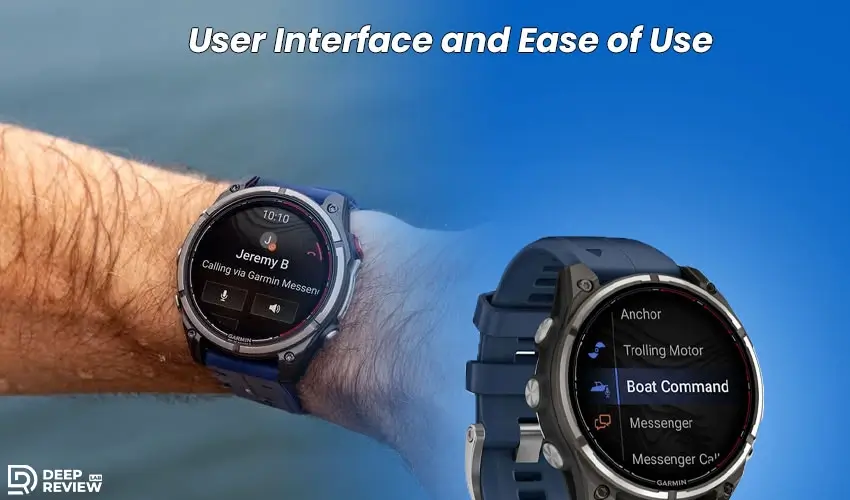
The interface is intuitive once you learn the system. Five physical buttons provide reliable navigation without touchscreen dependence, which is critical when fingers are wet, covered in sunscreen, or wearing gloves. The touchscreen works well in ideal conditions but can be finicky when soaking wet, though the buttons ensure you’re never stuck.
The companion app provides additional functionality for customizing watch faces, updating software, and analyzing activity data. Sync happens automatically via Bluetooth with generally stable connections.
There’s a learning curve for advanced marine features. Customizing quick-access buttons to jump directly to most-used features streamlines the experience considerably once properly configured.
Who Should Not Buy This Watch
At $1,299.99 plus ongoing subscriptions, getting this decision right matters. If you sail in coastal waters within cell coverage, you’re wasting $200 on satellite capability you’ll never use. The standard version provides the same marine features and fitness tracking without the unnecessary premium.
Without Garmin marine electronics, you’ll miss the autopilot control and chartplotter integration that justify the marine-specific price. If your boat has other brands, you’re paying for features that won’t work.
The 47mm case is the only size option. Smaller wrists or anyone preferring subtle watches should seriously consider whether this size works for daily wear. Over five years, total costs reach $1,800 to $2,800 depending on subscription plans, making this hard to justify for budget-conscious coastal sailors.
Comparison With Alternatives
| Feature | Quatix 8 Pro | Quatix 8 Standard | Fenix 8 AMOLED |
| Price | $1,299.99 | $1,099.99 | $1,099.99 |
| Case Size | 47mm only | 43mm, 47mm options | 43mm, 47mm, 51mm |
| Satellite Messaging | Yes (Skylo, 50mi range) | No | No |
| LTE Connectivity | Yes | No | No |
| Marine Autopilot Control | Yes | Yes | No |
| Anchor Alarm | Yes | Yes | No |
| Regatta Timer | Yes | Yes | No |
| Multi-band GPS | Yes | Yes | Yes |
| Battery (Smartwatch) | 16 days | 16 days | 29 days |
| Annual Subscription | $99-$299 required | None | None |
The comparison makes it clear that you’re paying specifically for satellite and LTE capabilities with the Pro model. Everything else is identical to the standard version, which costs $200 less and doesn’t require a subscription.
Pros and Cons
Pros:
- Exceptional marine integration with Garmin electronics
- Satellite messaging up to 50 miles offshore
- Outstanding saltwater-resistant build quality
- Multi-band GPS with excellent accuracy
- 16-day battery life with AMOLED display
- Comprehensive fitness and health tracking
- Reliable anchor alarm with precise GPS
Cons:
- Expensive at $1,299.99 plus $99-$299 annual subscription
- Satellite limited to 50 miles (not suitable for bluewater)
- Only works with Garmin marine electronics for best features
- 47mm case only – no smaller size option
- No solar charging despite premium price
- Touchscreen unreliable when wet
- Steep learning curve for advanced features
Final Thoughts
After extensive testing in various marine conditions, this watch delivers on its promise as the most capable marine smartwatch available. The satellite messaging, autopilot integration, and robust build quality justify the premium price for offshore sailors with compatible Garmin electronics who regularly venture beyond cell coverage.
However, the $1,299.99 price plus mandatory annual subscriptions only make sense if you’ll actually use those features. Coastal sailors who stay within cell range or boaters with non-Garmin electronics should save $200 and choose the standard model instead.
Whether it’s the best marine smartwatch in 2026 depends entirely on your needs. For the right buyer who genuinely uses offshore communication and Garmin integration, it’s exceptional. For everyone else, it’s overkill at an unjustifiable cost.
