


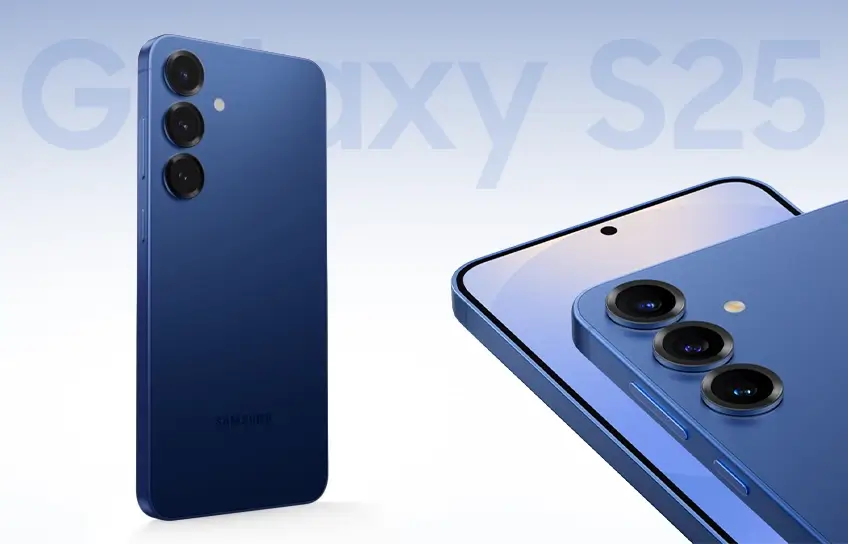
Buying a flagship smartphone in 2026 is a big decision. With prices hovering close to $800 and newer models arriving every year, it can feel hard to know when the right time to upgrade actually is. The samsung galaxy s25 sits right at that crossroads, offering a compact and powerful Android experience without pushing you into four-figure territory. Since the Samsung s25 release date of February 3, 2026, it has been one of the most talked-about compact flagships on the market. This review covers everything you need to know before buying.
Samsung Galaxy S25 Specifications at a Glance
| Feature | Details |
| Display | 6.2-inch Dynamic AMOLED 2X |
| Resolution | 2,340 x 1,080 pixels (FHD+) |
| Refresh Rate | 1Hz to 120Hz adaptive |
| Peak Brightness | 2,600 nits |
| Processor | Qualcomm Snapdragon 8 Elite for Galaxy |
| RAM | 12GB LPDDR5X |
| Storage | 128GB / 256GB / 512GB (no microSD) |
| Rear Cameras | 50MP main (OIS) + 12MP ultra-wide + 10MP 3x telephoto |
| Front Camera | 12MP with autofocus |
| Video | Up to 8K @ 30fps, LOG video support |
| Battery | 4,000mAh |
| Wired Charging | 25W |
| Wireless Charging | 15W |
| OS | Android 15, One UI 7 (upgradeable to One UI 8) |
| Dimensions | 146.9 x 70.5 x 7.2mm, 162g |
| Water Resistance | IP68 |
| Connectivity | Wi-Fi 7, Bluetooth 5.4, 5G, NFC |
| Software Support | 7 years of OS and security updates |
| Starting Price | $719.99 |
Design and Build

Open the box and the S25 will look immediately familiar, especially if you have owned a Samsung flagship in the past few years. Samsung has kept the same overall shape, the flat screen, the rounded corners, and the slim profile that has defined the S-series since the Galaxy S22. This year’s changes are subtle: slightly thinner bezels, a marginally slimmer frame shaving off about 0.4mm, a small reduction in weight, and bold black rings around the rear camera lenses that give the back panel a more premium look. For reference, the samsung galaxy s25 dimensions come in at 146.9 x 70.5 x 7.2mm and a weight of just 162 grams, making it one of the lightest compact flagships you can buy today.
The build quality is solid. An Armor Aluminum frame wraps around the device, and Corning Gorilla Glass Victus 2 protects both the front and back. The phone carries an IP68 rating, meaning it can handle dust and water submersion without issue.
Color Options and Missing Features
When it comes to samsung s25 colors, you have four standard options to choose from: Mint, Icyblue, Navy, and Silver Shadow. Three additional exclusive shades, including Coralred, Pinkgold, and Blueblack, are available directly through Samsung’s website. The matte finishes do a reasonable job of resisting fingerprints, though some smudging is inevitable.
A few things are worth noting before you commit. There is no headphone jack, no microSD card slot for expanding storage, and no charger included in the box. You do get a USB-C cable, but the charger is a separate purchase. When you factor in the samsung s25 price starting at $719.99, these omissions are worth keeping in mind as part of your total spending plan. They are not unusual for a modern flagship, but budgeting for accessories upfront makes sense.
Display Quality

The Galaxy S25 features a 6.2-inch Dynamic AMOLED 2X screen with a resolution of 2,340 by 1,080 pixels, an adaptive refresh rate that ranges from 1Hz all the way up to 120Hz, and a peak brightness of 2,600 nits. If you have been browsing the samsung s25 specs ahead of this review, you will notice these display figures carry over from the S24, and that is not a bad thing. The screen was excellent last year and remains excellent now.
Colors are rich and vibrant, text is sharp and easy to read, and the high brightness means you can use the phone comfortably outdoors even on a sunny day. The 120Hz adaptive refresh rate keeps scrolling and animations feeling fluid while also conserving battery when the screen does not need to refresh as frequently.
AI ProScaler
New to the S25 is a software feature called ProScaler, developed with Qualcomm, which uses artificial intelligence to upscale on-screen content for a sharper visual result. Samsung has not been entirely transparent about when exactly it activates, and most users will not notice it working in the background. What they will notice is that the screen looks consistently crisp and clear across apps, videos, and photos.
One limitation worth mentioning is that the S25 does not carry the anti-reflective glass coating found on the S25 Ultra. Under direct sunlight, there is some glare to manage, though the high brightness helps offset it.
Performance
If there is one area where the Galaxy S25 genuinely impresses, it is performance. Every S25 model worldwide now runs on the Qualcomm Snapdragon 8 Elite for Galaxy, an overclocked version of Qualcomm’s most powerful chip, built in close collaboration with Samsung. Looking at the full samsung galaxy s25 specifications, this global chip consistency is one of the most welcome changes of the entire lineup. In previous years, buyers in the UK and Europe received a Samsung Exynos chip that lagged behind its American counterpart. That frustrating inconsistency is finally gone.
The performance improvements are substantial. Benchmark tests show nearly 50% better CPU performance compared to the Galaxy S24. Real-world use reflects those numbers too. Apps open instantly, multitasking between demanding applications is smooth, and gaming sessions run without dropped frames or significant slowdown. The phone does warm up slightly under sustained heavy use, but it never becomes uncomfortable to hold.
RAM and Storage
The base S25 now comes with 12GB of RAM, up from 8GB on the S24. This change matters more than it might sound. More RAM means the phone can keep more apps active in the background, reducing the need to reload them when you switch between tasks. Storage options include 128GB, 256GB, and 512GB. Since there is no microSD card support, picking the right storage tier from the start is important. For most users who take photos and videos regularly, the 256GB model is the safer long-term choice.
Camera Performance

The camera hardware on the S25 has not changed from last year. You get a 50MP main camera with optical image stabilization, a 12MP ultra-wide lens with a 120-degree field of view, a 10MP telephoto camera with 3x optical zoom, and a 12MP front camera. At first glance, this might seem disappointing. In practice, the results are very good.
Samsung has improved the underlying image processing through a feature called the ProVisual Engine. The biggest visible change is in color accuracy. Photos look more natural and realistic compared to older Samsung phones, which had a tendency to oversaturate colors and over-brighten the final result. Across many samsung galaxy s25 reviews from real-world testers, the improvement in skin tones has been one of the most consistently praised upgrades, with colors looking noticeably more true to life. Fine details and textures also resolve better without that oversharpened quality that Samsung cameras were once known for.
Low Light, Zoom, and Selfies
In low-light conditions, the main camera produces noticeably different results depending on how you shoot. When left on automatic, the camera activates Night Mode on its own and delivers a darker, more true-to-the-scene result. When you manually select Night Mode yourself, the output is brighter, shadow detail improves significantly, and the overall image looks more polished. For anyone shooting indoors or after sunset, manually triggering Night Mode is worth the extra tap. The ultra-wide lens holds up reasonably well in good light but loses detail and picks up more noise once the light drops, so it is best reserved for daytime wide shots.
The telephoto camera at 3x delivers sharp, well-composed results and can even focus closely enough for detail shots of objects like food or small products. Beyond 10x digital zoom, image quality drops off sharply and the results are only useful for reading distant text or getting a rough sense of a faraway subject, not for photos worth keeping.
The selfie camera is a strong performer. It delivers sharp, well-detailed results and handles autofocus better than many competing front cameras. Portrait mode adds depth-of-field blur that can be adjusted after the fact in the Gallery app.
New Video Features
Video recording gets two meaningful additions this year. LOG video recording, a format long used by professional cameras and already available on iPhones, is now supported on the S25. It captures the full dynamic range of the sensor in a flat, low-contrast format designed for color grading in editing software. It is a feature aimed at enthusiasts and content creators rather than casual users.
The second addition is Audio Eraser, which analyzes recorded video and allows you to reduce or eliminate specific background sounds such as wind, traffic, or crowd noise. It works surprisingly well and is the kind of practical feature that many everyday users will genuinely appreciate.
Connectivity and Audio
On the connectivity front, the S25 upgrades from the S24’s Wi-Fi 6E to Wi-Fi 7, which means faster speeds and better performance on congested networks. In real-world testing on T-Mobile’s 5G UC network, the phone reached download speeds of up to 463Mbps. On a Wi-Fi 6 access point, it hit 512Mbps down, which is strong for everyday use. The phone also supports dual SIM with a physical nano-SIM and eSIM, NFC for contactless payments, and USB-C 3.2 with DisplayPort output for connecting to a monitor or TV.
Audio is handled by stereo speakers, with one driver firing from the earpiece and one from the bottom edge. The top volume is loud enough to fill a small room comfortably, and the speakers deliver good clarity with more bass presence than most compact phones. Call quality is clean, with the phone doing a solid job of filtering out background noise during voice calls. There is no headphone jack, so wireless headphones are the way to go for better audio quality.
Battery Life and Charging

The S25 carries a 4,000mAh battery, the same size as the S24. The numbers back up the real-world experience: in a continuous HD video streaming test over Wi-Fi at full brightness, the S25 lasted 14 hours and 15 minutes, which is an improvement over the S24’s 13 hours and 5 minutes on the same test. Most users report finishing a normal day with around 20 to 30 percent remaining, and the phone has not failed to reach bedtime in day-to-day use. The Snapdragon 8 Elite’s efficiency and One UI 7’s battery management are doing meaningful work behind the scenes to get more life out of the same capacity.
Charging speeds are where the S25 falls a little short of the competition. Connected to a 25W charger, it reaches around 64% in 30 minutes and a full charge in 65 minutes. That is slightly faster than the iPhone 16 at 25W, but considerably slower than many Android rivals. Wireless charging is supported at 15W. The S25 Plus and Ultra both support 45W wired charging, which is a real difference if you regularly need a fast top-up before heading out. No charger is included in the box.
Software and Galaxy AI

The Galaxy S25 runs Android 15 with Samsung’s One UI 7 on top, backed by seven years of OS and security updates. That matches what Google offers and puts it well ahead of most Android competitors.
Galaxy AI is arguably the most compelling reason to consider the S25 over older Samsung models. Among all the samsung galaxy s25 features introduced this year, the deeper integration of Google’s Gemini as the default assistant stands out the most. It has replaced Bixby and now works seamlessly across both Samsung and Google apps. You can ask it to find pet-friendly restaurants and send the list directly to a contact, search your photo gallery using plain language descriptions like “photos of my dog from last summer,” or adjust settings by simply describing what you want to do.
Key AI Features
Now Brief delivers personalized daily summaries directly to your home screen, covering weather updates, calendar events, traffic conditions, and more throughout the day. It is a small but genuinely useful addition that reduces the need to actively check multiple apps for information you need regularly.
Circle to Search, introduced with the S24, returns in an improved form. It now supports searching for audio and music playing on your device, not just images and text on screen. Cross App Actions let you complete multi-step tasks across different apps with a single prompt, saving meaningful time for users who work across multiple applications throughout the day.
One UI 7 is noticeably snappier than its predecessor. Animations feel tighter, the lock screen loads faster, and the new AI Select tool lets you draw around anything on your screen to instantly search, translate, or summarize it, without switching apps.
Pros and Cons
Pros
- Snapdragon 8 Elite chip, nearly 50% faster than the S24
- Compact and lightweight at 162g
- 12GB RAM across all models
- 7 years of OS and security updates
- Genuinely useful Galaxy AI and Gemini integration
- LOG video and Audio Eraser for content creators
Cons
- Same camera hardware for three generations
- Slow 25W wired charging, no charger in the box
- No microSD card slot, base storage is only 128GB
- Design unchanged since Galaxy S22
- No anti-reflective screen coating
Conclusion
The Galaxy S25 is not a reinvention, but it is a well-rounded upgrade for anyone coming from an older device. The Snapdragon 8 Elite is a meaningful performance leap, Galaxy AI delivers real daily value, and the compact form factor is increasingly hard to find among true flagships. If yu own an S24, the changes are too incremental to justify the switch. If you are on anything older, the S25 earns its $719.99 starting price without needing much convincing.
