
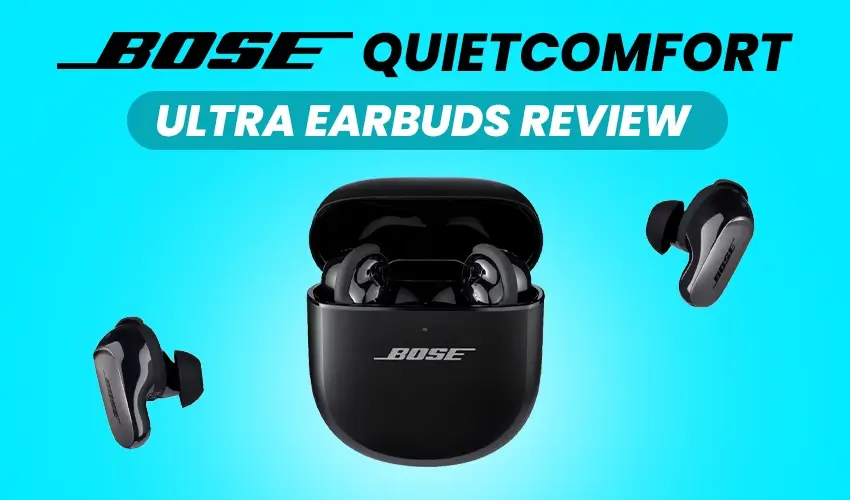
Bose QuietComfort Ultra Earbuds Review: Do They Live Up to the Hype?
When Bose dropped the QuietComfort Ultra Earbuds at $299, the internet had opinions. Some called them overpriced. Others claimed they were the noise-canceling champions the world needed. In this bose quietcomfort ultra earbuds review, I spent weeks testing them everywhere from crowded subway cars to quiet coffee shops to find out which side is right.
Here’s the thing about Bose: they practically invented consumer noise cancellation, so expectations are always sky-high. But in 2025, with Sony, Apple, and others pushing boundaries, being a legacy brand isn’t enough anymore. I went beyond the marketing claims, real-world hype, and polarized user reactions to see how these earbuds actually perform day to day.
This comprehensive bose quietcomfort ultra earbuds review cuts through the hype to answer one question: are these $299 earbuds actually worth your hard-earned money, or should you save your cash for something else?
Who Wins With These Earbuds?
Let’s not waste time. If you’re deciding whether to buy these right now, here’s what matters most. The QuietComfort Ultra Earbuds deliver the best active noise cancellation you’ll find in wireless earbuds today, period. They’re also genuinely comfortable for all-day wear, which matters more than most people think. The sound signature leans energetic with punchy bass and bright highs, perfect for modern pop, hip-hop, and electronic music, though classical and jazz lovers might want more balance.
However, they make real compromises. Battery life sits at just six hours with ANC on, trailing competitors by hours. There’s no wireless charging built in at this price point, which feels outdated. And that Immersive Audio feature everyone talks about? It’s interesting but drains your battery even faster and doesn’t work well with all music genres. If world-class noise cancellation and comfort trump everything else for you, especially for travel or noisy commutes, these justify their price. If you need longer battery life or perfectly neutral sound, look elsewhere.
Design and Build: Premium Looks With Practical Purpose
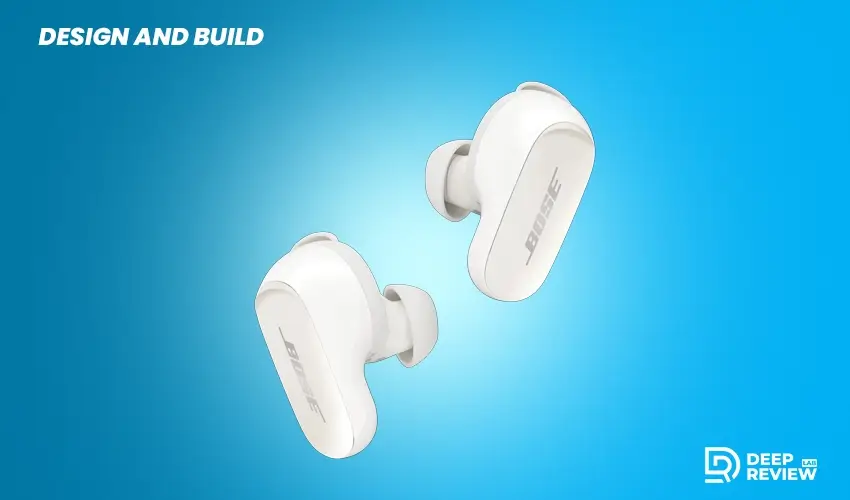
These earbuds make a statement when you unbox them. Unlike Apple’s minimalist stems or Sony’s compact buds, Bose uses a hybrid design combining a traditional earbud body with a short stem that houses crucial microphones and processing hardware for noise cancellation and call quality.
Each earbud features a metallic finish that looks premium, though the glossy surface attracts fingerprints instantly. Despite looking chunky, they weigh just 6.24 grams each, light enough to forget you’re wearing them.The real magic? Bose’s signature stability bands. These flexible wing tips tuck into your outer ear curves, anchoring the earbuds without relying solely on ear tip seal. With three band sizes and three tip sizes, you get nine fit combinations. The right fit transforms these from good to great, affecting both comfort and sound quality, especially bass response.
Now the frustrating part. The bose quietcomfort ultra earbuds case lacks wireless charging at $299 in 2025. That’s inexcusable penny-pinching. Bose sells a wireless charging cover separately, but it should’ve been included. The case itself is compact with USB-C charging and secure magnetic closure, though the LED indicator patterns take time to decode.
Comfort That Actually Lasts
After wearing these for six-hour stretches during work sessions and long flights, I’m confident saying Bose nailed comfort. The ultra-soft silicone tips feel cloud-like, creating an excellent seal without burrowing into your ear canal. This matters after hour three, when firmer tips start causing fatigue.
The stability bands initially seemed like potential irritants but actually enhance comfort by distributing weight across your outer ear. They prevent that slow-slide feeling you get with tip-only designs. I tested these during everything from desk work to brisk walks, and they stayed planted without adjustment.
Weight distribution impresses too. At just 6.24 grams per earbud (the modest bose quietcomfort ultra earbuds weight), combined with the stability band design, you don’t get that heavy-in-your-ears feeling even after marathon sessions. After four hours straight, no soreness, no pressure points, no fatigue.
One caveat: the overall footprint is substantial. If you’ve struggled with larger earbuds before, try these first. The secure fit that works great for average and larger ears might overwhelm smaller ear canals despite nine fit combinations.
Noise Cancellation: Where Bose Flexes Its Muscles
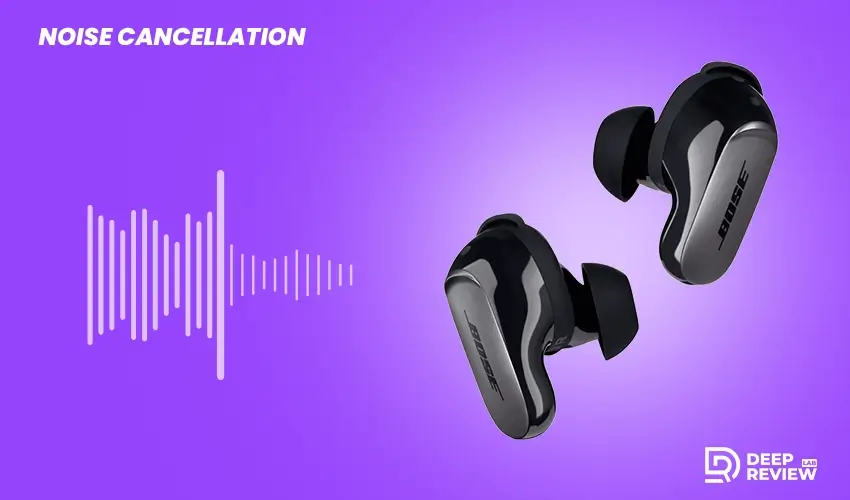
This is where things get interesting. Any honest bose quietcomfort ultra earbuds anc review needs to acknowledge that Bose absolutely dominates here. After decades of refining active noise cancellation technology, they’ve created something genuinely special with these earbuds.
How Well Does It Actually Work?
The dual-microphone system uses both inward and outward-facing mics to monitor and counteract external sounds in real time. This setup handles everything from the low rumble of airplane engines to higher-frequency sounds like keyboard clacking and conversation. In practice, this translates to remarkable quiet across diverse scenarios.
Testing in my usual haunts revealed the strength. Walking down a busy Manhattan street, traffic noise faded to background murmur. In a packed Starbucks with conversations happening on all sides, voices became indistinct ambient sound rather than distracting chatter. During a cross-country flight, the constant engine drone that usually forces me to crank volume simply disappeared, letting me enjoy podcasts at comfortable levels.
The Aware Mode (Bose’s transparency feature) works equally well. A quick tap switches from isolation to environmental awareness using those external microphones. Unlike artificial-sounding transparency modes I’ve tested, this sounds natural. Conversations happen without removing earbuds, and you maintain appropriate awareness for crossing streets or catching announcements.
Customization That Makes Sense
What separates these from competitors is the adjustable nature of everything. Through the Bose Music app, you can fine-tune ANC intensity on a sliding scale from full cancellation to full transparency, finding the perfect sweet spot for any situation. Want complete isolation for focused work? Done. Need mild reduction for an outdoor walk? Easy.
ActiveSense adds another clever layer by automatically detecting sudden loud sounds and briefly reducing cancellation to let them through. If a car horn blares or someone calls your name, you won’t be oblivious. It works seamlessly in practice, though you can disable it if you prefer consistent full-strength cancellation.
Sound Quality: Energetic But Not Neutral
Sound quality splits opinion, which makes sense given how personal audio preferences are. Among the many bose quietcomfort ultra earbuds features available, the tuned sound signature emphasizes both bass and treble, creating a vibrant, energetic presentation. If you love modern pop, electronic music, or hip-hop, you’ll probably love these. If you’re chasing studio-reference neutrality, you won’t.
The Bass Response
Bass hits hard without overwhelming everything else. Electronic tracks with deep sub-bass have real weight and impact. Hip-hop beats punch through with authority. The low end adds energy to music without muddying vocals or midrange instruments. Some listeners might find it emphasized compared to flat studio playback, but for most genres and casual listening, it’s exciting rather than excessive.
After testing with everything from Kendrick Lamar to Daft Punk, the bass impresses consistently. It’s not bloated or boomy, just present and powerful when the music calls for it.
Vocals and Midrange
Midrange frequencies, where most vocals and instruments live, are slightly recessed compared to the boosted bass and treble. Vocals still come through clearly with good detail and presence. Male voices have satisfying warmth, while female vocals retain clarity and expressiveness. The recessed mids become more noticeable compared to audiophile equipment, but for wireless earbuds at this price, performance remains solid.
I spent hours listening to vocal-heavy tracks from artists like Adele and John Mayer. Vocals never disappeared or sounded thin, though they didn’t pop quite like they do on my studio monitors.
Treble Sparkle and Limits
Bose really pushed the treble here, emphasizing sparkle and air in upper frequencies. This creates clarity and detail that makes music feel alive and engaging. Cymbals shimmer beautifully, guitar strings have bite, and hi-hat patterns cut through cleanly. However, elevated treble occasionally makes sibilant sounds in vocals more pronounced. Some already-bright recordings can sound slightly harsh at higher volumes.
The CustomTune technology runs a brief calibration every time you put the earbuds in, measuring how your unique ear shape affects sound and adjusting output to compensate. Does this make a dramatic difference? Debatable. But it’s thoughtful engineering that shows attention to detail.
The Bose Music app includes a three-band equalizer for adjusting bass, mid, and treble levels. While more limited than five or six-band EQs some competitors offer, it provides enough flexibility to tailor sound to your preferences. Preset modes like Bass Boost and Treble Reducer offer quick adjustments.
Immersive Audio: Cool Tech, Mixed Results
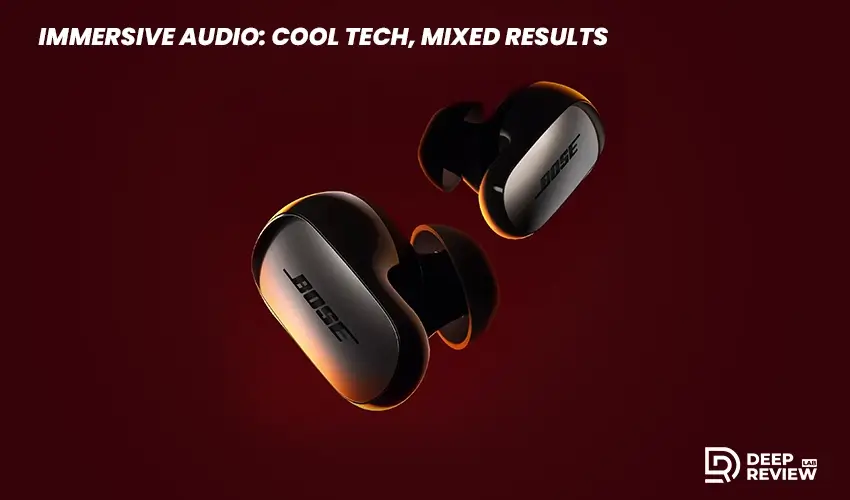
Bose Immersive Audio uses spatial processing and head tracking to make music sound like it’s coming from around you rather than inside your head. In theory, impressive. In practice, wildly inconsistent.
Orchestral pieces and live recordings benefit from the expanded soundstage, with instruments feeling separated in three-dimensional space. But electronic music, pop, and heavily produced tracks often sound artificially spread out rather than immersive. The head tracking feels like technology searching for a problem. It’s neat initially, then you wonder why you need it.
The real dealbreaker? Battery life plummets from six hours to four when Immersive Audio is enabled. That’s a significant hit. Treat this as an optional enhancement for specific content like movies or classical music, not a default setting. For everyday listening, standard stereo mode sounds better and lasts longer.
Battery Life: Adequate But Not Leading
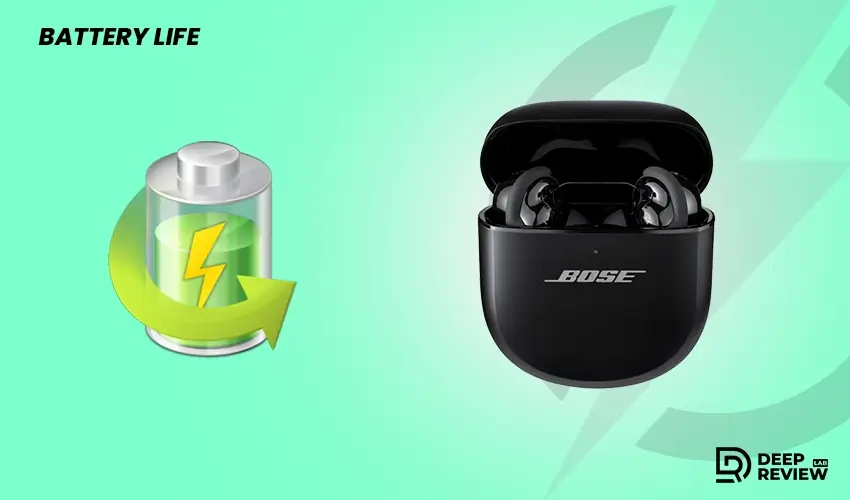
Battery performance sits in adequate territory without being exceptional. In this bose quietcomfort ultra earbuds review, real-world testing with noise cancellation enabled and Immersive Audio disabled consistently delivered around six hours of playback per charge. This aligns with Bose’s specifications and handles most daily scenarios like commutes and work sessions.
However, six hours behind competitors meaningfully. The Sony WF-1000XM5 manages over nine hours under similar conditions. For users with long flights or marathon listening sessions, this difference matters.
The bose quietcomfort ultra earbuds charging case provides three additional full charges, bringing total battery life to around 24 hours before needing a power outlet. This covers several days of typical use respectably. The case charges via USB-C, and a quick 20-minute charge provides up to two hours of listening when you’re in a pinch.
Enabling Immersive Audio mode significantly impacts battery life, reducing playback to around four hours per charge. This limitation forces you to choose between the spatial audio feature and longer battery life, which feels like an unnecessary compromise at this price point.
The lack of built-in wireless charging continues to perplex. At $299, this feels like an oversight, especially when many mid-range earbuds now include it standard. While you can purchase a wireless charging case cover separately, this shouldn’t be necessary on flagship earbuds.
Connectivity and Call Quality
Crystal Clear Conversations
Call quality on the QuietComfort Ultra Earbuds is excellent, showcasing Bose’s expertise in audio processing and microphone technology. The adaptive microphone system impressively isolates your voice from background noise, making conversations clear even in challenging environments.
Testing in various noisy settings including busy streets and windy conditions, call recipients consistently reported hearing me clearly. The earbuds effectively suppressed background sounds while keeping my voice natural and intelligible. Wind noise, often problematic for earbuds with external microphones, was well-controlled thanks to dedicated wind reduction.
The self-voice feature thoughtfully allows you to hear your own voice naturally during calls, preventing the strange sensation of speaking with your ears completely sealed off. The level of self-voice feedback is adjustable in the app.
Rock-Solid Wireless Performance
Connectivity is rock-solid thanks to Bluetooth 5.3 support. The bose quietcomfort ultra wireless earbuds maintain stable connections up to about 30 feet from source devices with minimal dropouts even through obstacles like walls. Initial pairing is quick and easy. If you need to connect to a new device, activating bose quietcomfort ultra earbuds pairing mode is as simple as pressing and holding the button on the case until the LED starts blinking.
The earbuds support Snapdragon Sound with aptX Adaptive codec, delivering higher-quality audio with lower latency on compatible Android devices. For Android users with recent Qualcomm-powered phones, this means better sound quality and tighter audio-video synchronization. iPhone users are limited to AAC codec, which still sounds good but doesn’t take advantage of the advanced codec support.
Multipoint connectivity was added via software update, and the bose quietcomfort ultra earbuds multipoint feature allows connecting to two devices simultaneously. This is incredibly convenient if you regularly switch between, say, a laptop for work and a phone for calls and music. Transitions between devices happen smoothly and automatically when audio plays from either source.
App and Controls
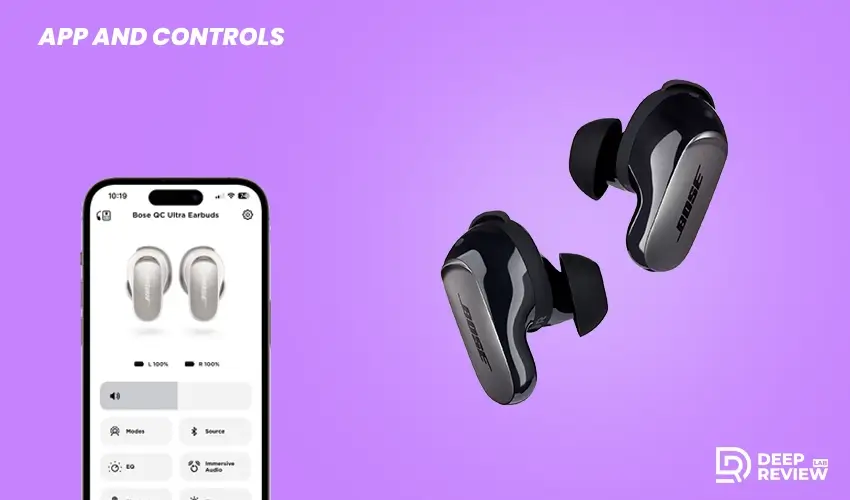
The Bose Music app serves as control center for these earbuds with a generally well-designed interface. It’s clean and intuitive, making it easy to access features without digging through multiple menus. Within the app, you can adjust equalizer settings, control noise cancellation levels, enable or disable Immersive Audio, and customize the long-press shortcut function on each earbud. The app also handles firmware updates and provides access to product tutorials and support resources, serving as a helpful companion to the bose quietcomfort ultra earbuds manual that comes in the box.
The three-band equalizer covers essentials with separate controls for bass, mid, and treble frequencies. You can create custom EQ profiles or use built-in presets. Changes apply in real-time, letting you hear effects immediately as you adjust sliders.
One particularly useful feature is the ability to adjust the intensity of different listening modes. You can fine-tune exactly how much noise cancellation or transparency you want, creating custom mode settings matching your preferences. This level of control goes beyond simple on-off toggles many earbuds offer, and understanding these options is essential when learning how to use bose quietcomfort ultra earbuds effectively.
Mastering the Touch Controls
Physical controls on the earbuds themselves are straightforward and reliable, though mastering the bose quietcomfort ultra earbuds controls takes a bit of practice initially. Each earbud features a touch-sensitive surface responding to taps and swipes. Single tap plays or pauses, double tap skips forward, triple tap skips back, and swiping up or down adjusts volume. These gestures work consistently, though they require firm, deliberate touches rather than light taps.
The long-press function is customizable, letting you assign it to toggle between listening modes, activate your voice assistant, or access a Spotify shortcut. Having control over this function adds useful flexibility to match your usage patterns.
How They Stack Up Against Competitors
The QuietComfort Ultra Earbuds face stiff competition from the Sony WF-1000XM5, Apple AirPods Pro 2, and Technics EAH-AZ100. Against the Sony WF-1000XM5, Bose wins on comfort and noise cancellation, but Sony delivers better battery life, more balanced sound, wireless charging, and a more feature-rich app. If sound quality matters most, go Sony. If noise isolation is your priority, many still choose the Bose Ultra QuietComfort earbuds, as highlighted throughout this bose quietcomfort ultra earbuds review.
The Apple AirPods Pro 2 excel for iPhone users with seamless iOS integration and spatial audio, plus they’re smaller and lighter. But they can’t match Bose’s ANC performance. Android users should skip Apple entirely due to codec limitations. The Technics EAH-AZ100 delivers audiophile-grade sound quality at a similar price but compromise on comfort.
Choose them if pure audio fidelity trumps everything else. Otherwise, Bose offers better overall balance with superior noise cancellation and comfort. Price-wise, these sit at $299, though sales often drop them to $249. Whether that premium is justified depends on how much you value elite noise cancellation and comfort versus longer battery life or neutral sound.
Who Should Buy These (And Who Shouldn’t)
These earbuds make the most sense for specific user types. If you frequently travel, especially by air, and want the absolute best noise cancellation available in earbuds, this bose quietcomfort ultra earbuds review confirms that the QuietComfort Ultra models deliver exceptional performance. The combination of powerful ANC and all-day comfort makes them ideal for long flights or train rides where ambient noise can be overwhelming.
Commuters dealing with noisy public transportation daily will also appreciate what these offer. The ability to create a quiet bubble even in subway car or busy bus chaos is genuinely impressive. Enjoying your music or podcasts without cranking volume to unsafe levels is both healthier for your hearing and more enjoyable.
People working in noisy environments or open offices might find these earbuds valuable for maintaining focus. Excellent noise cancellation helps create productive environments even when surrounded by distractions. The relatively secure fit means wearing them for hours without discomfort during long work sessions.
Users who prioritize comfort over compact size will also be happy. If you’ve tried smaller, lighter earbuds and found them uncomfortable or insecure during extended wear, the Bose design with stability bands might be exactly what you need.
Who Should Look Elsewhere
However, these earbuds might not be the best choice for everyone. If you’re an audiophile seeking the most neutral, accurate sound reproduction possible, you’ll find the bass and treble emphasis here to be a compromise. While sound quality is good, it’s tuned for consumer appeal rather than studio reference accuracy.
Budget-conscious buyers should consider whether the premium price is justified for their needs. Very good wireless earbuds are available for significantly less money offering solid noise cancellation and sound quality. The QuietComfort Ultra earbuds are excellent, but they’re not necessarily twice as good as earbuds costing half as much.
Battery life priorities also matter. If you regularly need more than six hours of continuous playback without recharging, these might not be ideal. Competitors with significantly longer battery life would better serve users with extended listening needs.
Conclusion
So do the Bose QuietComfort Ultra Earbuds live up to the hype? In this bose quietcomfort ultra earbuds review, the answer is yes, but with caveats. They deliver the absolute best noise cancellation you’ll find in wireless earbuds today, paired with all-day comfort that makes them perfect for frequent travelers and daily commuters. The sound is energetic and engaging, though not audiophile-neutral.
What holds them back are real compromises like short battery life, no built-in wireless charging, and that $299 price tag. If noise cancellation and comfort matter most to you and you can accept those trade-offs, these earbuds justify their premium price. For everyone else, the Sony WF-1000XM5 might be the smarter buy.