


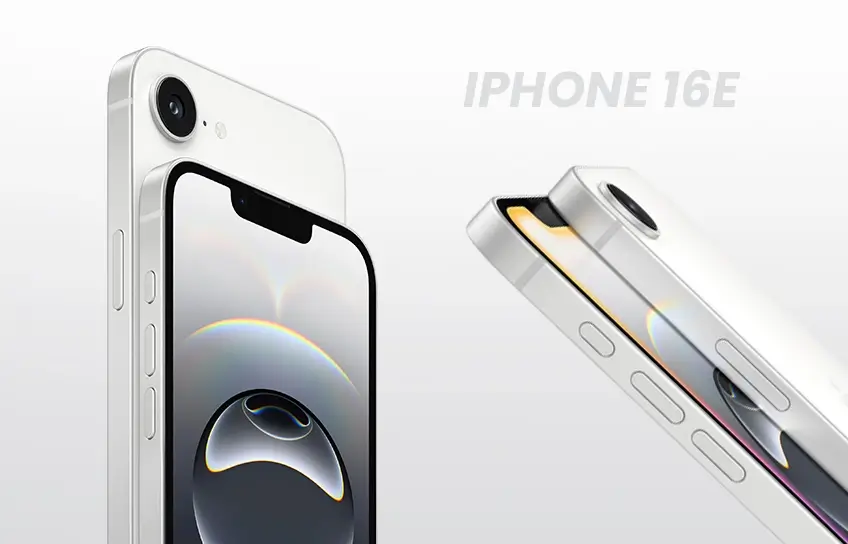
A friend picked up the iPhone 16e last month, handed it to her husband, and asked him what he thought. He swiped around for a few seconds, shrugged, and said, “It just works.” The man had been using a five-year-old iPhone for years and had no idea what MagSafe, Dynamic Island, or a 120Hz display even meant. By the next day, he had already bought one.
That reaction, quiet satisfaction rather than excitement, tells you almost everything you need to know about this phone. The iphone 16e landed on February 28, 2025, which is the iphone 16e release date Apple announced just nine days earlier, immediately replacing both the iPhone SE and the iPhone 14 in Apple’s lineup.
At $599, it cost $170 more than the SE it replaced, and that single fact ignited a debate that split the tech world almost overnight.
iPhone 16e Full Specifications
| Feature | Details |
| Announced | February 19, 2025 |
| Released | February 28, 2025 |
| Display | 6.1-inch Super Retina XDR OLED, HDR10 |
| Resolution | 1170 x 2532 pixels, 460 ppi |
| Refresh Rate | 60Hz |
| Peak Brightness | 1,200 nits (HDR), 800 nits (typical) |
| Chipset | Apple A18 (3nm) |
| CPU | Hexa-core (2×4.04 GHz + 4×2.20 GHz) |
| GPU | Apple GPU (4-core) |
| RAM | 8GB |
| Storage Options | 128GB / 256GB / 512GB |
| Rear Camera | 48MP, f/1.6, 26mm wide, OIS, PDAF |
| Front Camera | 12MP, f/1.9, 23mm wide, PDAF |
| Video | 4K at 24/25/30/60fps, 1080p up to 240fps, Dolby Vision |
| Battery | 4,005mAh Li-Ion |
| Charging | Wired (50% in 30 min), Qi wireless at 7.5W |
| MagSafe | No |
| Modem | Apple C1 (first in-house modem) |
| 5G | Sub-6GHz (no mmWave) |
| Wi-Fi | Wi-Fi 6 (802.11ax) |
| Bluetooth | 5.3 |
| NFC | Yes |
| USB | USB-C 2.0 |
| SIM | eSIM only (USA) / Nano-SIM + eSIM (International) |
| Face ID | Yes |
| Operating System | iOS 18.3.1, upgradable to iOS 26.3 |
| Build | Ceramic Shield front, glass back, aluminum frame |
| Water Resistance | IP68 (up to 6m for 30 min) |
| Dimensions | 146.7 x 71.5 x 7.8 mm |
| Weight | 167g |
| Colors | Black, White |
The Controversy Around the iPhone 16e
The controversy starts with the iphone 16e price. When Apple confirmed $599 as the entry point, it shocked buyers who had counted on the SE’s tradition of affordable pricing. That $170 increase from the $429 SE felt steep, and critics were quick to point out that spending just $100 more gets you an iPhone 15 with MagSafe and the Dynamic Island already included.
Beyond price, Apple made deliberate cuts that not everyone agrees were made in the right places. There is no MagSafe charging, no Dynamic Island, no ultra-wide camera, and no Camera Control button.
For anyone already inside Apple’s accessory ecosystem, those omissions sting. At the same time, people who have actually used this phone day in and day out tend to tell a very different story, and the real-world data backs them up.
What the iPhone 16e Does Well

The iPhone 16e surprises in all the right places. From exceptional battery life to flagship-level performance, it delivers where it counts most, and the real-world numbers back that up convincingly.
Battery Life

Numbers tell the story here better than anything else. In continuous HD video streaming tests at 50 percent brightness, the iPhone 16e lasted 16 hours and 32 minutes. The standard iPhone 16, which costs $200 more, managed only 15 hours and 17 minutes.
Real-world users have comfortably reached a day and a half on a single charge with normal use. Apple officially claims up to 26 hours of video playback and 90 hours of audio playback, figures that align closely with independent testing results.
The force behind this improvement is Apple’s C1 modem, the first cellular modem the company has ever built entirely in-house. Apple designed everything from the transceiver to the baseband software, allowing them to tune power consumption in a way no third-party Qualcomm component could match.
The result goes beyond battery life. Testers have reported improved call clarity and stronger signal in areas that previously had weak coverage. A 20W charger gets the 4,005mAh battery from zero to 50 percent in around 30 minutes, with a full charge completing in just over an hour.
Performance and Chip

When you look at the full iphone 16e specs, the A18 chip is the headline, and the benchmark numbers are genuinely surprising. In Geekbench 6, the iPhone 16e scored 3,441 on the single-core test and 8,362 on the multi-core test.
The standard iPhone 16 scored 3,267 and 8,004 respectively, meaning the 16e actually edges out its more expensive sibling on CPU performance. For wider context, the Google Pixel 9 scored approximately 1,545 single-core and 4,208 multi-core on the same test, despite carrying a retail price of $799.
The one area where the 16e steps slightly back is GPU performance, due to having four GPU cores instead of five. In GFXBench Aztec Ruins testing, the 16e ran at 58.8fps while the iPhone 16 hit 60.1fps.
In practice, this gap is invisible during everyday tasks. Apps open instantly, multitasking is smooth, and the 8GB of RAM ensures all Apple Intelligence features run fully without compromise.
Camera Performance

The single 48MP rear camera is the most discussed trade-off on this phone, and the honest assessment requires separating two different questions. The first is whether the camera is capable. The second is whether the missing ultra-wide lens will matter for how you personally shoot. On capability, the 16e performs confidently. The 48MP Fusion sensor with an f/1.6 aperture and optical image stabilisation produces sharp, well-exposed shots in daylight that sit very close to what the standard iPhone 16 delivers.
In direct side-by-side comparisons under normal lighting, photos from both phones look nearly identical at typical viewing sizes. In low light, Night Mode pulls out real detail and colour where many competing cameras at this price point produce only noise and blur. Among the iphone 16e features worth highlighting is 2x optical-quality zoom, which crops the centre of the 48MP sensor to deliver clean, detailed close-up shots. Results at 2x are consistently usable and sharp.
Push to 10x digital zoom and images soften noticeably, but that is expected at this price point. Video capability is strong: 4K at up to 60fps with Dolby Vision, slow motion at 240fps in 1080p, and Audio Mix for adjusting background noise after recording. On the ultra-wide question, the absence is a real limitation for specific situations. Wide shots of architecture, landscapes, or large indoor spaces cannot be captured the same way, and macro photography is gone entirely.
If those are regular parts of your shooting habits, the iPhone 16 is the more suitable choice. For everyone else, the Photonic Engine, Photographic Styles, Portrait Mode, and Night Mode deliver results well above what the price tag suggests.
Display Quality

The iPhone 16e screen size of 6.1 inches delivers a Super Retina XDR OLED panel at 460 pixels per inch, identical in sharpness to the standard iPhone 16. Colours are vibrant, contrast is deep, and Dolby Vision content looks genuinely impressive.
Considering the iphone 16e dimensions of 146.7 x 71.5 x 7.8mm at just 167 grams, the phone is comfortable to hold for extended periods and noticeably lighter than the iPhone 16 Pro at 199 grams.
The 60Hz panel has attracted criticism, and the difference is real when scrolling quickly through image-heavy feeds. For video, browsing, and everyday navigation though, most users simply will not notice.
Peak brightness at 1,200 nits lags behind the iPhone 16’s 2,000 nits, and in very bright direct sunlight that gap shows up. In normal indoor and outdoor conditions, the display is clear, sharp, and comfortable.
Pros
- Excellent battery life
- Flagship A18 chip performance
- Sharp OLED display
- Apple C1 modem for better connectivity
- Apple Intelligence supported
- Strong camera for the price
- IP68 water resistance
- Action Button included
Cons
- No MagSafe charging
- No Dynamic Island
- No ultra-wide camera
- 60Hz display only
- No mmWave 5G
- Higher price than iPhone SE
Value for Money
The apple iphone 16e 128gb entry-level model at $599 gives you the same A18 chip, the same C1 modem, and the same OLED display as the higher storage options. There is no performance penalty for choosing the base model.
Stretched across five to six years of expected software support, the cost works out to roughly $100 per year. That is a reasonable figure for a phone that performs at this level.
For those open to alternatives, the Android market offers real competition. The Google Pixel 8a at $499 brings a strong camera and seven years of promised updates. The Galaxy A35 at around $400 offers a 120Hz display and a triple camera system for significantly less.
If price is the primary concern and iOS is not a requirement, those are worth considering. But for anyone already in the Apple ecosystem who values long-term support and reliability, the 16e makes a strong case for itself.
Who Is This Phone For?
The phone makes the most sense for someone upgrading from an iPhone 11 or older, a first-time iPhone buyer, or anyone who wants Apple Intelligence without spending $800. For those wondering about the iphone 16e size before committing, the 6.1-inch form factor is light enough for all-day carry without feeling like a compromise.
It is also a strong option for business and corporate use, where long support cycles matter more than the latest hardware. If you are currently on an iPhone 14 or 15 and actively use MagSafe, the Dynamic Island, or an ultra-wide camera, the 16e is not a step forward for you. It is built for a different buyer entirely.
Final Thoughts
The iPhone 16e is not trying to be everything to everyone, and that is precisely why it works for so many people. Apple made deliberate trade-offs to reach a specific price, and for most users, none of those trade-offs will surface in daily life.
What will be noticeable is that the battery outlasts the iPhone 16, the chip runs just as fast, and the camera holds its own against phones costing significantly more.
For anyone upgrading from an older iPhone or buying their first one, this is a genuinely capable entry into the modern iPhone experience. The controversy around it says more about expectations than it does about the phone itself.
