
Skullcandy Method 360 ANC Worth It in 2026? Honest Review
When you think about budget earbuds, the words “Bose quality” don’t usually come to mind. But that’s exactly what makes the Skullcandy Method 360 ANC so interesting in 2026. This unexpected collaboration between Skullcandy and Bose has created something that challenges what we thought possible at this price point. After spending time with these earbuds and comparing them against both budget options and premium competitors, I wanted to share what you really need to know before making a purchase decision.
The big question isn’t just whether these earbuds sound good. It’s whether they deliver enough value to justify choosing them over the dozens of other options flooding the market right now. Let’s get into the details without the marketing fluff.
What Makes These Different from Other Skullcandy Earbuds

Skullcandy has always been known for its bold, youth-oriented designs and affordable pricing. The Skullcandy Method 360 ANC wireless earbuds take a completely different approach from the company’s previous offerings. While they still carry that signature Skullcandy aesthetic with colorways like Leopard print and Plasma red, what’s under the hood is pure Bose engineering.
The partnership means Bose provided the acoustic drivers, ear tip design, and overall sound tuning. If you’ve ever used the Bose QuietComfort Ultra Earbuds, you’ll immediately notice the similarities. The shape is nearly identical, and that’s intentional. Skullcandy essentially wrapped Bose’s premium technology in a more affordable, personality-driven package.
This collaboration addresses something Skullcandy has struggled with in the past: competing on pure audio quality rather than just price. The difference is noticeable from the first listen.
Technical Specifications
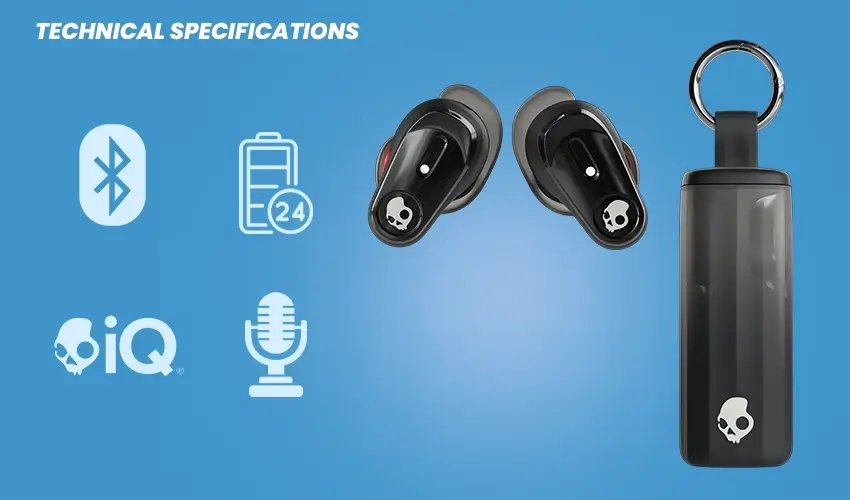
Here’s a detailed breakdown of what these earbuds offer:
| Specification | Details |
| Product Type | True Wireless In-Ear Earbuds |
| Connection | Bluetooth 5.3 |
| Driver Size | 12mm |
| Frequency Response | 20Hz – 20kHz |
| Impedance | 16Ω |
| Sound Pressure Level | 97.1 ± 4dB |
| Audio Codecs | SBC, AAC |
| Battery Life (ANC On) | 9 hours (earbuds) + 23 hours (case) = 32 hours total |
| Battery Life (ANC Off) | 11 hours (earbuds) + 29 hours (case) = 40 hours total |
| Quick Charge | 10 minutes = 2 hours playback |
| Charging Port | USB-C |
| Wireless Charging | No |
| Water Resistance | IPX4 (sweat and splash resistant) |
| Weight | 11g per earbud, 77g case |
| Microphones | 4-mic system with Clear Voice technology |
| Active Noise Cancellation | Yes, adjustable hybrid ANC |
| Transparency Mode | Yes, adjustable Stay-Aware mode |
| Multipoint Pairing | Yes (connect to 2 devices) |
| Wear Detection | Yes |
| App Support | Skull-iQ app (iOS and Android) |
| EQ Options | 3 presets + custom 5-band equalizer |
| Google Fast Pair | Yes (Android) |
| Ear Tips Included | S, M, L (3 sizes) |
| Fit Fins Included | S, M, L (3 sizes) |
| Warranty | 1 year |
| Colors Available | True Black, Bone, Leopard, Plasma, Primer |
Sound Quality

Here’s where things get genuinely impressive. Multiple reviewers have noted that when comparing these earbuds directly to the Bose QuietComfort Ultra Earbuds using an iPhone, the sound is remarkably similar. Some have even called them nearly indistinguishable in blind tests.
The audio signature leans toward a bass-forward profile, which aligns with Skullcandy’s traditional style, but the execution is far more refined than previous models. The bass hits deep without becoming muddy or overwhelming the mids. Vocals remain clear and detailed, even in complex tracks. The highs bring that characteristic Bose sparkle without crossing into harshness.
What separates these from truly premium earbuds is the codec support. Looking at the Skullcandy Method 360 ANC specs, you’re limited to AAC and SBC, with no high-resolution options like aptX or LDAC. For most listeners streaming from Spotify or Apple Music, this won’t matter. Audiophiles seeking lossless quality might feel the limitation, though the difference is subtle in real-world use.
The customizable 5-band equalizer in the Skull-iQ app gives you serious control over the sound profile. If the default bass is too much, you can dial it back. If you want more presence in the mids for podcasts, that’s easily adjusted. This level of customization puts many more expensive earbuds to shame.
Active Noise Cancellation Performance

Noise cancellation at this price point is usually where compromises become obvious. These earbuds handle it better than expected, though they don’t quite match Sony or Bose’s flagship models. The hybrid ANC system uses four microphones to effectively reduce low-frequency sounds like engine rumble and air conditioning hum. Testing shows attenuation of up to 28dB at 80Hz, which translates to noticeable quiet during commutes or flights.
Higher-frequency sounds like conversation get reduced by up to 35dB, thanks to the combination of active cancellation and the excellent passive seal from the Bose-designed ear tips. Where the ANC falls short is in the mid-frequency range, particularly between 900Hz and 1.4kHz. Human voices aren’t blocked as effectively as they would be with premium models. For general noise reduction, it works well. For complete isolation in extremely noisy environments, you might notice the limitations.
The Stay-Aware transparency mode is adjustable through the app, which is a nice touch. Unlike some cheaper earbuds that create an unnatural, tinny sound when you enable transparency, these maintain reasonably natural audio. There is a slight hiss at higher transparency settings, but it’s only noticeable during quiet passages.
Comfort and Fit
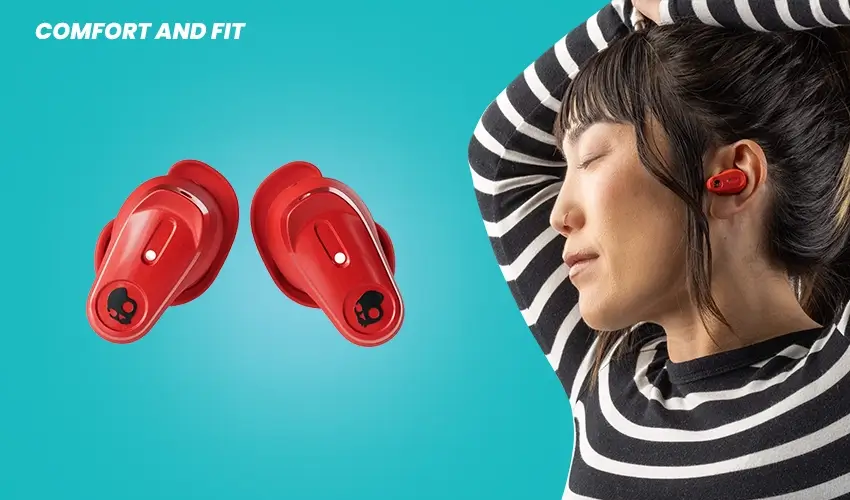
One area where the Bose partnership really pays off is fit. The included ear tips and stabilizing fins are licensed Bose technology, and they work exceptionally well. Three sizes of each are included, making it easy to find a secure, comfortable combination.
Once properly fitted, these earbuds stay put through workouts, runs, and general movement. The stability fins are subtle but effective, distributing pressure across the ear rather than relying solely on the seal from the ear tip. This reduces fatigue during extended wear.
The earbuds themselves are on the larger side at 11g each, but the weight distribution is good enough that they don’t feel heavy. The IPX4 rating means they’ll handle sweat and light rain without issue, though you shouldn’t take them swimming.
Touch controls are responsive and customizable, which addresses a common frustration with budget earbuds. The default gestures work well, but if you prefer having volume control on the earbuds instead of Spotify Tap, you can reassign functions through the app.
The Case Situation
This is where opinions diverge sharply. The charging case is massive compared to any other earbuds on the market. It’s designed with a sliding mechanism and built-in carabiner clip, clearly intended to hang from a backpack or belt loop rather than slip into a pocket.
The unique design means the earbuds sit on opposite sides of the case and need to be inserted upside down. It takes some getting used to, and the orientation can be confusing at first. From what most people consider the front of the case, the right earbud is on the left side and vice versa.
For people who want their earbuds case to be compact and pocketable, this is a dealbreaker. For those who appreciate having a clip-on design and don’t mind the bulk, it’s actually quite functional. The case feels solid, and the sliding mechanism is satisfying to use once you get the hang of it.
When it comes to Skullcandy Method 360 ANC battery life, you’re looking at solid performance with up to 9 hours per charge with ANC enabled, or 11 hours with it off. The case provides roughly 2.5 additional charges, bringing total battery life to around 32 hours with ANC or 40 hours without. A 10-minute quick charge gives you about 2 hours of playback. The main disappointment is the lack of wireless charging, which seems like a missed opportunity given the case’s size.
Call Quality and Connectivity
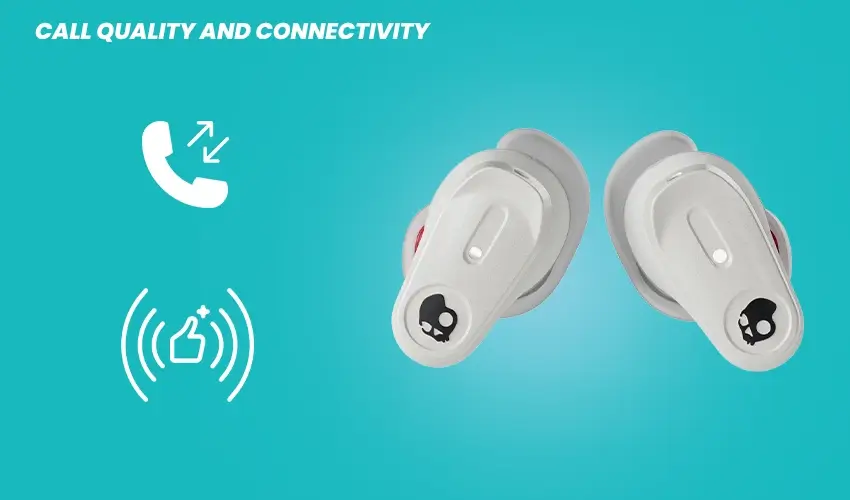
Microphone performance is surprisingly strong. According to various Skullcandy Method 360 ANC call quality reviews, these actually perform better than the Bose QuietComfort Ultra Earbuds at isolating your voice and cutting background noise in head-to-head comparisons. Wind noise and cafe chatter are handled impressively well, making these reliable for video calls and phone conversations.
Bluetooth 5.3 provides stable connectivity, and multipoint pairing works smoothly for switching between devices. Google Fast Pair on Android devices makes initial setup quick. The connection range is adequate for most situations, though it can struggle when moving between floors in a building.
The main connectivity limitation is the lack of high-resolution codec support, which we covered earlier. For the target audience and price point, standard AAC and SBC work fine.
The Voice Prompt Problem
One consistent complaint across reviews is the volume of voice prompts. When switching between ANC modes or other functions, the earbuds announce changes at uncomfortably high volume. A firmware update in mid-2025 addressed this somewhat, but many users still find the prompts too loud.
It’s a minor annoyance rather than a major flaw, but it’s worth noting. You can’t disable the prompts entirely, so you’ll need to live with them or use the app for mode switching instead of the touch controls.
Pros and Cons
Pros
- Excellent sound quality powered by Bose tuning
- Comfortable, secure fit ideal for workouts
- Strong battery life (up to 40 hours total)
- Clear call quality with reliable ANC
- Great value compared to much more expensive Bose models
Cons
- Bulky charging case
- No wireless charging or high-resolution codecs
- ANC is good, but not flagship-level
Value Proposition in 2026
This is where the discussion gets interesting. Looking back at the Skullcandy Method 360 ANC release date in 2025, the introductory price was $99, which made them an absolute steal. The current standard price sits at around $130, which is still competitive but changes the value equation slightly.
At $130, you’re getting sound quality that competes with $300 earbuds, effective ANC, excellent fit, and solid battery life. The compromises are the bulky case, lack of high-resolution codec support, absence of wireless charging, and occasional quirks like the loud voice prompts.
Compare this to the Bose QuietComfort Ultra Earbuds at $300, and you’re paying less than half the price for what many reviewers describe as very similar sound quality. The Bose version offers better ANC, a more compact case, and high-resolution codec support, but those improvements cost $170 more.
Against budget competitors like the Anker Soundcore Space A40, these offer noticeably better sound quality and superior fit, though the Anker option provides a more portable case and comes in cheaper.
Who Should Buy These in 2026
These earbuds make the most sense for a specific type of listener. If you value sound quality above all else and want something that punches well above its price class, these deliver. The Bose partnership isn’t just marketing talk; it genuinely results in premium audio performance.
They’re ideal for active users who appreciate the clip-on case design and need earbuds that stay secure during movement. The IPX4 rating and excellent fit make them reliable workout companions.
If you’re planning to buy Skullcandy Method 360 ANC earbuds, consider whether you’re a budget-conscious listener who wants premium sound without premium prices. You’re making targeted compromises on features like wireless charging and high-resolution codecs, but the core listening experience rivals much more expensive options.
They’re less suitable for people who prioritize portability and need earbuds that fit easily in a pocket. The case is genuinely oversized, and that’s not going to work for everyone’s lifestyle. If you need the absolute best ANC performance for frequent travel, the slightly weaker noise cancellation compared to top-tier models might be noticeable.
Final Thoughts
A year after launch, these earbuds remain a compelling option in 2026. The collaboration between Skullcandy and Bose created something genuinely unique at this price point. The sound quality is the real star here, delivering performance that would have cost significantly more just a few years ago.
The quirks are real. The case is huge, the voice prompts are loud, and audiophiles will notice the codec limitations. But these are targeted compromises that allowed Skullcandy to hit an aggressive price point while maintaining the audio quality that matters most.
Whether they’re worth it depends on your priorities. If sound quality and fit top your list, these offer exceptional value at $130.