
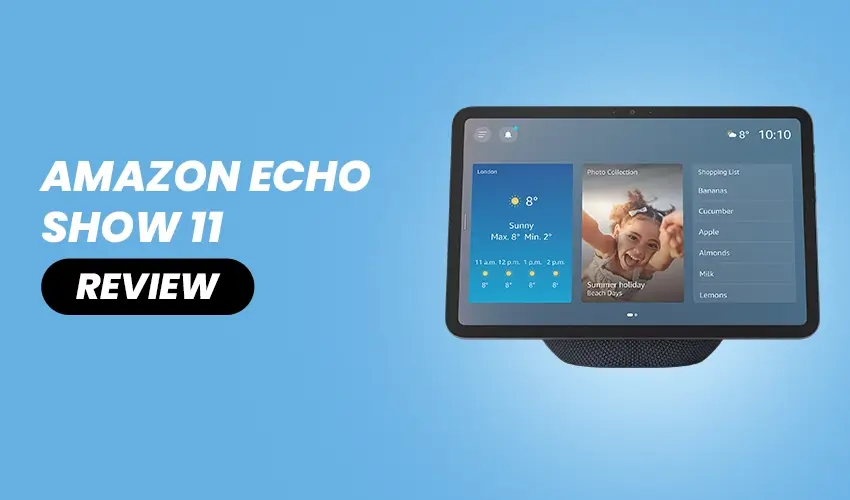
Amazon Echo Show 11 Review: Worth Buying in 2026?
If you’ve been eyeing Amazon’s latest smart display, you’re probably wondering whether the Echo Show 11 makes sense as we move deeper into 2026. I completely understand the hesitation. Smart home devices evolve quickly, and nobody wants to invest in something that might feel outdated in a few months or simply doesn’t deliver enough value for the price.
The good news? I’ve spent considerable time testing this device, and I’m ready to share what actually matters when deciding if this smart display deserves a spot in your home. Let me walk you through everything you need to know before making your purchase decision.
What Makes This Generation Different
When the amazon echo show 11 arrived in late 2025 as a replacement for the older Echo Show 10, it came with some significant changes. The motorized rotating screen that defined the previous generation is gone, replaced by a sleek, fixed display that sits on a fabric-covered base.
The design looks modern and blends nicely into most home environments. You can choose between two colors: graphite or glacier white. The 11-inch screen appears to float off the rounded base, giving it a premium aesthetic that doesn’t scream “tech gadget” when sitting on your counter or shelf.
What really sets this model apart is what’s happening under the hood. Amazon equipped it with the AZ3 Pro processor, which was specifically designed to handle artificial intelligence tasks locally on the device. This chip powers something called Omnisense technology, which uses multiple sensors to understand what’s happening around the display.
Think of it this way: the device can detect when you walk into a room, recognize your face, sense the temperature, and adjust what it shows you based on all that information. It’s trying to be less of a screen you talk to and more of an ambient assistant that just knows what you need.
Amazon Echo Show 11 Specifications
| Specification | Details |
| Display Size | 11 inches |
| Screen Resolution | 1920 x 1200 pixels (Full HD) |
| Processor | AZ3 Pro with AI Accelerator |
| Camera | 13MP with auto-framing and 3.3x digital zoom |
| Audio | Dual full-range drivers + 2.8-inch woofer |
| Connectivity | Wi-Fi 6E (802.11ax), Bluetooth |
| Smart Home Protocols | Zigbee, Thread, Matter |
| Voice Assistant | Amazon Alexa (Alexa+ compatible) |
| Physical Controls | Volume buttons, mic/camera mute button |
| Sensors | Omnisense (camera, ultrasound, Wi-Fi radar, temperature, ambient light) |
| Dimensions | 10 x 7.2 x 5 inches (260 x 180 x 130 mm) |
| Weight | 2.87 lbs (1.3 kg) |
| Colors | Graphite, Glacier White |
| Price | $219.99 (frequently discounted to ~$180) |
| Release Date | Late 2025 |
Screen Size: Does Bigger Actually Matter?
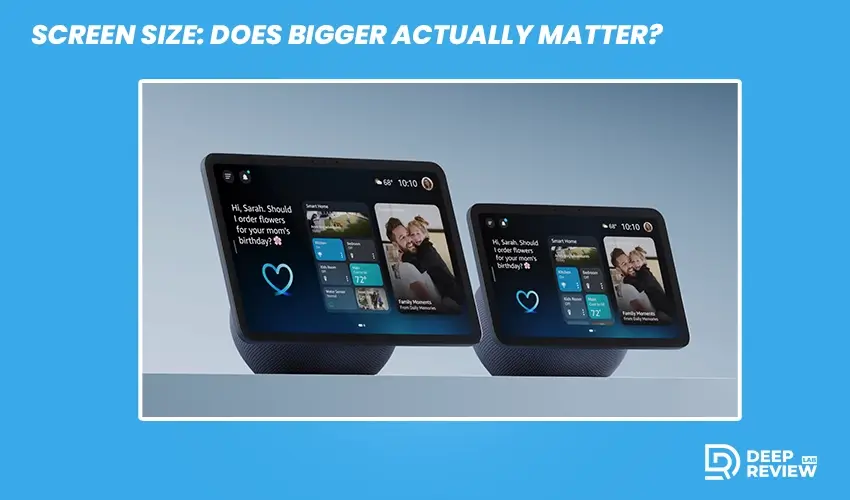
The display sports an 11-inch Full HD screen with 1920 x 1200 pixel resolution. That’s noticeably sharper and larger than what you’ll find on the Echo Show 8, which has an 8.7-inch screen.
In practice, the extra screen real estate makes a genuine difference if you’re using your smart display from across the room. Recipe instructions become easier to read from your stove. Calendar appointments don’t require squinting when you glance over from the dining table. Video calls feel less cramped, especially when the camera auto-frames to keep everyone in view.
I need to be honest with you about something important. The Echo Show 8 costs $180 at regular price (though I’ve seen it drop to around $150 on sale), while the alexa echo show 11 typically runs $220, with recent promotions bringing it down to $180. You’re paying a $40 difference for essentially the same internal hardware with a bigger screen.
For some households, that extra screen size justifies the cost. For others, it doesn’t. If you’re placing this in a kitchen where you’ll reference it while cooking, or in a large living room where multiple people might view it simultaneously, the 11-inch model makes more sense. But for a bedside table or small office desk? The smaller version probably serves you just as well.
Sound Quality That Surprises
One area where I expected this device to outperform its smaller sibling was audio, but both use identical speaker setups. You get two full-range drivers for stereo sound and a 2.8-inch woofer for bass.
Don’t let that disappoint you, though. The sound quality is genuinely impressive for a device this size. Music fills the room with clarity, and you can crank the volume up to around 75% without noticeable distortion. The bass won’t shake your walls, but it provides enough low-end presence to make songs feel full rather than thin.
I tested it with everything from orchestral pieces to bass-heavy electronic music. The device handles complex arrangements well, keeping different instruments distinct even during busy musical moments. Amazon uses clever digital processing to adapt the audio to your room’s acoustics, which helps the sound feel natural rather than artificial.
For podcast listening while cooking or background music during dinner, this speaker performs beautifully. If you’re an audiophile looking for your primary music system, you’ll want something more substantial. But for a smart display that also happens to be a competent speaker? It delivers.
The Smart Home Hub You Might Actually Need
Looking at the echo show 11 features, you’ll find built-in support for Zigbee, Thread, and Matter protocols. If those terms sound like technical jargon, think of it this way: you can connect a huge variety of smart home devices directly to this display without buying separate hubs.
Smart lights, thermostats, door locks, security cameras, and countless other gadgets can all communicate through this central hub. The Matter support is particularly important as we move through 2026, since that’s becoming the universal standard that lets different brands of smart home gear work together seamlessly. Whether you’re using Amazon’s own products or third-party options like the Ecobee Smart Thermostat Premium, everything connects smoothly through the Echo Show 11’s built-in hub.
Setting up smart home routines has become surprisingly intuitive. You can create automation just by asking Alexa to do something. Want your living room lights to turn on when you unlock your front door? Just tell the device, and it creates that routine for you. Previously, this required navigating through multiple app menus and settings.
The Omnisense sensors add another layer of usefulness. The device can detect your presence and trigger actions based on whether you’re in the room, what the temperature is, or even who specifically is standing in front of it (if you set up Visual ID). These aren’t gimmicks when implemented thoughtfully. Imagine lights that automatically adjust when you enter a room, or pairing it with an Amazon Smart Thermostat that kicks in your heating when the device detects you’re home.
Daily Living with This Smart Display
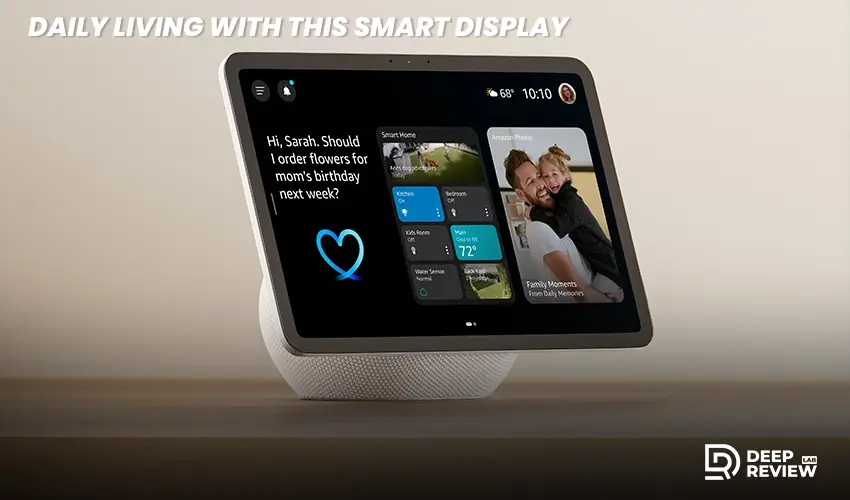
After using this device for several weeks, certain patterns emerged in how it fits into everyday life. The screen became my kitchen companion, displaying recipes with ingredients and step-by-step instructions I could follow hands-free. Checking the weather before getting my kids ready for school happened with a quick glance rather than pulling out my phone.
Video calls worked better than expected. The 13-megapixel camera automatically pans and zooms to keep you in frame, though the movement is subtle enough not to feel disorienting. Picture quality is clear, and the microphone picks up voices well even with background noise.
One feature I found myself using constantly was the ability to view security camera feeds on demand. Saying “Alexa, show me the front door” instantly brings up my Ring doorbell camera. When someone presses the doorbell, the feed automatically appears on screen. This integration works smoothly and actually saves time compared to fumbling with phone apps.
The touch screen interface takes some getting used to. It occasionally feels less responsive than I’d like, requiring multiple taps to register inputs. Typing web addresses using the on-screen keyboard can be frustrating. Amazon clearly prefers you to use voice commands, which work reliably most of the time.
Streaming and Entertainment Options
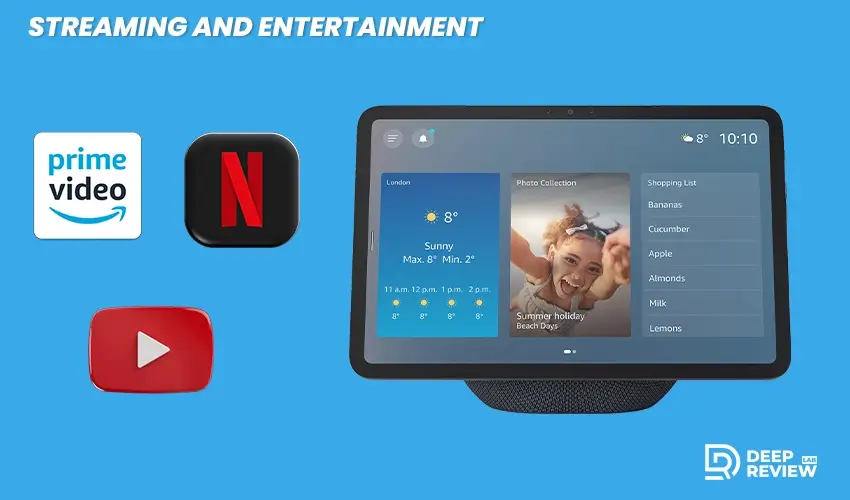
When it comes to watching content, the echo show 11 release date in late 2025 brought some updates to video streaming capabilities. Prime Video comes built in and works seamlessly with voice commands. You can also access various streaming services through the device’s web browser, though this approach feels somewhat clunky compared to dedicated apps.
The screen is large enough for casual video watching during meal prep or following along with workout videos, but it’s not really meant to replace your TV for serious entertainment. Picture quality is sharp and colors look vibrant, making it pleasant for shorter viewing sessions.
For echo show 11 netflix access, you’ll need to use the Silk web browser since there isn’t a native app installed. This works, but navigating through the browser interface with touch controls isn’t as smooth as you’d hope. YouTube follows a similar pattern, requiring browser access rather than offering a dedicated application.
What About Alexa Plus?
Amazon launched something called Alexa Plus, which is supposed to be a more conversational, AI-powered upgrade to the standard Alexa assistant. Early access was included with Prime memberships and new device purchases, though it will eventually cost $19.99 per month for non-Prime users after the trial period ends. This enhanced AI feature also comes built into other new Amazon devices like the Amazon Echo Dot Max, which launched alongside the Echo Show 11.
The catch? As of early 2026, Alexa Plus remains unavailable in many regions outside the United States. If you’re buying this device expecting the enhanced AI features, make sure to check availability in your area first.
The standard Alexa that comes with every device still works well for most tasks. Setting timers, playing music, controlling smart home devices, answering basic questions. These functions perform reliably without the AI upgrade. Alexa Plus adds more natural conversation abilities and supposedly better contextual understanding, but the core experience remains solid without it.
Missing Features and Compromises
No product is perfect, and this smart display makes some compromises worth mentioning. The most notable is the loss of the physical camera shutter that previous models included. Now you get an electronic disconnect button that turns off both the microphone and camera, but some people preferred the tangible reassurance of a physical cover.
The motorized rotating screen from the Echo Show 10 is also gone. Some users loved that feature for video calls or following them around the kitchen. If that was important to you, the newer model might feel like a downgrade in that specific area.
Streaming services require workarounds for certain platforms, as mentioned earlier. The browser-based approach works but feels less polished than native app experiences. The screen is fine for casual viewing, but not really large enough to replace your TV for movie nights.
Battery power isn’t an option. This device needs to stay plugged in, which limits placement flexibility compared to tablets. You’ll need a power outlet nearby wherever you plan to use it.
Is It Worth Your Money in 2026?
After living with this device, I can tell you it’s genuinely good at what it does. The screen is sharp and bright, the sound quality exceeds expectations for this product category, and the smart home integration works smoothly when you have compatible devices.
Whether it’s worth buying depends entirely on your specific situation. If you already own the Echo Show 8 or another recent smart display, upgrading probably doesn’t make sense unless you specifically need that larger screen. The core functionality is too similar to justify the expense.
If you’re entering the smart display category for the first time, or replacing something several years old, this represents solid value at current prices. The regular $220 feels steep when the Echo Show 8 offers nearly identical performance for $40 less. But if you can catch it on sale (which happens regularly, with prices dropping to around $180), that changes the equation.
The larger screen proves most valuable in kitchens, living rooms, or anywhere multiple people might use the device together. For personal spaces like bedrooms or home offices, the size advantage diminishes significantly. If you need an even larger display for wall mounting, the amazon echo show 15 offers a 15-inch screen designed specifically for that purpose.
Who Should Actually Buy This
You’ll get the most value if you’re planning to build out (or already have) a smart home ecosystem. The built-in hub supporting Zigbee, Thread, and Matter saves you from buying separate hardware, which partially offsets the cost. If you’re just starting with smart home devices, having this foundation makes expansion easier down the road.
People who spend significant time in their kitchens will appreciate the larger display for following recipes and setting multiple timers. The hands-free operation becomes genuinely helpful when your hands are covered in flour or you’re juggling cooking tasks.
If video calling with family members is a regular part of your routine, the improved camera and larger screen create a better experience than smaller alternatives. Grandparents who want to see grandchildren more clearly, or families staying connected across distances, benefit from the upgrade.
Looking at Long-Term Value
As we move through 2026, this device still feels current rather than outdated. The processor has headroom for future software updates, the smart home protocols are forward-looking, and the hardware quality should last several years of regular use.
Smart home technology continues advancing quickly. Amazon will inevitably release newer models with additional features. If you’re the type who always wants the latest technology, waiting might make sense. But if you need a capable smart display now, this device will serve you well for years to come.
Watch for sales, because they happen frequently. Saving $40 makes the device significantly more attractive compared to the Echo Show 8. At that discounted price, the larger screen becomes easier to justify even if you don’t absolutely need it.
This is a well-executed smart display that does everything Amazon promises. It won’t revolutionize your life, but it will make certain daily tasks more convenient and enjoyable. Whether that convenience is worth the investment comes down to how you plan to use it and whether the features align with your actual needs rather than just sounding cool in theory.
Conclusion
After weeks of testing, the Echo Show 11 is a solid smart display with excellent audio and a crisp screen. The problem? It’s nearly identical to the cheaper Echo Show 8. If you need the larger display for a kitchen or living room, it’s worth buying, especially on sale. Otherwise, save your money and go with the smaller model. It’s good tech, just not revolutionary.