


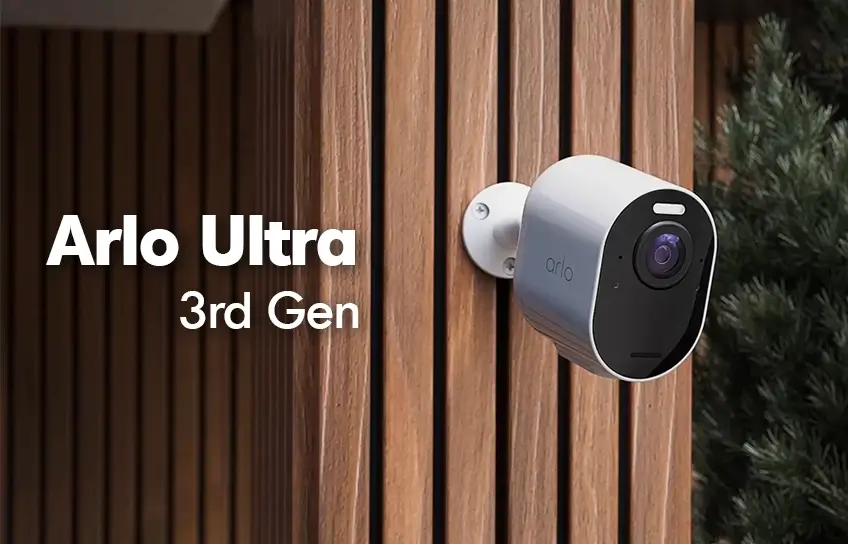
Home security has changed a lot. What once required a professional installer and a monitoring contract can now be handled with a smartphone and a Wi-Fi connection. But a crowded market makes it harder to find a camera that actually holds up in real use. The arlo ultra 3rd gen is a premium outdoor camera built around 4K video, a 180-degree field of view, and a growing set of AI-powered features aimed at making home monitoring more useful day to day.
This arlo ultra 3rd gen review covers what the camera does well, where it falls short, and whether it is worth the price for the average homeowner. Whether you are upgrading from an older security setup or buying your first outdoor camera, there is a lot here worth understanding before you decide.
Arlo Ultra 3rd Gen Specifications
The arlo ultra 3rd gen specs put it firmly in the premium tier of home security cameras. Here is a full breakdown of what the camera brings to the table before you buy.
| Feature | Details |
| Video Resolution | 4K HDR (3840 x 2160) |
| Field of View | 180 degrees |
| Night Vision | Color night vision with integrated spotlight |
| Weather Resistance | IP65 rated (dust and water resistant) |
| Charging | USB-C |
| Battery Life | Up to 6 months (use dependent) |
| Wi-Fi | Dual-band 2.4GHz and 5GHz via SmartHub |
| Audio | Two-way audio with wind and noise cancellation |
| Siren | Built-in 100dB siren |
| Smart Home Compatibility | Amazon Alexa, Apple Home, Google Home, Samsung SmartThings |
| Storage | Cloud (subscription required) |
| Subscription Cost | From $17.99/month (billed annually) |
| Camera Price | From $199.99 per camera |
| Auto Tracking | Yes, with auto zoom |
| AI Event Captions | Yes (requires subscription) |
| Required Hub | Arlo SmartHub (sold separately or in bundle) |
What Makes This Camera Stand Out

4K Video and a Wider View
One of the clearest differences between this camera and most competitors is the 4K HDR video resolution. Ring and Google Nest cameras top out at 1080p or 2K, which means less detail when you need to zoom in on a license plate or identify someone’s face. When you look at the arlo ultra 3rd gen frame rate 4k fps performance, it holds up well during playback, delivering smooth footage without losing detail during fast movement. Even when cropping into a specific area of the frame, the image stays sharp and usable.
Arlo pairs that resolution with a 180-degree field of view, which is wide enough to cover an entire driveway or front porch in a single shot. Most standard cameras sit around 130 degrees, which leaves noticeable blind spots on either side of the frame. For homeowners with wide entryways, large yards, or corner placements, that extra coverage makes a practical difference in what actually gets captured.
Color Night Vision That Actually Works
Nighttime footage has always been a weak point for home security cameras. Most cameras switch to black-and-white infrared mode after dark, giving you grainy, colorless images that make it hard to identify details like clothing color or vehicle color. Arlo has addressed this with a built-in spotlight and color night vision. When motion is detected at night, the spotlight activates and the camera captures color footage instead of the typical washed-out infrared image. The result is a much more useful picture after dark, especially when you need to identify someone or describe a vehicle.
Some users have noted that nighttime footage can still appear slightly softer than daytime video in areas where the spotlight does not fully reach. That is a fair observation, but the gap between this camera and most 1080p competitors at night is still significant. For the majority of outdoor scenarios, the color night vision performs reliably and delivers noticeably better results than infrared-only cameras.
Design and Build Quality

A Cleaner, More Practical Design
The physical design of this camera is clean and built to last outdoors. It carries an IP65 weather resistance rating, meaning it handles rain, dust, and the kind of outdoor conditions most homeowners deal with throughout the year. The rounded, compact body blends into most exterior setups without looking bulky or industrial, which matters if you care about aesthetics near your front door or garage.
Since the arlo ultra 3rd gen release date, one of the most talked-about hardware changes has been the switch to USB-C charging. Earlier models used a proprietary magnetic connector that frustrated many users who constantly misplaced the specific cable. USB-C solves that problem entirely and also supports faster charging. Arlo also reports around 15 percent longer battery life compared to the previous generation, which translates to fewer trips to bring the camera in for a recharge.
Smart Home Compatibility
This camera works with Amazon Alexa, Apple Home, Google Home, and Samsung SmartThings, covering every major smart home platform available today. That means it fits into almost any existing home setup without requiring you to change ecosystems or purchase additional bridges. You can pull up a live feed through Alexa, set motion automations through Apple Home, or trigger recordings through Google Assistant, depending on what you already use at home.
One important detail to know before purchasing is that this camera requires Arlo’s SmartHub to connect to your network. Unlike some cameras that pair directly to your router, this one routes everything through the hub first. The SmartHub supports dual-band Wi-Fi at 2.4GHz and 5GHz, which improves connection stability and reduces interference. It is a separate device that adds to the overall cost and setup, but if you plan to add multiple cameras, the hub cost spreads across the system and becomes far less of a concern.
Smart Features and AI Capabilities

Event Captions and Auto Tracking
Arlo has put real effort into making alerts from this camera more actionable than a basic motion notification. With an active subscription, the camera generates detailed event captions describing exactly what it detected, such as “person enters silver car near driveway.” When you are receiving dozens of alerts throughout the day, that level of detail helps you quickly decide what is worth checking and what can be ignored.
The auto zoom and tracking feature works alongside these captions to make recorded clips more useful. When a person or vehicle enters the frame, the camera zooms in and follows the subject as it moves across the scene. This helps capture usable footage even when the subject starts at the edge of the frame or moves quickly. It is a feature that sounds minor on paper but proves genuinely valuable when you are reviewing recordings and need to clearly see what happened.
The Subscription Question
The camera functions without a subscription for basic live viewing and motion alerts, but most of its best features sit behind a paid plan. AI event captions, cloud video storage, activity zones, and extended recording history all require an active Arlo subscription, which starts at $17.99 per month when billed annually. For homeowners using the camera as a serious monitoring tool, that ongoing cost is reasonable for what you get. For buyers who expected a one-time purchase with no recurring fees, it is worth factoring into the total cost of ownership before buying.
Comparing this to competitors, Google Nest cameras also require a subscription for full cloud features at a similar monthly rate. Ring’s plans run slightly cheaper, though Ring does not offer the same video resolution or field of view. If subscriptions are a dealbreaker for you, there are more budget-friendly alternatives, but none currently match this level of hardware quality and smart home flexibility at the same time.
How It Compares to the Competition

Arlo vs. Ring vs. Google Nest
Ring cameras are a solid choice for buyers who want reliable outdoor security at a lower upfront cost. They deliver 1080p or 2K footage with tight Alexa integration and a straightforward app experience. The subscription plans are also cheaper than Arlo’s. However, the video resolution and field of view fall noticeably short of what this Arlo camera delivers, and Ring cameras are not as compatible across different smart home platforms outside of Amazon’s ecosystem.
Google Nest cameras bring strong AI features to the table, including facial recognition that can identify who is at your door rather than just detecting that someone is there. They are easy to set up and work smoothly within Google Home. The limitation is that Nest cameras are closely tied to Google’s platform, which makes them a weaker fit for households using Alexa or Apple Home as their primary system. Nest also tops out at 1080p on most models, which is a hardware gap that matters when you need to read fine details in footage.
Where this Arlo camera stands apart is in the combination of 4K resolution, 180-degree coverage, color night vision, and cross-platform smart home support. No single competitor currently matches all four of those strengths in one outdoor package. For buyers who want the best available hardware without locking into a single ecosystem, this camera is the most complete option in its class right now.
Pros and Cons
Pros
- Crystal clear 4K HDR video
- Ultra-wide 180-degree field of view
- Color night vision with spotlight
- USB-C charging
- Works with Alexa, Google, Apple HomeSmart AI event captions
Cons
- Requires Arlo SmartHub
- Subscription needed for full features
- Expensive upfront cost
- No local storage option
- Slightly soft nighttime footage
Who Should Buy This Camera
This camera is the right fit for homeowners who want the best available outdoor video quality and are comfortable with an ongoing subscription to unlock the full feature set. It performs best in wide outdoor spaces like driveways, front yards, garages, and corner placements where a narrow-angle camera would leave gaps in coverage. If your priority is capturing clear, detailed footage that holds up under scrutiny, few cameras at any price point deliver what this one does.
It is not the right choice for budget-focused buyers or anyone who wants a fully offline setup with local storage and no monthly fees. Those buyers will find better value in Ring’s lineup or cameras that support onboard microSD storage. But for the homeowner who wants a capable, well-built outdoor camera that fits any smart home ecosystem and does not compromise on image quality, this is one of the most complete packages currently available.
Conclusion
This camera brings together 4K video, wide-angle coverage, color night vision, and broad smart home compatibility in a way that no direct competitor currently matches. The subscription cost and SmartHub requirement are real factors to weigh, but they do not change what the hardware itself is capable of. For homeowners who take outdoor security seriously and want footage they can actually rely on, this remains one of the strongest choices on the market today.
