


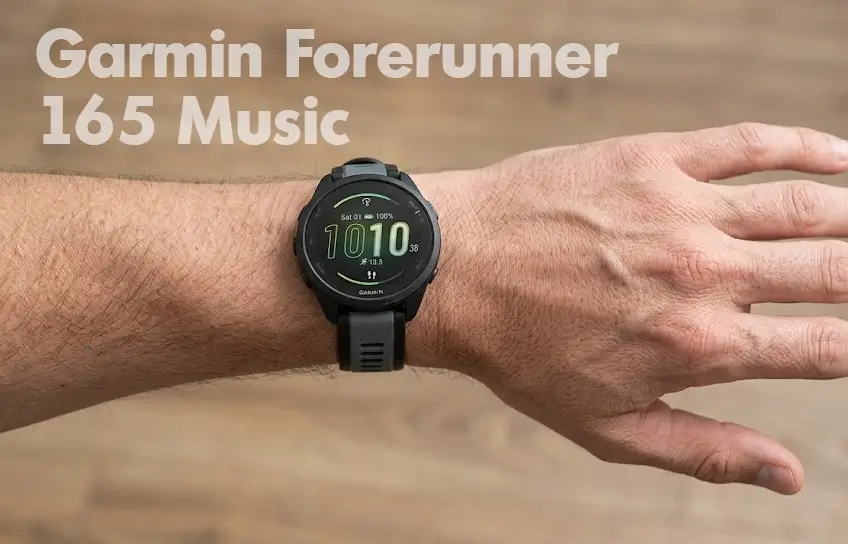
The garmin forerunner 165 music is priced at $299 and sits in a competitive spot where budget runners expect more than basics and Garmin has to justify every dollar. It packs an AMOLED display, multi-GNSS tracking, offline music storage, and a full suite of health monitoring tools into a 39-gram case. After testing it across road runs, trail routes, and daily wear, here is a clear-eyed breakdown of what it does well, where it falls short, and who it actually suits.
Who Is This Watch For?
The Forerunner 165 is built for runners, not multisport athletes. Since the Garmin forerunner 165 release date in early 2024, it has been positioned as Garmin‘s most accessible AMOLED running watch, sitting below the Forerunner 265 in price while sharing many of the same core capabilities.
It has no triathlon mode and no offline maps, so if those are on your checklist, this is not the right watch. What it does well is serve road runners and casual trail runners who want reliable GPS, training guidance, and the option to listen to music without carrying a phone.
It also covers gym workouts, walking, hiking, and pool swimming across 24 sport profiles. The watch is small and light enough to wear all day, which matters if you want sleep tracking and health monitoring around the clock.
Garmin Forerunner 165 Music Specifications
| Specification | Details |
| Display | 1.2-inch AMOLED touchscreen |
| Resolution | 390 x 390 pixels |
| Case Size | 43mm |
| Case Thickness | 11.6mm |
| Case Material | Polymer |
| Band Size | 20mm (standard) |
| Weight | 39g |
| Storage | 4GB internal |
| Music Capacity | Up to 500 songs |
| Water Resistance | 50 metres (5ATM) |
| GPS | Multi-GNSS (GPS, Glonass, Galileo) |
| Heart Rate Sensor | Garmin Elevate V4 optical HR |
| Other Sensors | Barometric altimeter, compass, pulse oximeter, ambient light |
| Connectivity | Bluetooth, ANT+, Wi-Fi (music edition) |
| Music Streaming | Spotify, Deezer, Amazon Music, MP3 |
| Payments | Garmin Pay contactless |
| Battery (Smartwatch Mode) | Up to 11 days (gesture), 4 days (always-on) |
| Battery (GPS Only) | Up to 19 hours |
| Battery (GPS Only + Music) | Up to 7 hours |
| Battery (All Systems + Music) | Up to 6.5 hours |
| Charge Time | Approx. 1 hour (full charge) |
| Sport Profiles | 25+ including run, swim, bike, hike, gym |
| Price (Non-Music) | $249 |
| Price (Music Edition) | $299 |
Design and Display

Build Quality and Comfort
The case is polymer with a 43mm diameter and 11.6mm thickness, and it weighs just 39 grams. That keeps it light on the wrist during long runs and comfortable enough to sleep in. The silicone band is standard 20mm, so replacements are easy and affordable. One practical note: clean the band every two to three days during heavy training to avoid skin irritation from sweat buildup.
The five-button layout, three on the left and two on the right, handles all navigation without needing the touchscreen. The forerunner® 165 music lets you fully disable the touchscreen if you prefer buttons only, or rely entirely on touch for menu browsing. The hybrid approach works well because every function is accessible both ways.
The AMOLED Display
The 1.2-inch AMOLED screen runs at 390 by 390 pixels. In direct sunlight, it stays readable without needing to shield the watch. The display brightness adjusts automatically via the ambient light sensor. In gesture mode, the screen only activates when you raise your wrist, which is what keeps battery life at 11 days. A built-in flashlight with three white-light levels and one red-light setting is a practical addition for pre-dawn or post-sunset runs.
GPS Accuracy and Tracking

How Well Does It Track?
The Forerunner 165 uses multi-GNSS, pulling from GPS, Glonass, and Galileo simultaneously. It does not have multiband dual-frequency GPS, which is found in the Forerunner 265 and above. In open terrain and on roads, tracking accuracy is on par with higher-end Garmin models. Dense urban corridors with tall buildings introduce occasional small deviations of two to three meters, but these do not meaningfully distort distance or pace data.
Every forerunner 165 review we consulted during testing confirmed that this single-band GPS consistently held its own against more expensive multiband alternatives in everyday running conditions. The watch also supports breadcrumb navigation. You can load a pre-planned route, and the watch will display a simple line and alert you when you deviate. There are no detailed offline maps.
Heart Rate Monitoring
The Garmin Elevate V4 optical sensor runs continuously. During steady efforts, it tracks well. During rapid heart rate shifts, such as the first 60 to 90 seconds of an interval or in cold temperatures, readings can lag or spike. One reviewer noted occasional readings of 220 bpm, which were clearly erroneous. For casual training, the built-in sensor is reliable enough.
For structured interval sessions or racing, pairing a chest strap via ANT+ or Bluetooth gives more precise data. The watch also reads blood oxygen saturation via pulse oximetry, though this is a passive monitoring feature rather than clinical-grade measurement.
Battery Life

The watch delivers up to 11 days in smartwatch mode with gesture-on display, and four days with the screen always on. GPS-only tracking runs up to 19 hours. Add music playback and that drops to up to 7 hours with GPS Only mode, or 6.5 hours with All Systems GPS active.
Each hour of GPS plus music use draws roughly 14 percent battery, so a fully charged watch covers most marathon training runs with music playing throughout. Charging from empty to full takes about one hour via Garmin’s proprietary cable.
Music and Smart Features

Offline Music Playback
The watch stores up to 500 songs in its 4GB of internal storage. It supports offline syncing from Spotify, Deezer, and Amazon Music, and you can also transfer MP3 files directly. Bluetooth headphone pairing works reliably once configured, and music controls such as track skipping and volume adjustment are accessible directly on the watch during a run.
The friction point is the initial Spotify sync. Several users have reported needing to troubleshoot the Wi-Fi connection through Garmin Connect before playlists download correctly. The fix typically involves forgetting and re-adding your Wi-Fi network in the Connect app, a step not listed in Garmin’s official troubleshooting guide. Once syncing works, it stays reliable.
Safety and Smart Connectivity
LiveTrack lets contacts follow your real-time GPS location during a run. Incident detection can send an alert if the watch detects a sudden stop or fall, though both features require a paired phone with cell coverage. Garmin Pay supports contactless payments but has limited bank compatibility depending on your region, so verify your bank is supported before relying on it. Smart notifications mirror calls, texts, and app alerts from a paired phone.
Health Tracking
The morning report gives you HRV status, sleep score, body battery level, and the day’s suggested workout each time you wake up. Sleep tracking logs time asleep, sleep stages (light, deep, REM), and nap detection. HRV is tracked throughout the night in five-minute increments and averaged into a status that requires 19 nights of data to establish your personal baseline.
VO2 max is estimated from run data and improves in accuracy as you log more varied workouts over time. Taken together, the garmin forerunner 165 music features on the health side are more complete than most watches in this price range, covering both performance recovery and general daily wellness.
Training Tools and the Garmin Ecosystem

Training Features
Daily suggested workouts are generated automatically based on your recent training load and adjust when you add a race to your calendar. You can also pull structured plans from Garmin Coach or sync workouts from TrainingPeaks and Strava. Recovery time is calculated after each session, and training effect scores tell you whether a workout targeted aerobic or anaerobic fitness.
What is absent compared to the Forerunner 265 is training load, training status, and training readiness. These features track cumulative workout stress over weeks and flag when you are building fitness versus risking overtraining.
Runners following structured plans with a coach will notice the gap. Runners doing three to five self-directed runs per week will not. Still, when you look at the full list of garmin forerunner 165 features available at the $299 price point, the training toolkit here is genuinely strong for its category.
The Garmin Connect App
Garmin Connect stores and displays all your data and syncs automatically over Bluetooth. It connects to Strava, TrainingPeaks, and other third-party platforms. The app is data-rich but has a dense menu structure that takes time to navigate confidently. Garmin has been updating the layout in recent builds and the redesign is improving usability, though it is not yet as intuitive as competitors like Polar Flow or Apple Fitness.
What Could Be Better
The Spotify sync setup is the most consistent pain point and should be simpler at this price. The lack of multiband GPS is a spec disadvantage even if real-world impact is minor. There are no offline maps, no triathlon mode, and no training load metrics, which are meaningful omissions for specific types of athletes. Garmin Pay’s bank compatibility is patchy and worth verifying before purchase.
Pros and Cons
Pros
- Bright, sharp AMOLED display readable in direct sunlight
- Up to 11 days battery life in smartwatch mode
- Accurate GPS across open roads and moderate terrain
- Lightweight at just 39 grams
- Stores up to 500 songs for phone-free runs
- Comprehensive health tracking including HRV, sleep stages, and VO2 max
- Daily suggested workouts and Garmin Coach integration
- Touchscreen and five-button hybrid input system
Cons
- Spotify sync setup is frustrating and poorly documented
- No multiband dual-frequency GPS
- No offline mapsMissing training load, training status, and training readiness
- Garmin Pay bank compatibility is limited by region
- Garmin Connect app has a steep learning curve
Conclusion
The Forerunner 165 delivers what most everyday runners actually need: accurate GPS, dependable heart rate monitoring, a bright readable display, long battery life, and offline music without a phone. At $299 for the music edition, it undercuts the Forerunner 265 by $150 while giving up training load metrics, multiband GPS, and offline maps.
For runners who do not need those features, that is a smart tradeoff. Triathletes, competitive athletes managing structured training blocks, or trail runners navigating unknown routes will find the missing pieces significant enough to justify higher-end options. Everyone else will find this watch does the job well and does it consistently.
