


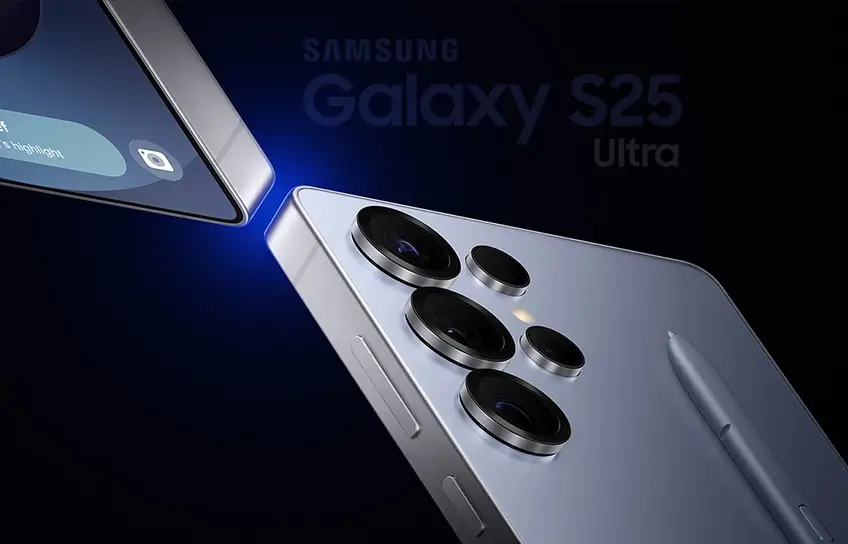
If you have been looking for a powerful Android phone and keep circling back to the same name, you are not alone. The samsung galaxy s25 ultra launched in February 2025 and has remained one of the strongest flagship Android phones available. Now, over a year later, with the Galaxy S26 series approaching and retailers cutting prices on the S25 Ultra, the real question is whether this phone still makes sense to buy in 2026, or whether you should hold off.
This review covers everything you need to know to make that call.
Samsung Galaxy S25 Ultra Full Specifications
| Feature | Details |
| Announced | January 22, 2025 |
| Released | February 3, 2025 |
| Display | 6.9-inch Dynamic LTPO AMOLED 2X, 1440 x 3120px (~498 ppi), 120Hz adaptive, HDR10+, 2600 nits peak |
| Display Protection | Corning Gorilla Armor 2, DX anti-reflective coating |
| Processor | Qualcomm Snapdragon 8 Elite for Galaxy (3nm), Octa-core |
| GPU | Adreno 830 |
| RAM | 12GB (256GB / 512GB / 1TB models) or 16GB (1TB model) |
| Storage | 256GB / 512GB / 1TB — UFS 4.0, no card slot |
| Operating System | Android 15, One UI 8 — up to 7 major Android upgrades |
| Main Cameras | 200MP f/1.7 wide (OIS) + 50MP f/1.9 ultrawide (PDAF) + 50MP f/3.4 5x telephoto (OIS) + 10MP f/2.4 3x telephoto (OIS) |
| Video Recording | 8K@24/30fps, 4K@30/60/120fps, 1080p@30/60/240fps, 10-bit HDR, HDR10+ |
| Front Camera | 12MP f/2.2, 26mm wide, dual pixel PDAF |
| Battery | Li-Ion 5,000mAh |
| Wired Charging | 45W (PD3.0) — 65% in 30 min |
| Wireless Charging | 25W (Qi2) |
| Reverse Wireless | 4.5W |
| Build | Gorilla Armor 2 front, Gorilla Glass Victus 2 rear, Grade 5 Titanium frame |
| Dimensions | 162.8 x 77.6 x 8.2mm (6.41 x 3.06 x 0.32 in) |
| Weight | 218g (7.69 oz) |
| SIM | Nano-SIM + Nano-SIM + eSIM + eSIM (max 2 active at a time) |
| Connectivity | 5G (Sub-6GHz + mmWave), Wi-Fi 7, Bluetooth 5.4, NFC, UWB, USB-C 3.2 (DisplayPort 1.2, OTG) |
| Positioning | GPS, GLONASS, BDS, Galileo, QZSS |
| Biometrics | Ultrasonic under-display fingerprint, Face unlock |
| Speakers | Stereo speakers (no 3.5mm headphone jack, no FM radio) |
| Water Resistance | IP68 (up to 1.5m for 30 min) |
| Stylus | S Pen (no Bluetooth in this generation) |
| Colors | Titanium Silver Blue, Titanium Black, Titanium White Silver, Titanium Gray, Titanium Jade Green, Titanium Jet Black, Titanium Pink Gold |
| Software Support | 7 years of OS updates and security patches (until 2032) |
| Launch Price | $1,299 (256GB / 12GB RAM) |
Design and Build Quality
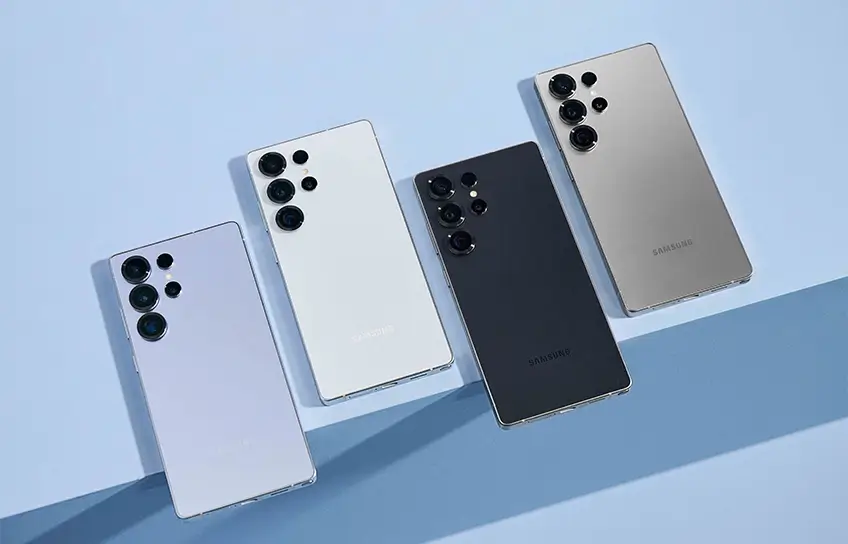
Previous Galaxy Ultra models had squared-off, sharp edges borrowed from the old Galaxy Note line. The S25 Ultra replaced that with flat sides and gently rounded corners, bringing it in line with the rest of the S25 family. The result is a phone that is noticeably easier to grip and more comfortable to hold one-handed. When you look at the samsung galaxy s25 ultra specifications, the Grade 5 titanium frame is one of the standout material choices, it is lighter and more corrosion-resistant than the steel used on earlier models.
The samsung galaxy s25 ultra dimensions are 162.8 x 77.6 x 8.2mm, making it slightly slimmer and narrower than the S24 Ultra despite housing a larger screen. The samsung galaxy s25 ultra weight is 218 grams, down from 233 grams on its predecessor, a difference you notice within the first few minutes of use.
Gorilla Armor 2 covers the front glass. It is the first anti-reflective glass ceramic used on a mobile device, and it survives drops of up to 2.2 meters onto concrete-like surfaces in testing. The DX anti-reflective coating on top of it reduces glare significantly, which matters when you are using the phone outdoors.
One honest criticism: the S Pen does not sit fully flush with the bottom frame. It protrudes slightly, which is a fit-and-finish issue that should not exist on a phone at this price. The back glass is also quite slippery, so most buyers will want a samsung galaxy s25 ultra phone case from day one, not just for protection but for a reliable grip.
The Display Is Genuinely Stunning
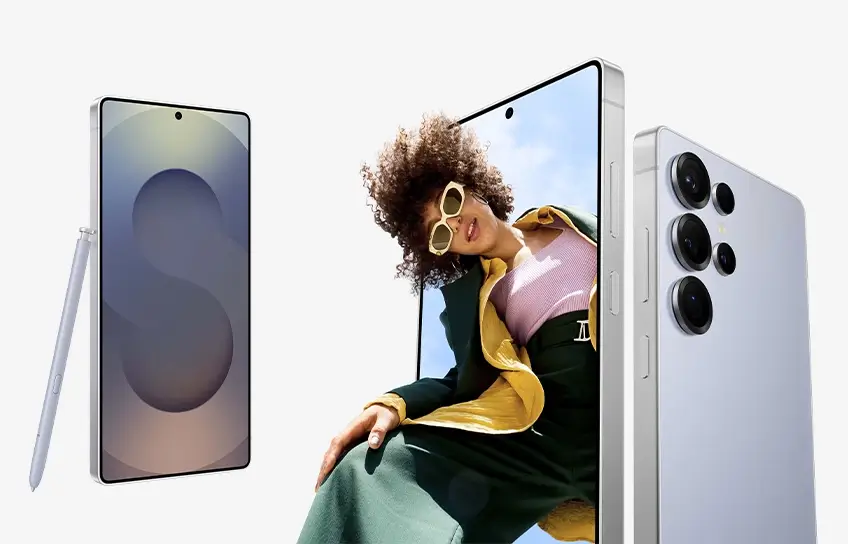
The samsung galaxy s25 ultra screen size is 6.9 inches, up from 6.8 inches on the S24 Ultra, thanks to thinner bezels rather than a larger body. The Dynamic LTPO AMOLED 2X panel runs at 1440 x 3120 pixels with a 120Hz adaptive refresh rate that drops as low as 1Hz when the screen is idle, saving battery without any perceptible difference in smoothness. Peak brightness reaches 2,600 nits, and the combination of the anti-reflective coating and that brightness level makes it one of the most legible screens available in direct sunlight.
Resolution and Default Settings
Samsung ships the phone at FHD+ resolution by default to preserve battery. Switching to QHD+ in the display settings gives you noticeably sharper text and finer detail, at the cost of a modest hit to battery life. If you spend a lot of time reading, working with documents, or just want the full sharpness the screen is capable of, QHD+ is worth enabling. For casual use, FHD+ is perfectly adequate.
Performance and Galaxy AI
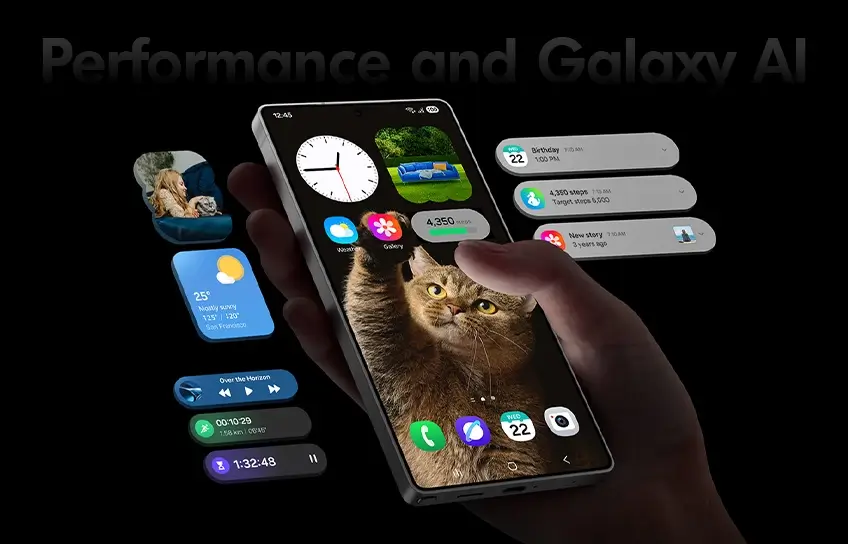
The Snapdragon 8 Elite for Galaxy is a customized version of Qualcomm’s flagship chip, with the two prime CPU cores clocked at 4.47GHz rather than the standard 4.32GHz. Combined with a 40% larger vapor chamber compared to the S24 Ultra, the phone handles sustained workloads without significant throttling under everyday conditions. If you check the full samsung galaxy s25 ultra specs, the chip also brings a 40% improvement in NPU performance, which is what powers most of the on-device AI processing.
In real-world use, the phone is fast across every task, app switching, web browsing, video editing, and gaming all run without lag or stutter. Benchmarks place it at the top of the Android field, though gaming-focused phones like the Asus ROG Phone 9 Pro show higher scores under sustained stress tests.
How Galaxy AI Works in Practice
Galaxy AI combines Samsung’s own tools with Google Gemini to handle tasks that previously required multiple steps. Cross App Actions is the most practical example: you can give a single voice or text request like “find a pet-friendly restaurant nearby and text the address to Sarah,” and the phone searches, compiles the result, and drafts the message in one flow. It works well for calendar management, note-taking, and email drafting too.
Circle to Search lets you highlight anything on screen, text, an image, or audio playing in a video, and instantly search it without leaving the app you are in. It is one of the most genuinely useful AI features available on any smartphone right now.
Now Brief generates a morning summary of your sleep data, calendar events, weather, and news. It is a good idea but still feels limited in practice because you cannot fine-tune which news sources appear. Users with packed schedules tend to find it more useful than those with lighter daily routines.
The key limitation with Galaxy AI overall is reliability. Most features work well most of the time, but the results are inconsistent enough that you cannot fully depend on them for anything critical without checking the output.
Camera System
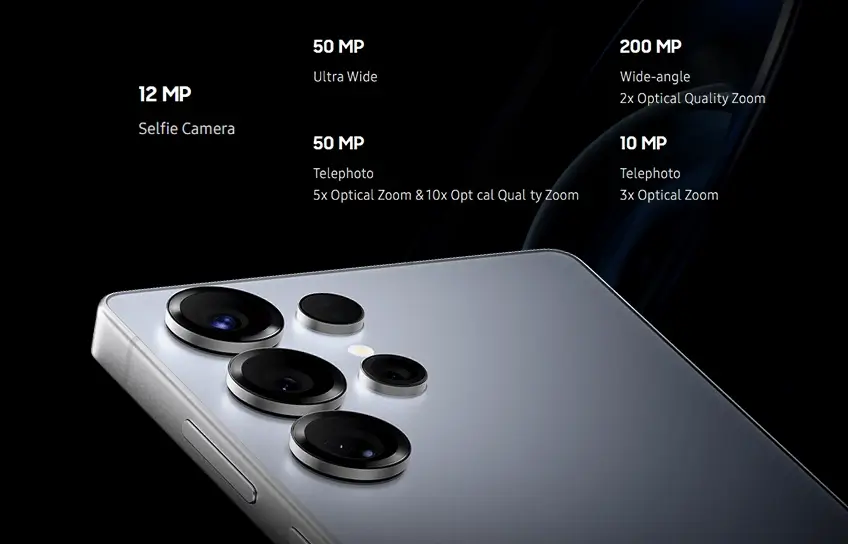
The Samsung galaxy s25 ultra camera system consists of four rear lenses: a 200MP f/1.7 main camera, a 50MP f/1.9 ultrawide, a 50MP f/3.4 5x periscope telephoto, and a 10MP f/2.4 3x telephoto. The only hardware change from the S24 Ultra is the ultrawide, which went from a 12MP sensor to a 50MP sensor with autofocus, a significant upgrade that improves both wide-angle detail and macro capability.
Strengths
The main camera produces sharp, well-exposed images in daylight with accurate colors and strong dynamic range. At 3x and 5x zoom, image quality holds up well, with the 5x telephoto being particularly strong for portraits and subject isolation. The upgraded ultrawide captures considerably more detail than before, and the addition of autofocus means macro shots are now genuinely useful rather than just a checkbox feature.
Low-light photos from the main camera are well-balanced, with a conservative approach to noise reduction that preserves texture rather than smoothing everything into a plastic look. Video at 4K 60fps is excellent, with strong stabilization across all cameras. For the first time on a Galaxy phone, Log video recording is available, giving content creators a flat color profile to work with in post-production.
Weaknesses
Night mode processing can look overly sharpened and artificial compared to what some competitors produce. Phones like the Vivo X200 Pro and the Google Pixel 9 Pro XL handle low-light scenes more naturally. The 3x telephoto, being a 10MP sensor, is the weakest link in the lineup, it is usable but noticeably softer than the 5x when examined closely. At 100x Space Zoom, digital processing artifacts are obvious, and shots are best treated as a last resort rather than a reliable tool.
Battery Life and Charging Speed
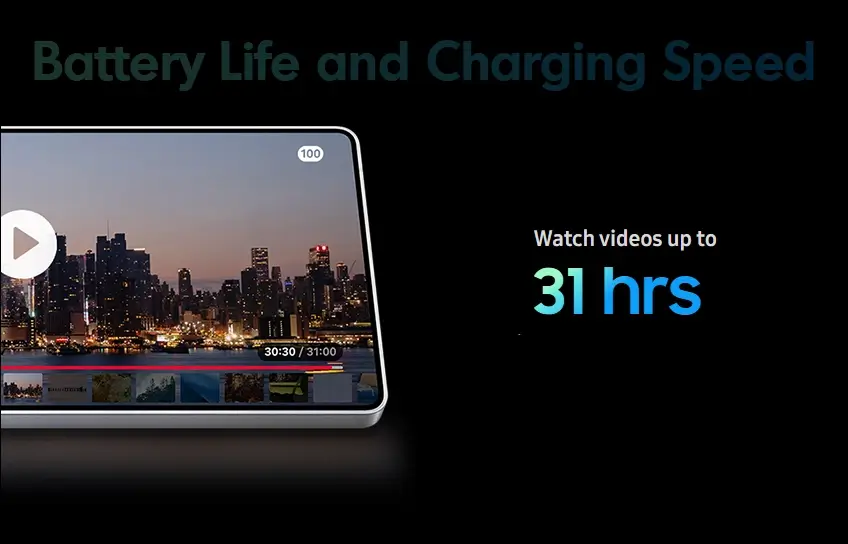
The S25 Ultra runs on a 5,000mAh battery, the same capacity as the S24 Ultra. Battery life has improved modestly, roughly 20 to 30 minutes more in active use, thanks to the Snapdragon 8 Elite’s improved power efficiency. In practice, most users get through a full day of heavy use with charge to spare, and lighter users can comfortably stretch to a day and a half.
Charging Speed
Wired charging maxes out at 45W, reaching 65% in 30 minutes and a full charge in about 65 minutes. For a phone that costs over $1,000, this is a clear weak point. The OnePlus 13 reaches a full charge in 40 minutes with its 100W wired charging. Even mid-range phones from Chinese brands now offer faster speeds than Samsung’s flagship.
Wireless charging is supported at up to 25W through the Qi2 standard. However, there are no built-in magnets in the phone, so you cannot use MagSafe-style magnetic accessories without a compatible case. Samsung’s stated reason is that magnets would interfere with the S Pen’s digitizer, a fair engineering constraint, but it still means an extra purchase if you want magnetic wireless charging.
S Pen
The S Pen is the feature that makes the Ultra line genuinely different from every other flagship on the market. For note-taking, sketching, annotating documents, and using the Screen Off Memo feature, it remains a practical tool with 4,096 levels of pressure sensitivity and reliable handwriting recognition.
What Changed This Year
Samsung stripped Bluetooth from the S Pen in this generation, removing Air Actions and the remote camera shutter. Less than 1% of users reportedly used these features, which explains the decision, but it still represents a downgrade for anyone who relied on the remote shutter for tripod photography or the Air Actions for presentations. The S Pen in the S25 Ultra is purely a passive stylus, it writes and draws, but it no longer communicates with the phone wirelessly.
Software and Connectivity
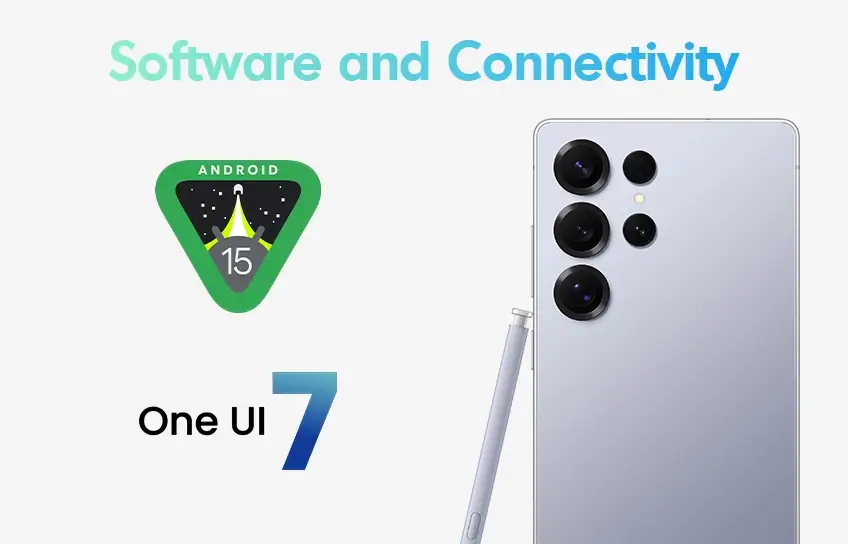
The phone shipped with Android 15 and One UI 7, and has since been updated to One UI 8 on Android 16. One UI 8 brings a refined interface, improved DeX support for desktop mode, a better Gallery editor, and additional AI tools integrated into core apps. The software is responsive and polished, and Samsung’s Galaxy Store and Knox security ecosystem add value for business users.
On connectivity, the phone supports samsung galaxy s25 ultra 5g across both sub-6GHz and mmWave bands, making it compatible with the fastest network tiers available from major carriers. The samsung galaxy s25 ultra release date of February 3, 2025 means it has had over a year of patches and refinements since launch, and the software is noticeably more stable than it was at release.
Looking at the samsung galaxy s25 ultra features as a complete package, Galaxy AI, Samsung DeX, Knox Vault security, Circle to Search, 7-year update commitment, and the S Pen, there is no Android phone that covers as many bases in one device.
On colors, the samsung galaxy s25 ultra colors available through most retailers are Titanium Black, Titanium Gray, Titanium White Silver, and Titanium Silver Blue. Three additional shades, Titanium Jet Black, Titanium Jade Green, and Titanium Pink Gold, are exclusive to Samsung’s own online store.
The samsung galaxy s25 ultra price at launch was $1,299 for the base 256GB model. As of 2026, retailers are offering the phone at a notable discount ahead of the S26 launch, with the 512GB model regularly available for well under that original figure.
Pros and Cons
Pros
- Outstanding 6.9-inch LTPO AMOLED display
- Snapdragon 8 Elite, top Android performance
- Upgraded 50MP ultrawide with autofocus
- Only flagship with a built-in stylus
- 7 years of software support until 2032
- Better value in 2026 with current discounts
Cons
- 45W wired charging is slow at this price
- S Pen lost Bluetooth and remote shutter
- No built-in magnets for magnetic wireless charging
- Weak low-light processing vs. top competitors
- Marginal upgrade over the S24 Ultra
Final Words
The S25 Ultra makes the most sense for three groups of buyers. If you are upgrading from a phone that is two or more years old, the jump in performance, camera quality, and software experience is substantial. If you are switching from the iPhone ecosystem and want the best Android has to offer, this is the phone to buy. And if you want the only flagship smartphone that includes a built-in stylus, there is no real alternative.
If you already own the S24 Ultra, there is no compelling reason to upgrade. The camera improvements are real but minor, and the AI features have rolled out to the S24 Ultra via software updates anyway.
If you are considering waiting for the S26 Ultra, keep in mind that it will launch at a higher price, and the S25 Ultra at a 2026 discount already offers a strong package with years of support ahead of it.
