


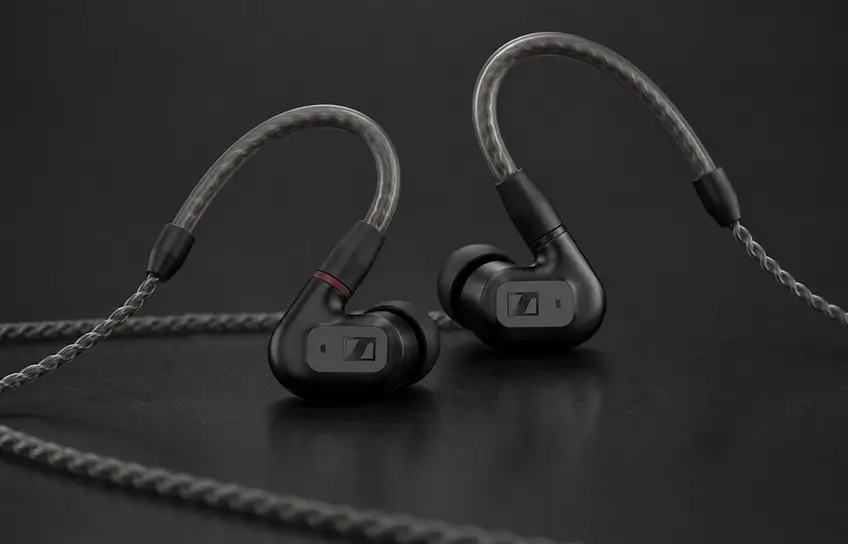
Most budget IEMs under $200 ask you to make a compromise. Either the sound is impressive but the fit is painful after an hour, or the comfort is great but the audio feels flat and forgettable. The Sennheiser IE 200 made us reconsider that expectation entirely.
We spent several days with these earphones across varied listening sessions: late-night critical listening at a desk, commutes, casual afternoon sessions on a phone, and back-to-back comparisons against other IEMs in the same price range. The IE 200 was tested through a laptop headphone jack, a smartphone, and a portable USB-C DAC to understand how the source affects what you hear. What we found was more nuanced and more impressive than the $149.95 price suggests, but there are real frustrations that deserve honest coverage too.
If you have been researching wired IEMs and headphones across different budgets, the IE 200 belongs on your shortlist. Here is why, and exactly where it falls short.
Sennheiser IE 200 Specifications
| Specification | Details |
| Driver | 7mm TrueResponse Dynamic Driver |
| Impedance | 18 ohms |
| Sensitivity | 119 dB SPL (1 kHz, 1 Vrms) |
| Frequency Response | 6 Hz to 20,000 Hz |
| Total Harmonic Distortion | Less than 0.08% |
| Cable Connector | MMCX (recessed) |
| Cable Length | 1.2 meters |
| Jack Plug | 3.5mm angled |
| Weight (per earpiece) | 4 grams |
| Acoustic Design | Closed |
| Price | $149.95 |
What Comes in the Box
The packaging does not attempt to impress. A thin cardboard sleeve holds the earpieces in molded foam. Inside you get the braided cable, a small faux-leather carrying pouch, and two full sets of eartips in three sizes each. One set is silicone and the other is memory foam.
The accessories are functional without feeling premium. The pouch lacks a zipper and just barely fits the earphones. There is no carry case, no cable clip, and no quarter-inch adapter. For $150, that is an honest but slightly underwhelming presentation compared to some Chinese IEM brands that pack significantly more into the box at similar or lower prices.
What matters is that Sennheiser included both silicone and memory foam tips, because the choice between them genuinely changes how this earphone sounds. More on that shortly.
Design and Build Quality

The earpiece shells are polycarbonate plastic, finished in matte black. They feel solid when handled, without any flex or creak. At just 4 grams per earpiece, the IE 200 is one of the lightest IEMs available, and that lightness is not a sign of cheapness. Sennheiser has used this same housing geometry across the IE 300, IE 600, and IE 900, meaning the physical design had already gone through years of refinement before arriving at this price point.
The braided cable uses MMCX connectors to attach to the earpieces, which means the cable is replaceable if it ever fails. That is a genuine long-term value point. The problem is the connectors sit recessed behind a small collar on the housing, which blocks most standard aftermarket cables from seating properly. Only cables designed specifically for Sennheiser’s IE series will fit cleanly.
The cable itself is the weakest part of this product. It tangles constantly, holds kinks from being stored, and transmits rubbing noise against clothing during movement. For stationary listening at a desk, it causes no issues at all. For commuting or any activity where the cable moves against fabric, the noise becomes genuinely distracting. This is the one area where the IE 200 feels noticeably unfinished for its price.
Fit and Comfort

Comfort is where the IE 200 separates itself clearly from most IEMs in this category.
The shell design sits low and flush inside the ear rather than protruding outward. Combined with the 4-gram weight, the IE 200 disappears into the ear in a way that larger IEMs simply cannot. After about ten minutes of wear, there is no pressure awareness, no hotspot against the ear canal, and no fatigue building in the outer ear. We wore these for four-hour sessions without discomfort, which is rare for wired in-ear monitors at any price.
The over-ear cable hooks are made from a soft, pliable material that you shape to your ear once and then forget about. Unlike rigid memory wire that tightens over time, these hooks hold their position without creating clamp pressure. The fit stays stable during head movement without requiring constant readjustment.
One practical benefit worth mentioning: because the shell sits so flat, the IE 200 is one of the few IEMs usable while lying on your side. The housing does not dig into the ear against a pillow, which makes it genuinely practical for listening before sleep.
The one variable that affects comfort indirectly is the eartip seal. The stock silicone tips are thin and slightly slippery, and they require precise positioning to maintain a proper seal. When they slip or fold slightly at the edge, the sound quality changes noticeably. Getting the fit right with the silicone tips takes a few tries. The memory foam tips seal more reliably on the first attempt, and they are worth trying before reaching for anything else.
How the IE 200 Actually Sounds

We tested the IE 200 across acoustic recordings, jazz, rock, hip-hop, and electronic music. Every listening session used lossless or high-quality streaming audio. The consistent finding across all of those sessions was that the IE 200 rewards well-recorded music and reveals problems in compressed or poorly mastered tracks. That is the character of a genuinely accurate earphone.
Bass
When the eartip seal is solid, the bass on the IE 200 is controlled, punchy, and clean. Kick drums land with real weight. Bass guitar lines carry body and definition. The low end does its job and steps back cleanly, without bleeding into the midrange and muddying the overall presentation.
Pink Floyd’s “Money” is a track we kept returning to during testing. The opening bass riff on that recording is one of the clearest tests of bass note separation. On the IE 200, each pluck carries its own weight and decays cleanly before the next note arrives. Nothing smears. That kind of precision in the low end is noticeably harder to find at this price than the specs would suggest.
Where the bass falls short is texture. The finer grain of a plucked double bass string, the slight roughness of fingers on a bass guitar neck, the way a low note blooms and fades on a piano, these micro-details are smoothed over. For most music and most listeners, this never surfaces as a problem. For serious jazz and classical listening where the bass instrument carries real complexity, it is a limitation worth knowing before buying.
Mids
The midrange is where the IE 200 quietly outperforms its own price, and arguably outperforms some of its more expensive siblings in the IE lineup.
The IE 300 has a slight push in the upper midrange that makes vocals feel artificially forward. The IE 200 corrects that tendency. Vocals sit inside the mix rather than being spotlit above everything else, and they sound like they belong to the recording rather than being added after the fact.
Bill Callahan’s “Drover” made this immediately obvious. His baritone sits naturally low and full, without any artificial brightness or presence boost that would feel wrong for the performance. Drums sound weighted. Acoustic guitar carries a real body. Every instrument in that mix stays in its correct relationship to the others, and the IE 200 simply lets you hear it without intervening.
This natural quality in the midrange holds across vocal styles. Male voices carry warmth and weight. Female voices stay clear without thinning out. Acoustic guitar, piano, strings, and horns all come through with a character that sounds like the instrument rather than a reproduction of it. That is not a given at $150.
Treble
Sennheiser pulled the top end back compared to the IE 300 and IE 600, and that was the right decision for this price point. The high frequencies add air and detail without becoming sharp or fatiguing during long sessions.
Miles Davis’ “Pharaoh’s Dance” became our go-to treble test. The trumpet’s upper register, the scattered percussive hits throughout the track, the cymbal decay as the recording opens up, all of it comes through with clarity and no harshness that would make you reach for the volume dial. That kind of controlled performance in the treble is exactly what makes the IE 200 sustainable across hours of listening.
Treble-sensitive listeners will find the IE 200 significantly easier to live with than most earphones in this category. There is some roll-off in the upper regions, so the extended airy shimmer of the IE 900 is not here. For most music and most listening situations, that trade-off is worth making.
The Dual Bass Tuning System

This is the section that most reviews either skip or explain poorly, and it is the root cause of nearly every negative review claiming the IE 200 has weak or missing bass.
The nozzle on the IE 200 has a small tuning hole built into the side. The eartip can be seated in two positions on that nozzle. When seated in the outer position, the hole is partially exposed, which intentionally reduces bass output. Sennheiser calls this the analytical setting. When seated in the inner position, the hole is covered, which restores the full low-end response. Sennheiser calls this the reference setting.
The problem is that many people seat their eartips in the outer position without realizing it, hear thin bass, and assume the product is defective or poorly tuned. It is not. It is behaving exactly as designed.
Beyond the two official positions, there is a community-discovered fix that audiophile forums have discussed extensively: placing a small piece of tape over the tuning hole before inserting the eartip. This ensures a consistent seal over the hole regardless of eartip positioning, and it locks in the reference tuning reliably. We tested both the standard inner position and the tape approach. The tape approach produced more consistent bass response across different eartips and fit conditions.
If the IE 200 sounds bass-light out of the box, try repositioning the eartip to the inner position before drawing any conclusions. That single adjustment changes the sound character substantially.
Does the IE 200 Need a DAC or Amp?

No. At 18 ohms impedance and 119 dB sensitivity, the IE 200 is one of the easiest IEMs to drive available. A modern smartphone, a laptop headphone jack, and a basic USB-C adapter all push it to clear, loud levels without strain.
That said, we noticed a genuine improvement in perceived detail and background noise floor when running the IE 200 from a portable USB-C DAC during testing. The difference is not dramatic, but it is consistent and audible on back-to-back comparisons. A dongle DAC is worth considering for serious listening sessions. It is not a requirement for the earphone to perform well.
How the IE 200 Compares to Its Competition
The $100 to $200 wired IEM category is genuinely competitive right now. Here is how the IE 200 sits relative to its closest alternatives:
| Model | Price | Driver | Tuning Character | Detachable Cable | Best Use Case |
| Sennheiser IE 200 | $149.95 | 7mm dynamic | Neutral, mild V-shape | Yes, MMCX | Acoustic, jazz, vocal, critical listening |
| Moondrop Aria 2 | $79 | 10mm dynamic | Harman-leaning, vocal forward | No | Everyday listening, vocals, value buyers |
| Etymotic ER2SE | $99 | Balanced armature | Reference neutral, deep fit | No | Analytical listeners, accuracy priority |
| Shure SE215 Special Ed. | $99 | Single dynamic | Warm, bassy | Yes, MMCX | Casual listening, bass-friendly genres |
| Sennheiser IE 300 | $299 | 7mm dynamic | Bass-forward, elevated treble | Yes, MMCX | Bass listeners upgrading within IE family |
The Moondrop Aria 2 costs nearly half as much. For pure value-per-dollar, it competes seriously with the IE 200. The IE 200 earns its premium through the MMCX detachable cable system, the smaller and lighter shell that fits more ear geometries comfortably, and the brand ecosystem that lets you upgrade cables and stay within Sennheiser’s IE family long term.
If wireless listening matters alongside wired use, the Sennheiser Momentum 4 covers that use case well without asking you to compromise on audio quality. For communication-focused use with hands-free features, the Sennheiser HDB 630 is built specifically for that purpose.
Pros and Cons
Pros
- Exceptional comfort for long sessions, genuinely disappears in the ear
- Natural, honest midrange that most earphones at this price cannot match
- Dual bass tuning system adds real flexibility once you understand it
- Easy to drive from any device, including phones
- Detachable cable means the earphones are repairable and long-lasting
- Housing design refined across multiple IE generations before this price point
Cons
- Stock cable tangles easily, holds kinks, and transmits clothing noise
- Recessed MMCX connectors limit aftermarket cable compatibility
- Stock silicone eartips require careful positioning to maintain seal
- No inline microphone or playback controls
- Bass texture is noticeably smoothed over compared to the IE 300 and above
Who Should Buy the IE 200
Buy the IE 200 if you:
- Listen primarily to acoustic, jazz, classical, or vocal-heavy music
- Value long-session comfort above an aggressive sound signature
- Want a wired earphone with a cable you can actually replace
- Are willing to spend a few minutes on eartip fit to get the best result
- Plan to stay in the Sennheiser IE ecosystem and want a starting point with upgrade potential
Consider something else if you:
- Listen mostly to hip-hop, EDM, or bass-heavy genres and want an emphasized low end
- Need an inline microphone for calls or voice messages
- Want a plug-and-play experience without any setup or adjustment
- Find yourself frequently moving or commuting and cannot tolerate cable noise
The Sennheiser Game One is built around an entirely different use case and deserves a mention here for anyone considering Sennheiser’s lineup for gaming or voice communication rather than music listening.
Final Verdict
The Sennheiser IE 200 is the kind of product that earns its reputation through listening rather than specifications. The bass detail does not match pricier siblings. The cable is a genuine frustration. The stock eartips require patience. None of that disappears under closer examination.
But when you settle in, get the fit right, and press play on music you care about, something clicks. The midrange sounds honest in a way that takes real acoustic knowledge to achieve at $150. The tuning does not flatter or exaggerate. It simply lets you hear the recording, which is a rarer quality than the market makes it seem.
