


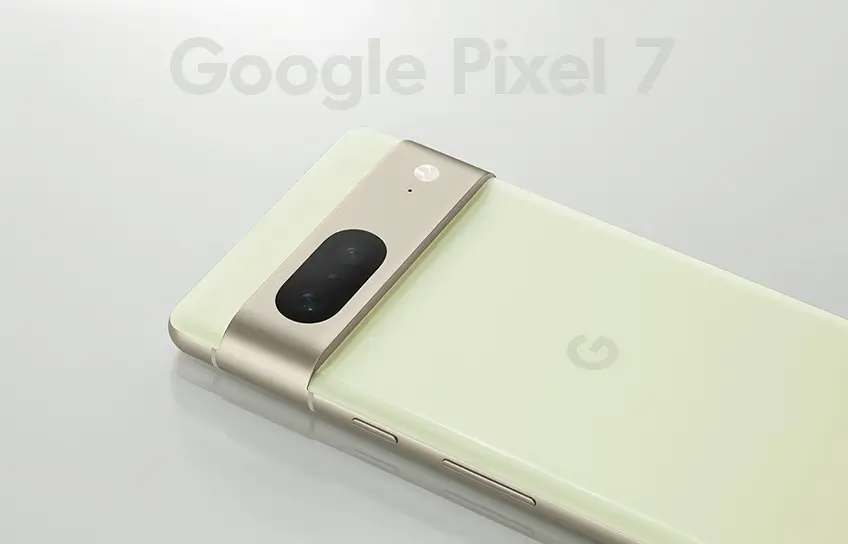
Finding a capable Android phone under $200 is harder than it sounds. Most options in that range ask you to compromise on the camera, the software experience, or both. The google pixel 7, which launched in October 2022 at $599, has dropped significantly in price and now sits in a range where its original strengths become even harder to ignore.
This google pixel 7 review covers everything a buyer in 2026 actually needs to know: what it does well, where it falls short, how its specs hold up today, and whether the price makes it worth choosing over newer alternatives.
Google Pixel 7 Full Specifications
The table below lists the confirmed hardware specifications pulled directly from the official product page.
| Feature | Details |
| Released | October 13, 2022 |
| OS | Android 13, upgradable to Android 16 (up to 7 major upgrades) |
| Chipset | Google Tensor G2 (5 nm) |
| CPU | Octa-core: 2×2.85 GHz Cortex-X1, 2×2.35 GHz Cortex-A78, 4×1.80 GHz Cortex-A55 |
| GPU | Mali-G710 MP7 |
| Display | 6.3-inch AMOLED, 90Hz, HDR10+, 1080×2400 px (~416 ppi), 1400 nits peak brightness |
| Protection | Corning Gorilla Glass Victus (front and back) |
| RAM | 8 GB LPDDR5 |
| Storage | 128 GB or 256 GB (UFS 3.1), no microSD slot |
| Main Camera | 50 MP f/1.9 wide, OIS + 12 MP f/2.2 ultrawide |
| Selfie Camera | 10.8 MP f/2.2 ultrawide |
| Video | 4K at 30/60 fps, 1080p up to 240 fps, 10-bit HDR, OIS and EIS |
| Battery | 4355 mAh, 20W wired (50% in 30 min), 21W wireless |
| Connectivity | 5G, Wi-Fi 6E, Bluetooth 5.2, NFC, USB-C 3.2, GPS (L1+L5) |
| SIM | Nano-SIM and eSIM (dual standby) |
| Biometrics | Under-display optical fingerprint sensor, Face Unlock |
| Water Resistance | IP68, up to 1.5m for 30 minutes |
| Dimensions | 155.6 x 73.2 x 8.7 mm, 197 g |
| Colors | Obsidian, Lemongrass, Snow |
| AnTuTu Score | 813,114 (v9) |
| Battery Endurance | 96 hours |
Design and Build Quality

The Pixel 7 measures 155.6 x 73.2 x 8.7 mm and weighs 197 grams. It is slightly smaller and lighter than the Pixel 6 it replaced, and that reduction is noticeable when you hold both side by side. The horizontal camera bar across the back is made from polished aluminum rather than the painted plastic on the Pixel 6, which improves both the look and the long-term durability of that section.
The frame is recycled aluminum, and both the front and back panels use Gorilla Glass Victus. This is the same glass used on phones costing over $1,000, and it handles everyday scratches and minor drops better than standard glass. The IP68 rating covers the phone against dust ingress and water immersion up to 1.5 meters for 30 minutes, which is a meaningful real-world protection level for this price.
Build Quality and Durability
One practical point worth raising is that the Google Pixel 7 screen replacement, if you ever need one, costs more than repairs on typical budget phones. This is partly because the AMOLED panel and Gorilla Glass combination is more expensive to source than the LCD screens found on cheaper devices. A protective case from the start is a sensible way to avoid that cost.
The phone comes in three colors: Obsidian, Lemongrass, and Snow. The Lemongrass version pairs a pale yellow back with a gold-toned aluminum frame, while Obsidian and Snow are more neutral choices that work in any setting.
Display Quality

The google pixel 7 specifications include a 6.3-inch AMOLED panel with a 1080 by 2400 resolution, a 20:9 aspect ratio, and a pixel density of approximately 416 ppi. The display runs at up to 90Hz and supports HDR10+. Peak brightness reaches 1,400 nits, which is enough to keep content legible in direct outdoor sunlight. At minimum brightness, the screen dims to around 1.9 nits, which is comfortable for reading in a completely dark room without eye strain.
The 90Hz refresh rate is the one area where newer phones at similar prices now have an edge. Several mid-range competitors offer 120Hz displays, and once you are used to that smoothness, 90Hz feels slightly less fluid during fast scrolling. For most everyday tasks like reading, messaging, and streaming, the difference is minor. For gaming or fast-scrolling through social media feeds, it is more noticeable. The panel is flat, which keeps edge interactions accurate and makes fitting a screen protector straightforward.
Camera System

The rear camera setup consists of a 50MP wide sensor with an f/1.9 aperture and optical image stabilization, paired with a 12MP ultrawide sensor at f/2.2 covering a 114-degree field of view. There is no telephoto lens on this model. The front camera is a 10.8MP ultrawide at f/2.2, capable of shooting 4K video at up to 60 frames per second.
Night Sight mode is the most practically useful feature for most people. It uses the Tensor G2 chip to combine multiple exposures and reconstruct detail in scenes with very little available light, often producing results that are brighter and sharper than what the eye perceives in the same environment. Portrait mode uses computational edge detection to separate subjects from backgrounds, and it performs well even with complex subjects like hair or fur, which tend to trip up software-based bokeh on other phones.
AI Camera Features
Photo Unblur, available through the Google Photos app, can retrospectively sharpen images that were captured with slight motion blur, including photos taken on other cameras or older phones. Magic Eraser identifies distracting elements in the background of a photo and removes them using AI-generated fill based on the surrounding pixels. Both features work on existing photos in your library, not just new ones taken on the Pixel 7.
The absence of a telephoto lens means that anything beyond 2x zoom relies on digital cropping from the 50MP main sensor. At 2x the results are usable, but quality drops off noticeably at 5x and above. If photographing subjects at distance is a regular part of how you use your phone, this limitation will matter.
Video Recording
The Pixel 7 records video at 4K resolution at either 30 or 60 frames per second, and supports 1080p slow motion at up to 240fps. Both optical image stabilization and electronic image stabilization are active during recording, which keeps handheld footage steady without a gimbal. The Cinematic Blur mode applies background blur to video in real time, similar to how Portrait mode works for photos.
It is not perfect on moving subjects, but it produces clean results when the subject is relatively still. The 10-bit HDR video option retains more detail in high-contrast lighting, which is useful if you plan to edit footage after recording.
Processor and Everyday Performance

Looking at the google pixel 7 specs, the Tensor G2 chip scores around 813,000 on AnTuTu v9. That places it below the Qualcomm Snapdragon 8 Gen 1 and Samsung Exynos 2200 found in flagship phones from the same era, but the gap in actual use is smaller than the numbers suggest. The Tensor G2 is designed with on-device machine learning as a priority, which is why camera processing, voice recognition, and real-time transcription feel faster on Pixel phones than on devices with higher benchmark scores.
The phone carries 8GB of LPDDR5 RAM, which is sufficient for running multiple apps simultaneously without reloading. Storage is UFS 3.1, which is fast enough for app launches and file transfers to feel responsive. The Tensor G2 does generate noticeable heat during extended gaming or prolonged camera use, which can cause the frame rate to drop slightly as the chip throttles to manage temperature. For non-gaming use, this is rarely an issue.
Fingerprint Reader and Face Unlock

The Pixel 6 had one of the worst under-display fingerprint readers of any phone in its price range, slow and prone to errors. The Pixel 7 uses the same optical sensor type but with improved placement and tuned algorithms. It is noticeably more reliable than its predecessor and unlocks at a speed comparable to most mid-range phones. It is still an optical sensor, meaning it requires a brief press rather than the near-instant recognition you get from the ultrasonic sensors found in Samsung’s Galaxy S series. For most users it will not be a frustration, but it is a step behind the best available at this price in 2026.
Face Unlock works as a secondary option and is faster than the fingerprint reader in well-lit conditions. It uses the front camera rather than a dedicated infrared sensor, so it does not work reliably in low light and is not considered secure enough for authorizing payments. It is useful for a quick lock screen bypass when your hands are wet or gloved.
Speaker and Audio Quality

The Pixel 7 has stereo speakers, with one firing from the bottom edge and the earpiece acting as the second channel. At high volume the output is clear with no significant distortion, and it is loud enough for watching videos in a quiet room without headphones. The low-end response is thin, which is typical for phone speakers at this size. If audio quality matters to you beyond basic media consumption, wired headphones via a USB-C adapter or Bluetooth headphones with aptX HD support will deliver a meaningfully better experience. There is no 3.5mm headphone jack.
Software and Update Support
The Pixel 7 ships with Android 13 and is confirmed to receive updates through Android 16, along with five years of monthly security patches from the original release date. In 2026, the phone is still within that support window. This update policy is comparable to what Apple offers on iPhones and is more generous than most Android manufacturers provide at this price point. Samsung offers four years of major updates on its flagship Galaxy S series, but most budget Android phones receive two years or fewer.
The software does not include any manufacturer customization layer. This means no duplicate apps, no third-party app stores, and no locked settings. Pixel-exclusive features include Call Screen, which automatically answers and transcribes calls from unknown numbers before you decide whether to pick up, and Direct My Call, which transcribes automated phone menu options onto your screen so you can tap rather than wait and listen. Both features run on-device using the Tensor G2 processor.
Battery Life and Charging

The phone uses a 4,355mAh battery. GSMArena’s endurance test rated it at 96 hours, which accounts for a mixed usage pattern of calls, browsing, and video playback. In practice, a user with moderate screen-on time of around four to five hours per day will reach the end of the day with battery to spare. Heavier users who keep the screen on for six or more hours, use GPS navigation, or run processor-intensive apps may need to charge before the end of the evening.
It is also worth noting that since the google pixel 7 release date in October 2022, several competing phones in the same price range have adopted larger batteries in the 5,000mAh range, which gives them a measurable endurance advantage.
Wired charging tops out at 20W, reaching 50% in approximately 30 minutes and full charge in about 95 minutes. Wireless charging is supported at up to 21W. Neither charging speed is fast by current standards. Competing phones in this price range now commonly support 33W or 45W wired charging. That cuts full-charge times to under an hour. The Pixel 7 cannot match that. No charging adapter is included in the box either. You will need a USB Power Delivery charger supporting at least 18W to get close to the rated speeds.
Is It Worth Buying in 2026?
The question most buyers are really asking is: is the google pixel 7 a good phone for the money in 2026? At its current street price of under $200 in most markets, the answer is yes for a specific type of buyer. The camera system, software cleanliness, build quality, and update longevity are all above what most phones at this price deliver. The trade-offs are real: 90Hz display, no telephoto lens, slow charging, and a battery that can struggle under heavy use. None of those are reasons to avoid the phone entirely, but they are factors worth weighing against what else is available at the same price.
Buyers who benefit most are upgrading from a phone three or more years old. It also suits people who shoot frequently in mixed lighting. Anyone wanting guaranteed software updates without flagship prices will find it compelling. Buyers better served elsewhere include heavy gamers. Users who need fast charging for a demanding daily schedule should look at alternatives. The same goes for photographers who regularly shoot subjects at a distance.
Pros
- 50MP camera with OIS performs reliably in daylight and low light
- Clean Android with updates guaranteed through Android 16
- Aluminum frame with Gorilla Glass Victus front and back
- 6.3-inch AMOLED display, 416 ppi, 1400 nits peak brightness
- IP68 dust and water resistance
- Under $200 at most retailers in 2026
Cons
- No telephoto lens, digital zoom degrades quickly past 2x
- 90Hz display, while 120Hz is now standard at this price
- 20W charging with no adapter in the box
- Battery struggles under heavy use before end of day
- No microSD slot, storage is fixed at purchase
Which Pixel 7 Should You Buy: 7, 7a, or 7 Pro?
All three share the same core experience. But the right one depends on your budget and what you actually need from a phone.
Pixel 7 vs Pixel 7a
The Pixel 7a shares the same Tensor G2 chip and a similar 64MP main camera as the standard Pixel 7. On paper they look close. But the differences matter in daily use. The Pixel 7a has a smaller 6.1-inch display, which is noticeable if you consume a lot of content or prefer a larger screen. The battery is also smaller at 4385mAh.
The build quality takes a step down too, with more plastic used in the frame compared to the aluminum construction on the Pixel 7. Charging is slightly slower at 18W versus 20W. None of these are dealbreakers on their own. But combined, they add up. If the price gap between the two is $30 to $50 in your market, the Pixel 7 is the smarter buy. You get a better build, a bigger display, and a cleaner feel without spending significantly more.
Pixel 7 vs Pixel 7 Pro
The Pixel 7 Pro is a different phone in several meaningful ways. The most obvious addition is the 5x optical telephoto camera, which makes a real difference if you shoot subjects at a distance. The display steps up to 6.7 inches with a 120Hz refresh rate, which feels noticeably smoother than the 90Hz panel on the standard model.
RAM increases to 12GB and the battery grows to 5,000mAh, giving it a clear endurance advantage. In 2026 the Pro is available at reduced prices, which closes the gap considerably. If the difference between the two is under $100 in your market, the Pro is worth the extra spend. The telephoto lens and display upgrade alone justify it for most buyers. If the gap is larger, the standard Pixel 7 still covers the majority of daily use cases without stretching your budget.
Final Thoughts
The Pixel 7 is a three-year-old phone that holds up well specifically because its advantages were built around software and camera processing rather than raw hardware power. The camera system, update policy, and build quality are still competitive at its current price. The 90Hz display, 20W charging speed, and lack of telephoto lens are genuine gaps compared to what newer phones now offer in the same budget range.
For buyers who prioritize camera quality, software reliability, and long-term support over the fastest specs available, it remains a well-rounded and sensibly priced choice in 2026.
