


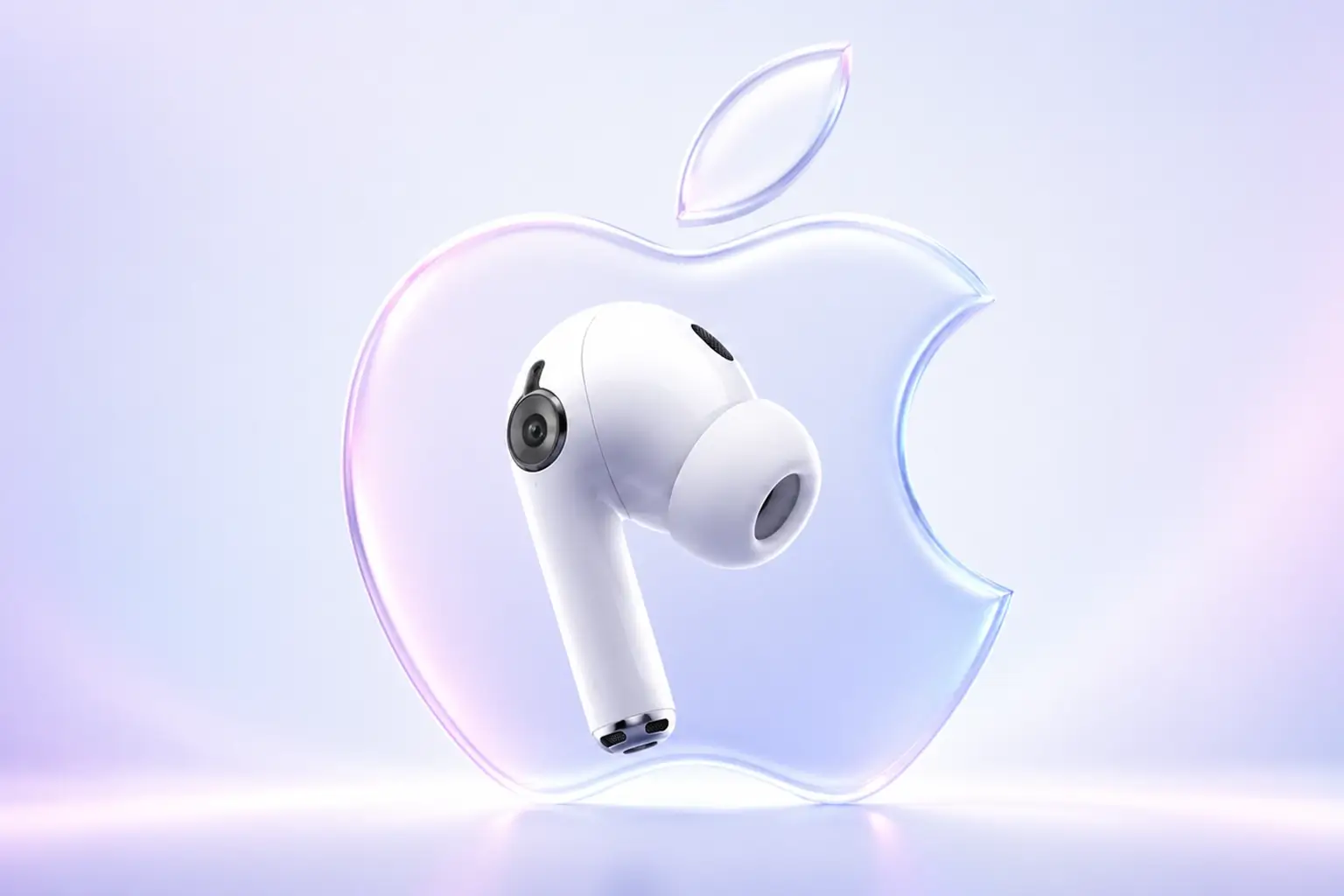
Apple has hit a major development milestone with its camera-equipped earbuds, Bloomberg’s Mark Gurman reported this week. The AirPods with a camera in each earbud now have prototypes featuring a near-final design, and internal testers are actively using them. Four years in the making, this product is closer to real shelves than it has ever been.
What the Cameras Are Actually For
Before you picture yourself snapping photos through your ears, it helps to understand what these cameras actually do. They will not take photos or record video. Their job is much simpler and, in some ways, more interesting: they give Siri a way to see the world around you.
Each earbud will carry a small camera that captures low-resolution visual data from your surroundings. That information goes straight to Siri, letting Apple’s assistant answer questions about real objects and situations around you without you ever pulling out your phone. It is the same idea as the Visual Intelligence feature already on iPhone, but now it works hands-free, just by looking at something.
You might have seen a similar experience with Meta’s Ray-Ban smart glasses, which also use cameras to feed visual context to an AI assistant. Apple’s version, however, is built entirely around Siri and is not meant for sharing photos at all.
Real-World Use Cases
The practical uses here are more grounded than they might first sound. You could glance at ingredients in your kitchen and ask Siri what to cook for dinner. You could walk through an unfamiliar street and get directions that reference an actual landmark in front of you, rather than a generic GPS prompt.
The earbuds could also notice things around you and surface a relevant reminder, like spotting a product on a store shelf and reminding you it was on your list. These are the kinds of small, everyday moments where a hands-free, context-aware assistant could feel genuinely useful rather than a gimmick.
Design and Privacy
The new earbuds are expected to look almost identical to the current AirPods Pro 3. The only visible difference is slightly longer stems, needed to fit the camera hardware inside. So unless you are looking closely, they will not stand out from what is already on the market.
On the privacy side, Apple has built in a small LED indicator that lights up whenever the cameras are sending visual data to the cloud. It is a clear, simple signal to anyone nearby that the earbuds are actively capturing information at that moment.
Where Development Stands Right Now
The earbuds are currently in what is called design validation testing, or DVT. This is the second-to-last stage before a product goes into production. Engineers are making final tweaks to the design and software, not starting over. The next step, production validation testing, is when Apple builds a limited run of units to test the assembly process at scale before mass production begins.
This is not a concept anymore. Apple is reportedly expecting strong demand for these earbuds and has already started securing components for mass production. That kind of supply chain prep does not happen for products that are still in question.
The Release Timeline and the Siri Problem
Apple had originally planned to put these earbuds on sale in the first half of 2026. That did not happen. The launch was pushed back because the next-generation Siri, which is the entire reason these cameras exist, was not ready in time. A camera that feeds visual data to an AI assistant is only as useful as that assistant.
Gurman now says the updated Siri is on track to arrive in September with iOS 27. If that holds, a fall 2026 release for the earbuds becomes a genuine possibility, though Apple has not officially confirmed anything.
These earbuds are the furthest along in a broader group of AI hardware Apple is developing, which also includes smart glasses and a small camera-equipped pendant worn like an accessory. The earbuds are leading that pack.
The Bigger Picture
What Apple is working on here is not simply a new pair of earbuds. It is a serious push into AI-first wearable hardware, the kind of device that understands your environment and responds to it without you needing a screen. Whether it lands the way Apple hopes depends almost entirely on how well the new Siri performs when it actually ships.
The cameras are nearly ready. The software is the last piece.
