


Finding the right speaker can feel like a project in itself. There are hundreds of brands and thousands of models. No shortage of opinions exists about which one is worth your money. If you have researched audio gear, you have almost certainly come across Klipsch speakers. The reason is simple: Klipsch has been building high-quality audio equipment since 1946. For nearly eight decades, the brand has refined what it means to deliver powerful, accurate, and enjoyable sound.
Whether upgrading a home theater or setting up a music room, Klipsch consistently delivers. This Klipsch speakers review covers five models. Each represents a different budget, room size, and listening habit. Every pick is explained in plain terms. No unnecessary technical jargon. The selections range from a $99 pocket-sized portable to a $1,499 all-in-one powered system, with three strong options in between.
Why Klipsch Continues to Stand Out in 2026
Part of what makes Klipsch so interesting as a brand is how deeply its identity is tied to its origins. Collectors who appreciate klipsch speakers vintage models from the 1950s and 1960s will tell you that the horn-loaded design philosophy those early speakers were built on is still very much alive in the products Klipsch makes today.
That continuity is rare in consumer electronics, and it speaks to how well-thought-out the original engineering was. The Tractrix horn, which directs sound outward with precision and minimal distortion, remains a defining feature across much of the current lineup.
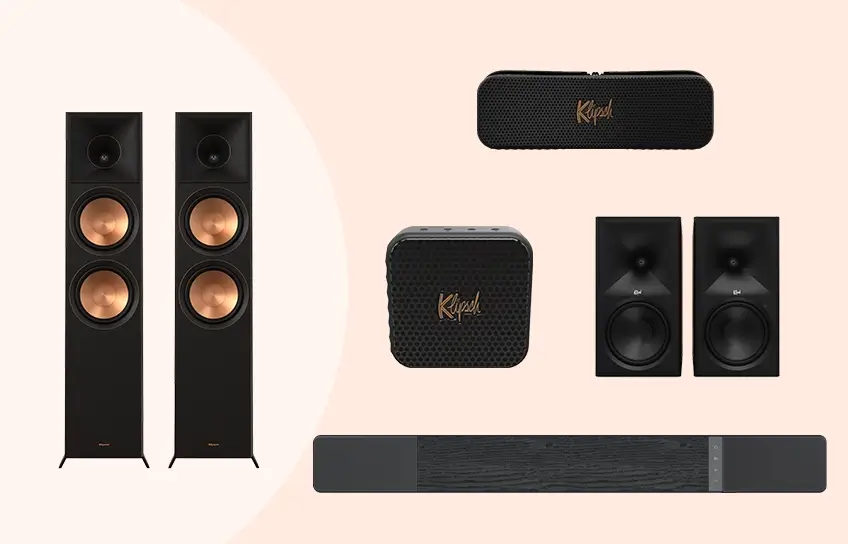
Today, Klipsch produces a wide range of products. These include passive floor-standing speakers, powered bookshelf speakers, Dolby Atmos soundbars, and outdoor-rated Bluetooth speakers. Understanding that range matters before you buy. The right Klipsch product for a studio apartment looks very different from the right one for a dedicated home theater room.
The 5 Best Klipsch Picks in 2026
1. Klipsch Reference Premiere RP-8000F II
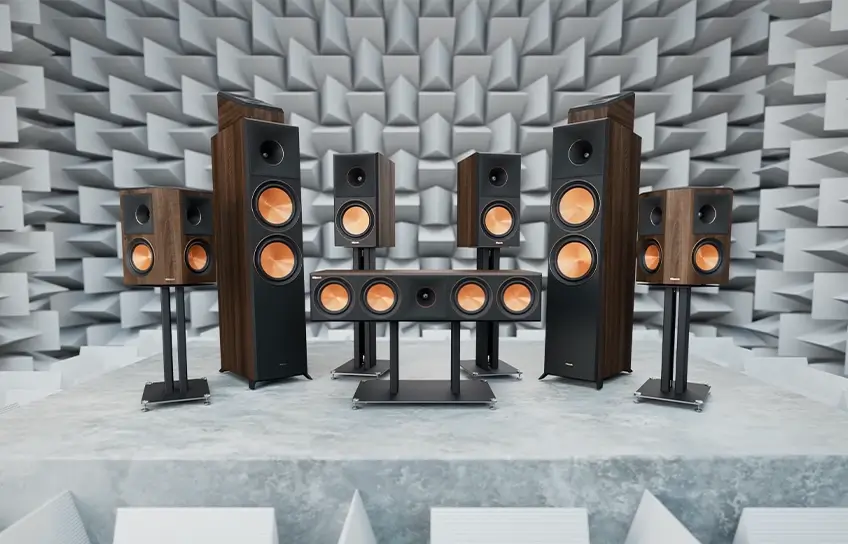
When people talk about a Klipsch speakers price that truly justifies itself, the RP-8000F II is the usual example. At around $1,198 per speaker, it sits firmly in the premium tier. But its design and performance back that number up. Each cabinet houses a pair of eight-inch cerametallic woofers. A one-inch titanium tweeter sits mounted on Klipsch’s Tractrix horn. The cerametallic material maximizes driver efficiency while reducing distortion. The result is a speaker that sounds fast, clear, and authoritative at any volume.
The Tractrix horn disperses treble outward in a controlled pattern, cutting down on wall reflections and the kind of high-frequency harshness that makes long listening sessions tiring. Specially tuned bass ports extend low-end response cleanly, and cast aluminum feet elevate the cabinet off the floor to prevent vibration-induced distortion at higher volumes.
What makes the RP-8000F II a particularly smart long-term purchase is the upgrade path built into each cabinet. Connectors near the top allow you to add Klipsch’s RP-500SA upward-firing speakers later, turning a stereo pair into a Dolby Atmos-capable system without buying new main speakers. That means your initial investment keeps its value as your setup grows.
Pros:
- Exceptional clarity and dynamic range across every volume level
- Cerametallic woofers minimize distortion for tight, powerful bass
- Built-in Dolby Atmos upgrade path via top-mounted connectors
- Cast aluminum feet reduce vibration and cabinet resonance
- Tractrix horn delivers natural, fatigue-free treble reproduction
Cons:
- At $1,198 per speaker, a stereo pair is a significant investment
- Requires a separate amplifier or AV receiver to operate
- Large cabinet size demands considerable floor space in your room
- More speaker than most small or casual listening environments need
2. Klipsch The Nines
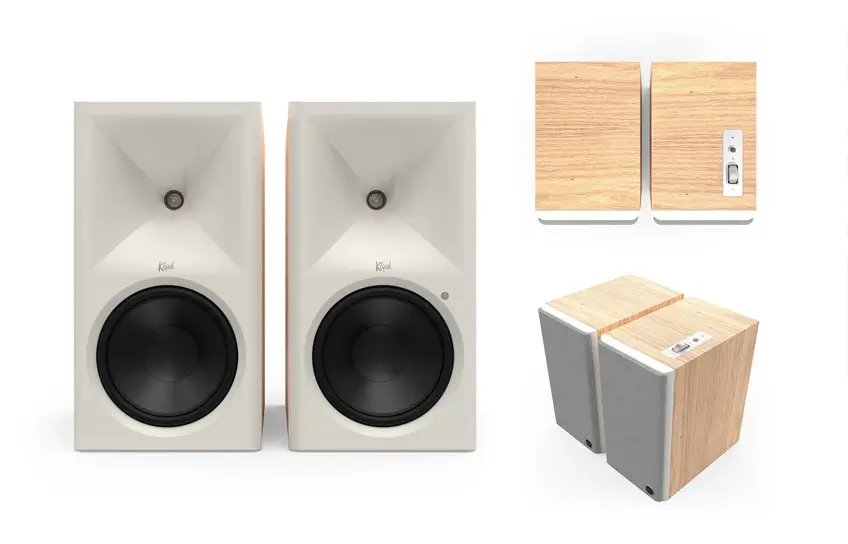
Among the klipsch speakers for sale right now, The Nines occupy a unique position: priced at $1,499, they sit at the higher end of the powered bookshelf category, but what you are getting is a complete audio system in two cabinets with no additional hardware required. Each speaker stands just over a foot and a half tall, yet the eight-inch woofer and one-inch Tractrix horn-loaded tweeter inside produce a sound that easily fills a medium to large room with authority and depth.
The Nines are exceptionally well-connected for a bookshelf speaker. They include a built-in phono stage with an RCA input for turntables, an HDMI port, an optical audio input, a USB port, a subwoofer output, and Bluetooth for wireless streaming. You can connect your turntable, television, and laptop all at once and switch between them without touching a single cable. Digital listeners will also appreciate native support for 24-bit, 192kHz audio through the digital inputs, a level of playback quality that competes with dedicated DAC setups.
The Nines make the most sense for someone who wants a single speaker system that handles every source without compromise. If you own a turntable, stream music daily, and occasionally connect a TV or computer, this is the one product that handles all three jobs at a high level without requiring you to add or upgrade anything else.
Pros:
- All-in-one powered system with built-in amplification and phono stage
- Extensive inputs including HDMI, optical, USB, RCA, and Bluetooth
- Supports 24-bit, 192kHz hi-res audio playback natively
- Eight-inch woofer delivers room-filling sound from a compact cabinet
- No receiver required, plug-and-play simplicity for any source
Cons:
- Premium $1,499 price point puts these beyond reach for budget buyers
- Heavier than standard bookshelf speakers due to built-in amplifier
- May be more speaker than necessary for very small rooms or desktops
3. Klipsch Nashville
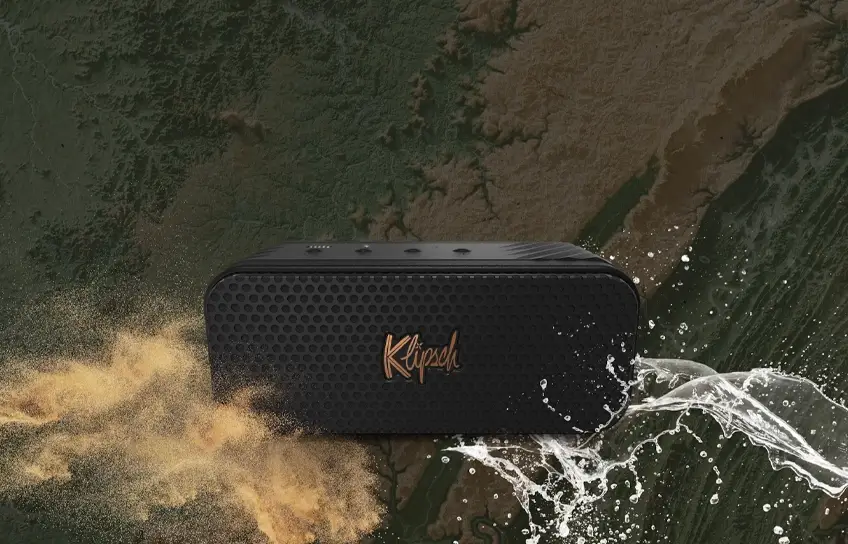
The Nashville is the mid-sized model in Klipsch’s Music City portable lineup. It makes a strong case for why Klipsch speakers Bluetooth options deserve more attention. At $149 and just 2.4 pounds, it is light enough to carry anywhere. Yet the sound quality goes well beyond what the size and price suggest. The speaker uses two 2.25-inch full-range drivers. One points forward and one points backward. This spreads audio in all directions rather than projecting in just one straight line.
A pair of passive bass radiators support the low end, keeping things tight and textured rather than boomy. One of the standout features of the Nashville is Broadcast Mode, which allows it to connect wirelessly to up to 10 other Klipsch speakers simultaneously. Whether you are filling a backyard with synchronized audio or adding a second room to the mix during a gathering, Broadcast Mode makes the process simple.
The Klipsch Connect app on iOS and Android gives you EQ controls to fine-tune the sound. The IP67 rating means the Nashville handles rain, splashes, and dusty environments without issue. Battery life reaches up to 24 hours per charge. USB-C reverse charging lets it top up your phone or earbuds on the go. Compared to the smaller Austin, the Nashville suits group settings better. It also delivers enough volume to fill an outdoor space comfortably without distortion.
Pros:
- Sound quality and bass depth well above average for its compact size
- Broadcast Mode wirelessly connects to up to 10 Klipsch speakers
- IP67 rated for complete water and dust resistance
- Up to 24 hours of battery life per charge
- EQ customization available through the free Klipsch Connect app
- USB-C reverse charging to power other devices in a pinch
Cons:
- Bluetooth only with no aux or wired input option available
- Mono playback with no true stereo channel separation
- Clarity drops noticeably above 70 percent volume in open spaces
4. Klipsch Flexus CORE 200
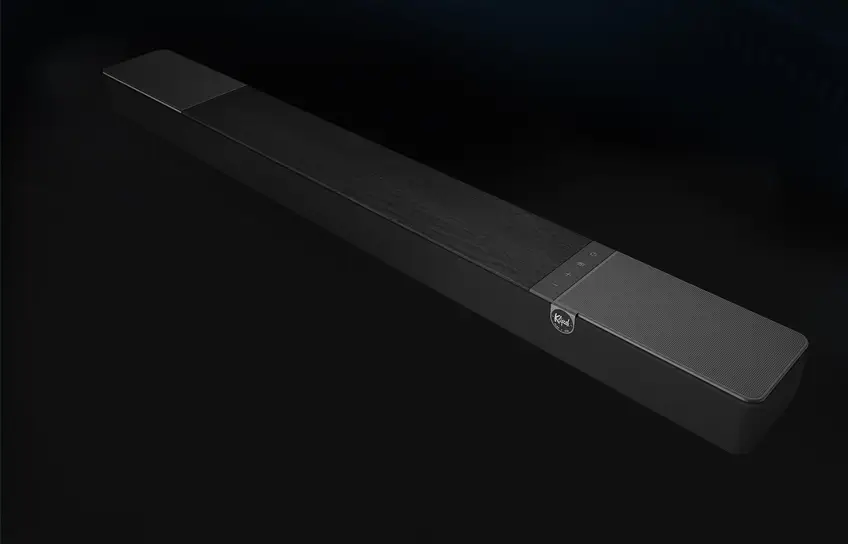
Soundbars have a complicated reputation among serious audio listeners, but the Klipsch Flexus CORE 200 earns its place by doing things most soundbars in this price range cannot. Priced at $499, it was developed alongside Onkyo, with Klipsch handling the acoustic design and Onkyo contributing the internal processor. The driver count alone sets it apart: six 2.25-inch ceramic drivers including two upward-firing units for Dolby Atmos height channels, plus two four-inch built-in subwoofers, all housed in a single 44-inch bar.
The upward-firing drivers create a genuine sense of overhead space when watching Atmos-encoded content, which is something most soundbars in this range fake through processing rather than dedicated hardware. The bass response is tight and controlled rather than boomy, which matters for dialogue clarity in movies and instrument separation in music. It also works well as klipsch speakers computer audio when connected to a desktop via HDMI or optical, making it a practical upgrade for anyone who uses their monitor for both work and entertainment.
The Flexus CORE 200 makes the most sense for someone who wants a significant audio upgrade over a TV’s built-in speakers but does not have the space or budget for a full surround system. It is also worth noting that Klipsch sells compatible wireless surround speakers and a matching subwoofer separately, so there is a clear expansion path available if your needs change later.
Pros:
- Built-in subwoofers deliver surprisingly tight and controlled deep bass
- Upward-firing drivers create genuine Dolby Atmos height channel effects
- Co-developed with Onkyo for best-in-class audio processing
- Expandable with optional wireless surround speakers and subwoofer
- Versatile connectivity works equally well for TV, gaming, and desktop audio
Cons:
- At 44 inches wide, requires a large media unit or TV console
- Costs more than most entry-level soundbars at $499
- Optional surround and subwoofer accessories add significant extra cost
5. Klipsch Austin
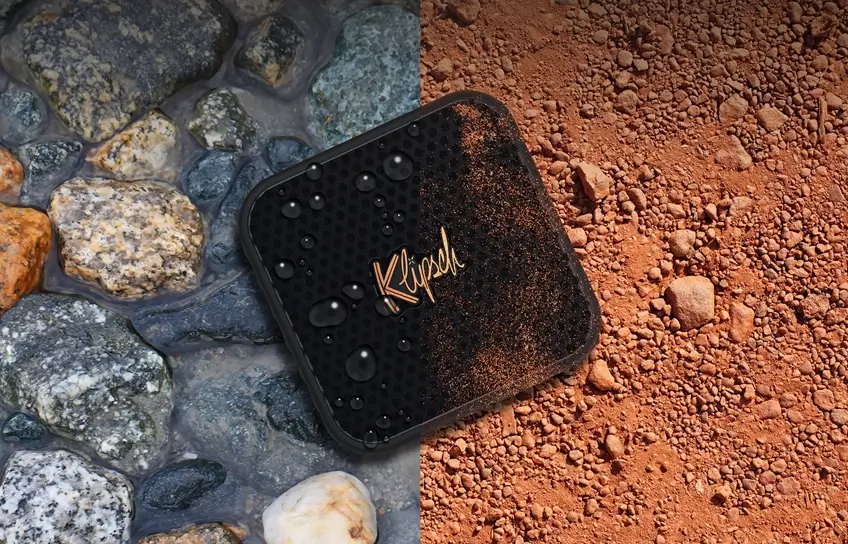
At $99, the Klipsch Austin costs less than most competing portable speakers, but it does something most of them do not: it uses two separate drivers instead of one. A dedicated two-inch woofer handles the low and mid frequencies while a separate tweeter manages the high end, which gives the Austin noticeably better frequency separation and vocal clarity than single-driver rivals at this price.
That engineering decision is the main reason it sounds more defined than its size and cost would suggest. Part of the same Music City lineup as the Nashville, the Austin is smaller, lighter, and purpose-built for personal portability. It weighs less than a pound, fits in a jacket pocket or bag without any effort, and includes a built-in strap for clipping to a backpack or bike handlebar. It is not the speaker for filling a patio or a gathering of people, but for a solo listener at a desk, on a morning run, or at the beach, it handles the job cleanly.
The Austin covers an IP67 rating for water and dust resistance, supports Bluetooth 5.3, includes Broadcast Mode, and delivers up to 12 hours of battery life per charge with USB-C reverse charging. If you are deciding between the Austin and the Nashville, the Austin wins on portability and price, while the Nashville wins on volume, battery life, and group listening situations.
Pros:
- Outstanding value at $99 with real Klipsch acoustic engineering
- Separate woofer and tweeter provide superior frequency separation to rivals
- IP67 water and dust resistance for worry-free outdoor use
- Ultra-compact and lightweight at under one pound with built-in strap
- Broadcast Mode and Bluetooth 5.3 enable effortless multi-speaker pairing
Cons:
- 10W output limits its volume headroom in larger open-air spaces
- Mono playback only with no stereo imaging available
- 12-hour battery life is shorter compared to the Nashville’s 24 hours
Quick Comparison: All 5 Klipsch Speakers
Not sure which model fits your needs? The table below puts all five speakers side by side across the most important buying criteria so you can make a confident, informed decision.
| Speaker | Price | Type | Connectivity | Best For | Editor Rating |
| RP-8000F II | $1,198 | Passive Floorstanding | Wired only | Home theater & audiophile listening | 9.5 / 10 |
| The Nines | $1,499 | Powered Bookshelf | Wired + Bluetooth | All-in-one multi-source music system | 9.3 / 10 |
| Nashville | $149 | Portable Bluetooth | Bluetooth 5.3 | Outdoor and on-the-go listening | 8.7 / 10 |
| Flexus CORE 200 | $499 | Powered Soundbar | HDMI / Optical | Home theater and TV audio upgrade | 9.0 / 10 |
| Austin | $99 | Portable Bluetooth | Bluetooth 5.3 | Budget portable everyday use | 8.4 / 10 |
What to Consider Before You Buy
Before settling on any speaker from this list, the most useful question to ask yourself is whether you need a passive or powered model. Passive speakers like the RP-8000F II require a separate amplifier or AV receiver and speaker cable to function. If you do not already own that equipment, it adds cost and complexity to your setup. Powered speakers like The Nines have amplification built in and connect directly to your source devices, which makes them far easier to get started with and a better fit for most home setups today.
Room size has a bigger impact on your experience than most people expect. A large floor-standing speaker in a small bedroom will produce too much bass energy for the room, making the sound feel congested and overwhelming. A compact bookshelf speaker in a large open living room may struggle to fill the space adequately. Before committing to a form factor, consider measuring your room and checking the manufacturer’s recommended room size for the speaker you are considering.
Connectivity is worth thinking through carefully as well. If you want to connect a turntable, television, and laptop all to one pair of speakers, a model like The Nines with its wide range of inputs gives you that flexibility right out of the box. If you only need wireless audio for casual listening on the move, the Nashville or Austin is genuinely all you need. Matching the speaker’s inputs and outputs to your actual devices and habits will save you from frustration further down the line.
One practical tip that applies across all five options: factor in the total cost of ownership before deciding. The RP-8000F II requires a receiver, which can add several hundred dollars to the upfront cost. The Nines need nothing extra. The portable speakers need no accessories at all. The Flexus CORE 200 works great alone but benefits significantly from the optional surround kit. Knowing the full cost before you buy avoids surprises after you commit.
Final Thoughts
The five speakers in this guide cover a wide range of situations, and choosing the right one comes down to knowing your setup. If you have a dedicated listening room and an amplifier, the RP-8000F II is the most rewarding long-term investment. If you want a complete system without extra hardware, The Nines do everything in one package.
For TV-focused listening in a limited space, the Flexus CORE 200 delivers more than its price suggests. And if portability is the priority, the Nashville handles group listening while the Austin is built for personal, everyday use.
Klipsch has been solving real audio problems with thoughtful engineering since 1946, and that focus shows across every product on this list. Each one was built with a specific listener in mind, which means finding your match is less about choosing the most expensive option and more about being honest about how and where you actually listen.
