


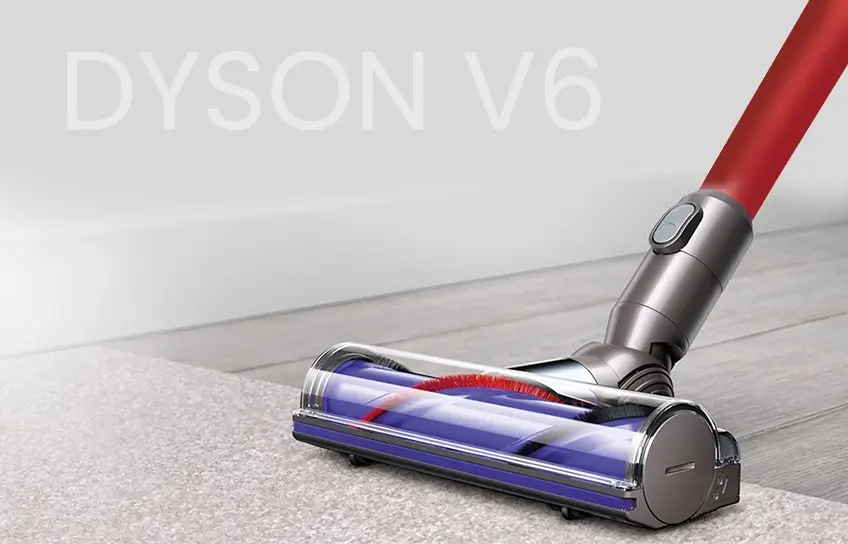
There’s a reason people still talk about this vacuum years after launch. The Dyson V6 arrived when most cordless vacuums were weak, short-lived, and more frustrating than helpful, and it genuinely shifted how people thought about cleaning without a cord. It built a loyal following fast, and that reputation has stuck around longer than most products in this category ever do.
I have used this machine personally, tested it across different floor types, and spent time understanding where it genuinely delivers and where it quietly disappoints. If you are considering buying one today, whether new or secondhand, this review gives you the complete picture without the marketing gloss.
Quick Specs
| Feature | Details |
| Type | Cordless Stick / Handheld |
| Weight | 4.5 lbs (2.04 kg) |
| Height | 47.5 inches |
| Motor Speed | 110,000 RPM |
| Suction Power | Up to 100 Air Watts |
| Battery Life | 20 min (standard) / 6 min (MAX) |
| Charge Time | ~3.5 hours |
| Dustbin Capacity | 0.4 liters |
| Filtration | 15-cyclone + washable filter |
| Warranty | 2-year limited |
What Kind of Vacuum Is This, Really?
Before getting into the details, it helps to be clear about what this machine was designed to do, because a lot of buyer frustration comes from expecting the wrong thing.
The dyson v6 stick vacuum was not built to replace your heavy upright canister. It was built for speed, convenience, and flexibility. You grab it off the wall, clean what needs cleaning, and put it back. That is its whole identity. At 4.5 pounds and 47.5 inches tall, it is genuinely easy to carry up stairs, swing around furniture, or use above your head without your arm giving out halfway through.
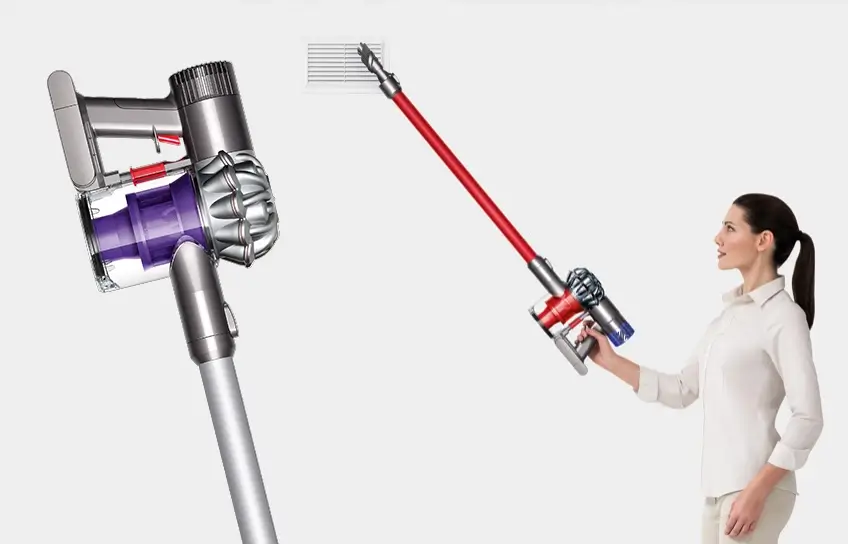
It also converts into a handheld in about five seconds. Pop off the wand, attach a tool directly to the motor head, and suddenly you have something that works just as well inside a car or along a skirting board as it does on an open floor. That flexibility is real, and it is one of the main reasons people keep reaching for this machine even when newer options are sitting on shelves.
Where it struggles is the same place it has always struggled. Larger homes, thick carpets that need heavy-duty extraction, and cleaning sessions longer than 20 minutes will push it to its limits. Knowing that upfront saves a lot of disappointment.
Build Quality and Design
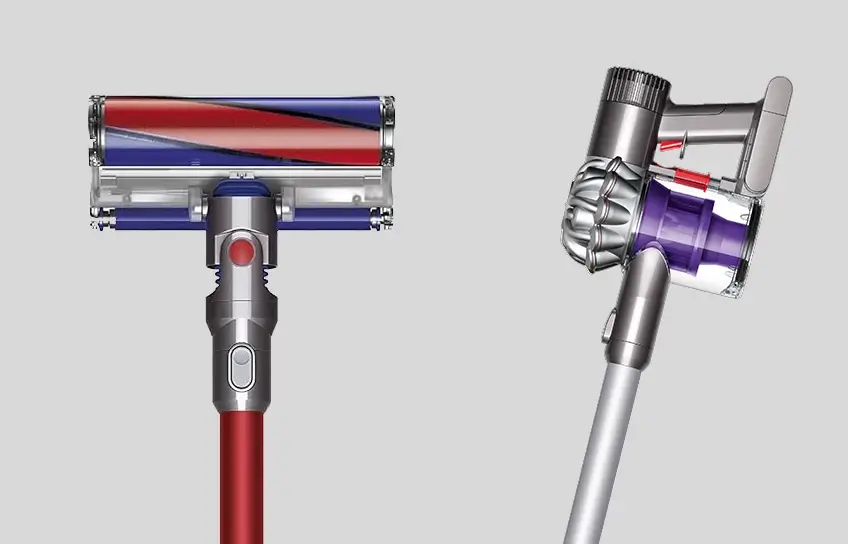
Pick this vacuum up and the first thing you notice is how solid it feels despite the light weight. Dyson did not cheap out on the materials. The plastic housing has a rigidity to it that cheaper cordless vacuums lack, and the connections between the wand, head, and body clip firmly without any wobble.
The bin release mechanism is one of those small details that actually matters in daily use. A single push of the red button drops the bin contents directly into the trash without you having to touch anything. That sounds minor until you have used a vacuum where emptying it is a messy, fiddly process. Here it is clean, fast, and oddly satisfying.
The wall mount doubles as a charging dock, which keeps the machine upright, charged, and out of the way. If you live in a smaller space and hate having cleaning equipment cluttering up a corner, this matters more than it sounds.
The trigger design is where some people run into trouble. You hold the trigger to run the vacuum and release it to stop. It preserves battery life because the motor only runs when you are actively cleaning. The downside is that your index finger stays under constant pressure throughout the session. For a 10-minute cleanup, this is not a problem. For a longer cleaning session, or for anyone with arthritis or joint discomfort in their hands, it becomes genuinely tiring. This is not a dealbreaker but it is worth knowing before you buy.
How the Suction Actually Works
The engineering behind this machine is worth understanding because it explains why it performs differently from most cordless vacuums you might have tried before.
A digital motor at the core spins at 110,000 RPM, which is faster than most motors in this class. That speed directly translates to suction strength, pulling in up to 100 Air Watts. For context, that is competitive with a number of corded vacuums that cost similar money.
The cyclone system is where Dyson has invested heavily. Fifteen small cyclones arranged in two radial tiers create centrifugal force that spins incoming air. Heavier particles and debris fly outward and fall into the dustbin, while finer particles are captured further down the line by the filter. The benefit of this design is that suction stays consistent as the bin fills. With a basic vacuum, suction drops noticeably as the bin gets full. The cyclone setup prevents that from happening here.
The filter itself sits at the back of the motor and handles the finest particles before the air is expelled. It is washable, which matters for long-term performance. A clogged or dirty filter is the most common reason this vacuum starts cutting out or losing power, and monthly washing solves that almost every time.
Real-World Cleaning Performance
Spec sheets only tell part of the story. How the machine actually behaves day to day is what matters.
On Hard Floors
Fine debris is where this vacuum genuinely shines. Sugar, rice, kitty litter, flour, and fine dust are picked up cleanly and completely. The suction pulls material out of cracks between floorboards and along edges where dust settles. For a kitchen floor after cooking or an entryway after muddy shoes, the results are impressive.
Larger debris tells a different story. Dry cereal, small chunks of food, or anything with irregular shape can clog the cleaning head or partially block the wand. When that happens, the motor cuts out as a protective measure. Pickup rates for larger debris on hardwood drop noticeably in real testing, sometimes to around 50%. This is one of the more honest limitations of the machine and it comes up regularly in user feedback.
The fix, when it happens, is simple. Turn the machine off, check the head and wand for blockages, clear them, and carry on. It is not a catastrophic failure, but it does interrupt the flow of cleaning in a way that feels unnecessary on a machine at this price point.
On Carpet
Carpet performance is meaningfully better than hard floor performance for larger debris, and here is why. The carpet fibers slow debris down before it reaches the head, reducing the likelihood of clogging. You also get better agitation from the brushroll working against the pile.
Rice, sugar, and kitty litter all come up near perfectly on both low and high pile carpet in testing. Ground-in dirt, which is the real test on carpet, responds well to the dyson v6 motorhead configuration that pushes bristles physically into the fibers rather than relying purely on airflow. That contact makes a genuine difference to how thoroughly the carpet is cleaned.
Pet hair is a specific strength here. Whether it is embedded in carpet or sitting on a fabric sofa, the brushroll and suction combination lifts it effectively without the hair wrapping around the brush in a way that requires constant manual removal.
Above-Ground and Handheld Cleaning
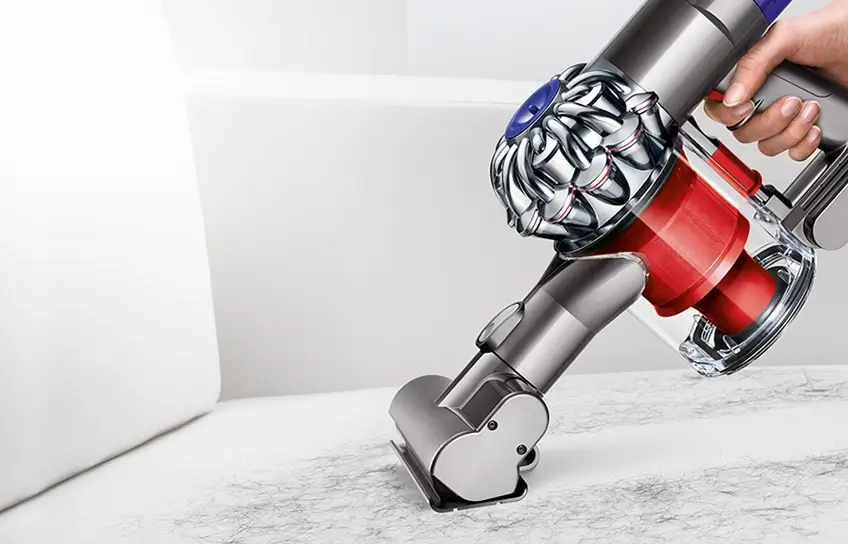
This is one area where the V6 genuinely earns its reputation. Remove the wand, attach a tool directly, and you have a handheld unit that is light enough to hold comfortably for several minutes. The crevice tool gets into gaps between sofa cushions, along skirting boards, and around car seats with real precision. The dusting brush handles shelves, blinds, and lampshades without scattering dust back into the air.
The mattress tool is one of the more underrated attachments. Running it across a mattress surface removes dust, dead skin particles, and allergens in a way that most people have never thought to address. Once you have done it, you will not go back.
Battery Life
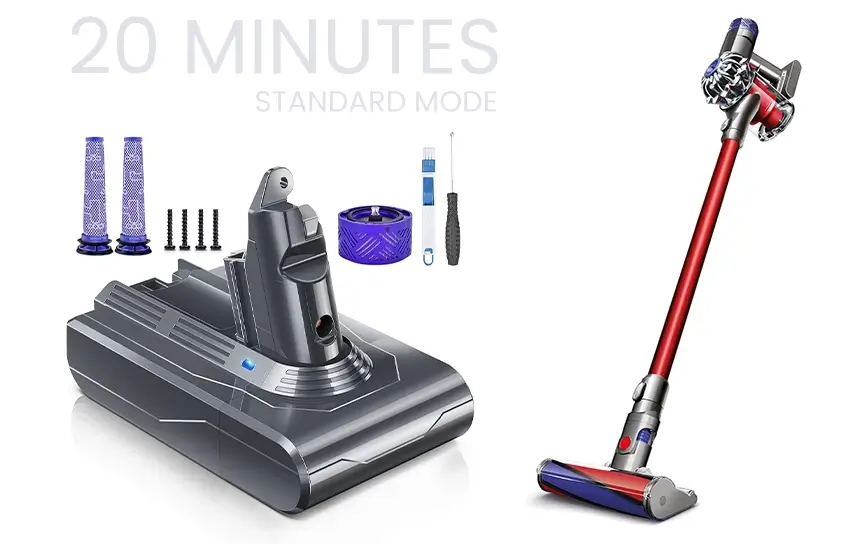
Twenty minutes in standard mode. Six minutes in MAX mode. Those numbers need context.
Six minutes on MAX sounds terrible until you understand that MAX mode exists for heavy-duty surfaces where you need extra power for a short burst. Most people rarely use it for longer than a minute or two at a time. Standard mode is where the majority of cleaning happens, and 20 minutes is enough for a studio flat, a two-bedroom apartment cleaned in sections, or a quick whole-house tidy before guests arrive.
Where it falls short is any cleaning session that demands sustained power across a larger space. A three-bedroom house with a mix of hard floors and carpet is going to require either a recharge partway through or accepting that some areas will be cleaned on separate days. For people coming from a corded vacuum where runtime was never a concern, this adjustment is the steepest part of the learning curve.
One positive that does not get mentioned enough is how the battery performs right up until it dies. There is no gradual fade, no point where suction feels weaker because the charge is running low. The machine runs at full power and then stops. That consistency is more useful in practice than a longer but gradually weakening runtime.
Recharging takes roughly 3.5 hours from empty to full. Keeping the machine on the dock when not in use means it is always ready, which effectively removes the battery concern for most people who clean regularly in shorter sessions.
The Different Versions Explained
The dyson v6 cordless was released in several configurations, and understanding the differences matters because they are sold at different prices and marketed toward different buyers.
The core machine is identical across all versions. Same motor, same battery, same suction, same cyclone system. What changes is the cleaning heads and accessories included in the box.
The Motorhead comes with the direct-drive carbon fibre head, which is the standard motorised brushroll. It handles carpet and hard floors reasonably well and is the no-frills entry point into the range.
Which Version Should You Choose?
For homes with mostly carpet and pets, the Animal is the practical pick. The direct-drive head and mini motorised tool included are genuinely better at lifting embedded pet hair than the standard head.
For hard floor focused homes, the Fluffy version is the one to look at. The soft roller head is designed specifically for smooth surfaces and handles fine dust and larger debris on hard floors more effectively than the standard head.
Those who want the most complete package will find the dyson v6 absolute covers every scenario. It includes both the soft roller head and the direct-drive head, HEPA filtration, and the full attachment set. If you have a mix of floor types and want one machine that handles all of them without buying additional heads separately, this is the version that makes the most sense financially.
The Cord Free is the budget entry point. Same machine, fewer accessories, lower price. If you already know you will only use the standard head, it is a sensible way to save money.
Attachments and Accessories
The accessories that come with this machine are not afterthoughts. Each one has a clear, practical use.
The crevice tool is long, narrow, and gets into gaps that no cleaning head can reach. Skirting boards, the gap between the fridge and the counter, between sofa cushions, and along car door edges all respond well to it.
The combination tool flips between a brush and a wide nozzle. The brush side works on shelves, keyboards, blinds, and delicate surfaces. The nozzle side handles larger areas above the floor quickly.
The mini motorised tool is the one that most surprises people who have not used it before. A small motorised brushroll in a compact head that attaches directly to the handheld body. On stairs, on upholstered furniture, and in car footwells, it lifts embedded dirt and hair far more effectively than any non-motorised attachment.
The mattress tool is broad, flat, and specifically designed for mattress surfaces, but it works equally well on any large upholstered surface you want to clean thoroughly.
If you ever need to replace or add to what comes in the box, dyson v6 parts are widely available through Dyson directly and through third-party retailers, and compatibility across the V6 range means attachments from different versions work with the same machine.
Maintenance and Running Costs
This is one area where the V6 genuinely rewards careful ownership.
Both filters are washable. Rinse them under cold water monthly, squeeze gently, and leave them to air dry for a full 24 hours before putting them back. Do not be tempted to speed-dry them with a hairdryer. Reinserting a damp filter causes the motor to work harder and shortens its lifespan. If you do this wash once a month, filter replacement is essentially never necessary under normal use.
The brushroll benefits from a quick inspection every few weeks. Long hair and thread wrap around the bristles over time and reduce cleaning effectiveness. Most of it can be pulled free by hand. A pair of scissors along the brushroll removes anything more stubborn.
The bin at 0.4 litres is small, and in a home with pets or young children, it fills faster than you expect. Emptying it over a bin takes five seconds and is worth doing every session rather than waiting for it to get full. A packed bin reduces suction noticeably even with the cyclone system compensating.
The main long-term cost to plan for is the battery. Under regular use, most owners find dyson v6 battery replacement becomes necessary somewhere between two and three years of ownership. The battery is covered under the standard warranty for the first two years. After that, replacement packs are available from Dyson and third-party suppliers at a reasonable cost. Over a five-year ownership period, the total running cost including battery replacement works out to a modest annual figure that compares well against the cost of a new budget machine every few years.
How It Compares to Other Dyson Models
The V6 did not exist in isolation. Dyson has built an entire cordless lineup around it, and understanding where the V6 sits in that lineup helps you decide whether it is the right machine for your budget and needs or whether spending a little more actually makes sense.
Dyson V6 vs Dyson V7
The Dyson V7 is the most direct step up from the V6 and the comparison is straightforward. Dyson addressed the two most common V6 complaints with the V7: runtime improves to 30 minutes on standard mode and the filtration becomes whole-machine HEPA as standard. The suction and overall cleaning performance are comparable between the two. If the 20-minute battery is the one thing holding you back from the V6, the V7 closes that gap without a dramatic price jump. If the runtime already works for your cleaning habits, the V6 saves you money without sacrificing much.
Dyson V6 vs Dyson V8
The Dyson V8 is where the upgrade becomes more meaningful. Runtime stretches to 40 minutes, the dustbin is noticeably larger, and the machine runs quieter. For anyone who needs to clean a medium to large home in a single session without stopping to recharge, the V8 handles that comfortably where the V6 cannot.
The V6 has dropped in price considerably since the V8 launched, which does make the value case for the V6 stronger than it used to be. But if battery life is a daily frustration rather than an occasional inconvenience, the V8 is worth the extra cost.
Dyson V6 vs Dyson 360
The Dyson 360 is a robot vacuum and the comparison here is less about which is better and more about what kind of cleaning you actually want to do. The 360 maps your floor plan, navigates autonomously, and vacuums while you get on with something else. The V6 requires you to be present and in control.
The 360 cannot do stairs, above-floor surfaces, or tight handheld work. The V6 can do all of that but demands your time and effort. For someone who wants daily floor maintenance handled automatically and is willing to use the V6 for everything else, the two actually complement each other well rather than competing directly.
Quick Comparison Table
| Feature | V6 | V7 | V8 | 360 |
| Runtime (Standard) | 20 min | 30 min | 40 min | Continuous |
| Suction Power | 100 AW | 115 AW | 115 AW | N/A |
| Dustbin Size | 0.4L | 0.54L | 0.54L | 0.33L |
| HEPA Filtration | Select models | Standard | Standard | No |
| Converts to Handheld | Yes | Yes | Yes | No |
| Above-Floor Cleaning | Yes | Yes | Yes | No |
| Autonomous Cleaning | No | No | No | Yes |
| Best For | Small homes, daily quick cleans | Medium homes, allergy sufferers | Medium-large homes, longer sessions | Hands-off daily floor maintenance |
Who Is This Vacuum Best Suited For?
People who clean little and often rather than infrequently and deeply will get the most out of this machine. A quick run through the kitchen and living room every day or two, catching debris before it builds up, is exactly what the V6 was designed for. In that context, the 20-minute runtime and 0.4L bin are rarely a problem.
It suits smaller homes and apartments particularly well. One or two rooms at a time, a quick vacuum after cooking, a fast clean before someone arrives. For that kind of use it is close to ideal.
It works well as a secondary vacuum in larger homes. Run the heavy upright for weekly deep cleans and use the V6 for everything in between. The speed of grabbing it off the dock, doing a quick clean, and hanging it back up is genuinely different from getting out a corded machine.
Elderly users and anyone who finds a full-size vacuum physically demanding will appreciate the weight and maneuverability. At 4.5 pounds, it removes most of the physical effort from vacuuming.
It is a harder recommendation for large homes with thick carpets as the primary vacuum, for households that need to deep clean infrequently in long sessions, and for anyone whose main debris type is irregular or chunky material that can trigger clogging.
Pros
- Lightweight at just 4.5 lbs, easy to carry and maneuver without fatigue
- Strong, consistent suction up to 100 Air Watts that holds steady until the battery dies
- Converts between stick and handheld in seconds with no tools required
- Washable filters keep long-term running costs very low
- Excellent on pet hair, fine debris, and above-floor surfaces
Cons
- Clogs on larger, irregular debris like dry cereal on hard floors
- Trigger must be held continuously, which becomes tiring over longer sessions
- 0.4L dustbin is small and needs frequent emptying in busy households
- 20-minute runtime is limiting for larger homes
Final Verdict
The Dyson V6 earned its reputation honestly. When it launched it was genuinely better than almost everything else in its category, and years later the core of what made it good has not changed. The motor is strong, the build is solid, the cyclone system delivers consistent suction, and the handheld versatility remains one of the better implementations in this class.
The honest answer on whether to buy one today comes down to what you need it for. For daily cleanups, smaller spaces, above-floor work, and homes where convenience matters more than marathon runtime, it is still a well-built and capable machine. The price has come down significantly from launch, which makes the value case stronger than it has ever been.
If you need longer battery life, a bigger bin, and the ability to clean a large home from start to finish in one go, the V8 or V10 will serve you better. But do not let that push you toward overspending if the V6 fits your actual cleaning habits. It works best when used for the right job, and for the right job, it still works very well.
