


I have lost count of how many times an earbud has fallen out of my ear mid-run. One minute you are in the zone, the next you are fumbling around on the pavement trying to find a tiny piece of plastic before someone steps on it. I have also had the opposite problem, earphones that stayed in perfectly but blocked out so much sound that a car had to honk at me before I realised it was there.
Those two frustrations are what pushed me toward bone conduction headphones in the first place, and after spending several weeks putting the Shokz OpenRun Pro 2 Mini through daily runs, long commutes, and full work days, I want to give you the honest picture of what it is actually like to live with these.
What Is the Shokz OpenRun Pro 2 Mini?

Before getting into the experience, it is worth briefly explaining what this headphone actually is, because it is genuinely different from anything most people have used before.
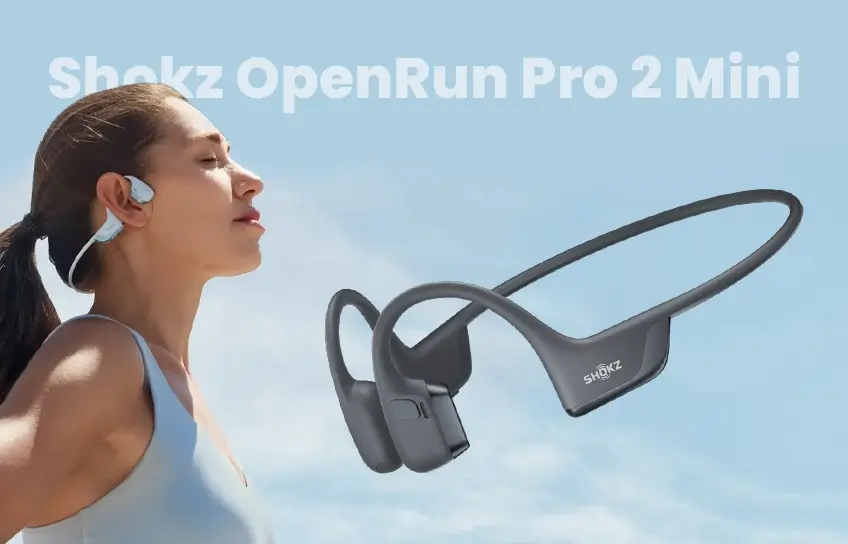
There are no ear tips. Nothing goes in your ear canal. The frame wraps around the back of your head and two small transducer pads sit just in front of your ears, pressed lightly against your cheekbones. Sound travels through those pads as vibrations, through your cheekbone, and directly to your inner ear. Your ears stay completely open the whole time.
The OpenRun Pro 2 Mini adds something older Shokz models did not have: a small air conduction speaker alongside the bone conduction transducer. Shokz calls this DualPitch technology. The bone conduction side handles mids and highs. The air conduction speaker handles bass. That split matters for sound quality, and I will get into why in the sound section.
Shokz OpenRun Pro 2 Mini Quick Specs
| Feature | Details |
| Technology | DualPitch (Bone + Air Conduction) |
| Battery Life | Up to 12 hours |
| Quick Charge | 5 minutes = 2.5 hours playback |
| Water Resistance | IP55 |
| Charging | USB-C |
| Bluetooth | 5.3 |
| Microphones | Dual AI noise-cancelling |
| EQ Presets | Standard, Vocal, Bass Boost, Treble Boost |
| Weight | 29 g |
| Band | Mini (approx. 2 cm shorter than standard) |
| Warranty | 2 years |
First Impressions
Putting these on for the first time is a genuinely odd experience, and I think it is worth saying that upfront so nobody gives up too quickly.
Your brain expects the familiar feeling of something in your ear. When that does not happen, something feels off. The first time audio came through while my ears were completely open, I actually took the headphones off and put them back on again just to make sure they were working correctly. That is not a flaw. It is just a new sensation that takes a few sessions to get used to.
The frame itself is made from titanium alloy wrapped in soft silicone. It bends and flexes without feeling fragile, and the silicone coating grips the back of your ears without creating any pressure. At 29 grams, it is light enough that after about twenty minutes of wearing it, you genuinely stop noticing it is there.
The two transducer pads sit flat against your cheekbones and are small enough that you mostly forget about them. I will say this though: they do look a bit unusual when you catch yourself in a mirror mid-run. More than one person stopped me to ask what I was wearing. That either bothers you or it does not.
Mini or Standard
This is the question I wish someone had answered clearly before I ordered, because it is less obvious than it looks.
The Mini band is approximately 2 cm shorter than the standard version. That does not mean it is only for people with smaller heads. In my experience, it is actually a better fit for anyone who wants the frame to sit close to the head rather than arching outward. A band that sits tighter reduces the chance of it catching on a jacket hood, a car headrest, or a helmet strap.
People with thicker or longer hair often find the Mini more comfortable too, because it does not push out as far through the hair. I have a fairly average head size and went with the Mini, and the fit felt immediately more secure than the standard version I tried briefly in store.
If you are genuinely unsure, here is a rough guide based on head circumference:
| Head Circumference | Size to Choose |
| 48 to 54 cm | Mini |
| 54 to 62 cm | Standard |
| Right at 54 cm boundary | Mini usually works better |
The reason the boundary leans Mini is simple: tighter contact between the transducer pad and your cheekbone produces better sound. A loose-fitting bone conduction headphone sounds noticeably thinner than one that sits firmly in place.
Comfort and Fit During Real Use

After the first two or three sessions, the adjustment period is over and the headphone just disappears. I wore these through a two-hour run on a Saturday morning and genuinely forgot I had them on for long stretches.
A few things that stood out from actual daily use:
- Glasses compatibility is excellent. The wraparound band sits behind the ears entirely, so there is no clashing with glasses arms. I wear glasses for some runs and never felt any pressure or discomfort at the point where the two meet.
- Hats and caps work fine. You can pull a running cap down over the frame without it shifting position. The over-ear hooks keep everything locked in place.
- Lying down is the exception. If you do gym work that involves lying flat, like a bench press, the band shifts when your head contacts a surface. This is not a dealbreaker for running or cycling but it is worth knowing for gym use.
One habit you will need to build early: these do not power off automatically when you take them off. You have to hold the button to switch them off manually. It caught me out a few times in the first week and I drained the battery overnight by forgetting. Once the habit is there it becomes automatic, but it takes a little time.
Sound Quality

Let me be straight about this because sound is where bone conduction headphones have always divided opinion.
The OpenRun Pro 2 Mini sounds better than I expected coming into it, and significantly better than older single-driver Shokz models I have tried. The DualPitch setup makes a genuine difference. Because the air conduction speaker handles bass separately, the bone conduction transducers do not have to work as hard in the low frequencies. What that means in practice is less vibration buzzing against your cheekbone and more actual bass you can hear and feel in a natural way.
On a morning run with a playlist heavy on hip-hop and electronic music, the bass response was present enough to keep the energy going. It is not the deep, room-filling bass you get from a sealed in-ear, but it is far from the thin, flat sound older bone conduction models produced.
Mids and highs come through with decent clarity. Podcasts are easy to follow. Call audio is clear enough for normal conversations. The four EQ presets in the Shokz app are worth exploring: I settled on Vocal for podcast runs and kept the Standard setting for music, since Bass Boost introduced a slight vibration that I found distracting.
Where sound falls short is outdoors in noise. On a busy road at rush hour, the open-ear design means ambient noise competes with your audio. You can hear your music but it blends with everything else around it. This is not a flaw in the usual sense. It is literally the point of the design. You are supposed to hear your surroundings. But if you are expecting isolation, that is not what this headphone offers and it never pretends to be.
Wind: The One Honest Weakness

This needs its own section because it came up on almost every outdoor session.
Wind is the real weak point of the OpenRun Pro 2 Mini, and it is worse than most reviews prepare you for. Running into a strong headwind, the open design catches air noise directly against the transducer pads and microphones. Audio drops noticeably in quality. At maximum volume you can still hear what is playing, but the experience is genuinely worse than running with the wind at your back or in still conditions.
I tested this directly by running the same one-mile loop in both directions on a windy morning. The difference was stark. Into the wind, music felt muffled and distant. Turning around and running with the wind, sound quality returned almost immediately.
This is not a manufacturing flaw. It is a physical consequence of keeping your ears open. But knowing it exists before you buy is far more useful than discovering it mid-run and feeling let down.
Battery Life and Controls in Daily Use

Twelve hours of battery is the headline number, and it held up well across several weeks of use. Running four to five times a week with daily commute listening in between, I charged the headphones roughly once a week. The quick charge feature earned genuine appreciation: five minutes plugged in before heading out the door gave over two hours of playback when I had forgotten to charge the night before.
USB-C charging is a welcome upgrade from the proprietary connector that earlier Shokz models used. One less specialist cable to keep track of.
The physical buttons take a short learning curve. Volume up and down sit on the right side of the frame. A multifunction button on the left handles play, pause, track skipping, and call answering through single, double, and triple press combinations. After about a week it becomes second nature. The bigger issue is distinguishing the buttons by feel, especially with gloves on. They sit close together and have a similar texture, which means the occasional wrong press during a run until muscle memory kicks in.
Call Quality and the Microphone

Call quality in calm conditions is genuinely good. Indoor calls came through clearly on both ends, and the AI noise cancellation handled moderate background noise well enough that colleagues never mentioned anything on calls.
Outdoors in wind, the microphone performance drops. On a particularly blustery run, I took a call and the person on the other end described my voice as “breaking up quite a bit.” Switching to a quieter street improved things significantly. For occasional calls during activity this is workable. If you are regularly taking calls in exposed, windy conditions, manage your expectations.
Shokz OpenRun Pro 2 Mini vs. the Competition
Before buying I looked at a few alternatives, and these comparisons helped me make the decision:
| Feature | Shokz OpenRun Pro 2 Mini | Shokz OpenMove | Philips A4216 |
| Audio Technology | DualPitch (bone + air) | Bone conduction only | Bone conduction only |
| Battery Life | 12 hours | 6 hours | 9 hours |
| Water Resistance | IP55 | IP55 | IP67 |
| Bluetooth | 5.3 | 5.1 | 5.2 |
| Charging | USB-C | Proprietary | USB-C |
| Multipoint | Yes, app required | No | No |
| App and EQ | Yes | No | No |
| Size Options | Mini and Standard | Standard only | Standard only |
| Price | $179.95 | $79.95 | ~$99.95 |
The OpenMove is the budget starting point in the Shokz lineup. Single driver, no bass speaker, no app, half the battery. Fine for light use. Not in the same category as the Pro 2 Mini for athletic use.
The Philips A4216 is worth considering if water resistance is your priority. IP67 means it handles heavier rain and splashes better than IP55. But it lacks the DualPitch system and any app support, which means no EQ adjustment and no multipoint. For audio quality and features, the Pro 2 Mini is stronger.
For open-ear alternatives outside the bone conduction category, the JLab headphones range and JBL sport lineup are worth comparing if you want different form factors at lower price points.
A Few Things Worth Knowing Before You Buy
Multipoint Bluetooth is off by default. The Pro 2 Mini can connect to two devices simultaneously, but this setting is disabled out of the box. You will not find it through button combinations. You have to open the Shokz app, find the connectivity settings, and switch it on manually. Once on, it works well for moving between a phone and laptop without re-pairing. But plenty of people miss it entirely because the app step is not mentioned in the box.
The gym is not its best environment. Loud ambient noise from equipment and music systems competes directly with open-ear audio. Sealed earbuds are better for gym use. The Pro 2 Mini is built for outdoor movement, not enclosed spaces with high background noise.
The price moves. Full retail is $179.95. It has dropped to $124.95 multiple times through direct Shokz sales and retail events. There is no feature or quality difference between a discounted unit and a full-price one. If you are not in a rush, waiting is worth it.
Pros and Cons
Pros
- Keeps ears fully open for awareness during outdoor activity
- Secure fit that holds position during running, cycling, and commuting
- 12-hour battery comfortably covers a full week for most users
- USB-C charging with a useful quick charge feature
- Physical buttons work reliably with sweaty or gloved hands
- Comfortable for extended wear including with glasses
- IP55 handles sweat and light rain without concern
- DualPitch bass is noticeably better than older Shokz models
Cons
- Sound quality drops in strong wind, which is an inherent open-ear limitation
- No automatic power-off when removed, requires manual habit
- Buttons are hard to distinguish by touch, especially early on
- Microphone performance weakens in windy outdoor conditions
- Sound does not match sealed in-ear earphones for audio depth
- Minor sound leakage at high volumes
Final Verdict
The Shokz OpenRun Pro 2 Mini is not trying to compete with sealed in-ear earphones for pure audio performance, and it should not be judged on those terms. What it does, it does genuinely well: it keeps your ears open, stays securely in place during hard effort, lasts through a full week on a single charge, and holds up to the physical demands of outdoor training without any special treatment.
After several weeks of daily use, I reach for these almost automatically for anything that takes me outdoors. The wind limitation is real and worth knowing about. The gym is not where these shine. The manual power-off habit takes a little time to build.
But once they click, and they do click after a few sessions, they become one of those pieces of kit that just works without demanding your attention. For runners, cyclists, commuters, and anyone who needs to stay aware of their surroundings while listening, the OpenRun Pro 2 Mini makes a strong case at its sale price. At full retail it is still competitive. At $124.95 it is an easy recommendation.
