


If you’ve been researching air purifiers lately, you’ve probably noticed that indoor air quality has become a hot topic. And for good reason. We spend most of our time indoors, and the air we breathe at home can actually be more polluted than the air outside. When I started looking into solutions for my own home, the Dyson Purifier Humidify+Cool Formaldehyde kept popping up in my research, and I wanted to understand what makes this device different from the dozens of other air purifiers on the market.
This isn’t just another air purifier. It’s a machine that tries to solve multiple problems at once, and after spending considerable time understanding how it works and what it actually does, I think it’s worth having an honest conversation about whether it lives up to the expectations.
Technical Specifications
Here’s a detailed look at what this machine offers in terms of specs:
| Specification | Details |
| Dimensions | 30.3″ H x 9.8″ W x 8.1″ D |
| Weight | 18.7 lbs |
| Room Coverage | Up to 1,000 sq ft |
| Filtration | HEPA H13 + Activated Carbon + Catalytic (Formaldehyde) |
| Particle Capture Rate | 99.95% of particles as small as 0.1 microns |
| Water Tank Capacity | 1 gallon (5 liters) |
| Sensors | Formaldehyde, VOC, NO2, Particulate Matter, Temperature, Humidity |
| Oscillation | Up to 350 degrees |
| Airflow Settings | 10 speed settings |
| Night Mode | Yes, with dimmed display |
| App Control | Dyson Link app (iOS and Android) |
| Voice Control | Compatible with Alexa, Siri, Google Assistant |
| Filter Life | HEPA/Carbon: ~12 months, Catalytic: lifetime |
| Power Consumption | 40W maximum |
| Noise Level | 38-62 dB depending on speed |
| Warranty | 2 years |
Understanding What This Machine Actually Does

Let’s start with the basics. This device combines three main functions into one unit. It purifies the air by removing pollutants and allergens, it adds moisture to dry air through humidification, and it circulates cool air around your room like a fan. That’s already a lot for one machine to handle.
But here’s where it gets interesting. The formaldehyde detection and destruction capability is what sets this model apart from earlier versions. Formaldehyde is a chemical that’s more common in our homes than most people realize. It off-gases from furniture, flooring, paint, and even some fabrics. It’s invisible, it’s odorless at low concentrations, and it can hang around for years.
The technology inside uses a catalytic filter that’s designed to continuously destroy formaldehyde molecules, breaking them down into tiny amounts of water and CO2. Unlike traditional filters that just trap pollutants until they’re full, the dyson purifier humidify+cool formaldehyde filter is supposed to last the entire lifetime of the machine without needing replacement.
The Air Purification Side of Things
The filtration system uses a sealed HEPA H13 filter combined with an activated carbon layer. This setup captures 99.95% of particles as small as 0.1 microns. We’re talking about things like pollen, dust, pet dander, bacteria, and even some viruses.
What I found particularly useful is the real-time air quality monitoring. The machine has sensors that detect particles, volatile organic compounds, nitrogen dioxide, and of course, formaldehyde. You can see exactly what’s in your air at any given moment through the LCD screen on the device itself.
The air purification works continuously in the background, and the machine automatically adjusts its settings based on what it detects. If air quality drops, it ramps up. When things are clean, it scales back. This automatic adjustment through the dyson purifier humidify+cool autoreact feature means you’re not constantly fiddling with settings or wondering if you’ve got it configured correctly.
How the Humidification Works
Dry air can cause all sorts of problems. Dry skin, irritated sinuses, static electricity, and even damage to wooden furniture. The humidification feature addresses this by using what Dyson calls “evaporative humidification.
“Here’s how it works in practice. You fill a water tank (which holds about a gallon), and the machine draws that water through a special evaporator. The evaporator has a silver-infused mesh that’s designed to reduce bacteria in the water by up to 99.9% before it gets released into your room.
The machine monitors humidity levels automatically and maintains your target humidity level. Most experts recommend keeping indoor humidity between 30% and 50%, and this device lets you set your preferred level within that range.
One thing worth mentioning is that you’ll need to use the deep clean cycle regularly. The machine reminds you when it’s time, and the process takes about an hour. You run a citric acid solution through the water system to prevent mineral buildup and keep everything hygienic. It’s not difficult, but it is something you need to stay on top of.
The Cooling Function and Air Circulation
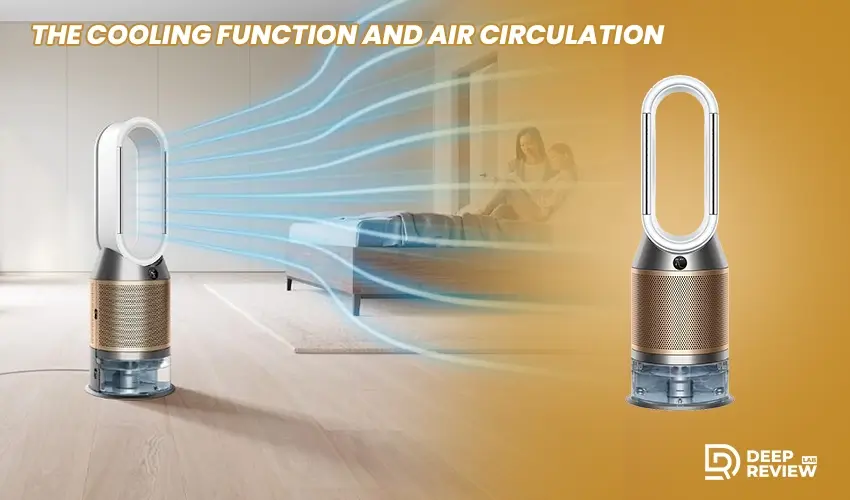
During warmer months, the cooling function becomes particularly valuable. Now, let me be clear about what this is and isn’t. This is not an air conditioner. It doesn’t lower the temperature of your room. What it does is circulate air effectively, creating a breeze that makes you feel cooler through evaporative cooling from your skin.
The airflow is impressive. The dyson purifier humidify cool can project purified, humidified air throughout a large room. Dyson’s Air Multiplier technology creates a smooth, powerful stream of air without the buffeting you get from traditional fans with visible blades.
You can adjust the airflow direction, oscillate it up to 350 degrees, or use the breeze mode that mimics natural wind patterns. In diffused mode, the air comes out the back of the machine rather than the front, which is useful when you want purification and humidification without feeling a direct breeze.
What It’s Like to Actually Live With
The setup is straightforward. You unbox it, plug it in, connect it to the Dyson Link app on your phone, and you’re basically ready to go. The app connection is optional, but it adds useful features like scheduling, remote control, and detailed air quality history. If you prefer working with physical instructions, the dyson purifier humidify+cool formaldehyde manual provides comprehensive guidance on setup and maintenance procedures.
The machine runs fairly quietly on lower settings. You’ll hear it working, but it’s a gentle white noise that many people find unobtrusive. On higher settings when it’s working harder to clean poor air quality, it gets louder, but that’s expected from any air purifier.
The nighttime mode dims the display and runs more quietly, which is thoughtful for bedroom use. The sensors continue monitoring air quality throughout the night, and the machine adjusts as needed while keeping noise to a minimum.
Maintenance is relatively simple once you understand the routine. The HEPA and carbon filters need replacing roughly once a year, depending on usage and air quality. The catalytic filter for formaldehyde never needs replacing. The water tank needs regular refilling if you’re using humidification, and you’ll need to run that deep clean cycle monthly.
Who This Machine Makes Sense For

This device makes the most sense for people dealing with specific situations. If you live in a newer home or recently renovated space where formaldehyde off-gassing is a concern, the formaldehyde detection and destruction capability is genuinely valuable. Most air purifiers can’t handle formaldehyde effectively.
It’s also well-suited for people dealing with dry air problems alongside air quality concerns. If you live in a climate with cold, dry winters or use heating systems that dry out the air, having purification and humidification in one machine eliminates the need for separate devices.
For allergy sufferers, the combination of HEPA filtration and the ability to monitor exactly what’s in your air provides peace of mind. You can see the particle count drop in real-time after the machine has been running.
People who value consolidated solutions will appreciate having one device instead of three separate machines for purification, humidification, and air circulation. It saves space and eliminates the clutter of multiple cords and devices.
The Investment Consideration
Let’s talk honestly about cost. This is a premium-priced device. You’re paying significantly more than you would for a basic air purifier or a simple humidifier. The question becomes whether the combination of features, the formaldehyde capability, and the engineering quality justify that premium.
The ongoing costs are worth factoring in. Replacement filters run about sixty to seventy dollars when you need them annually. Citric acid for cleaning is inexpensive. If you use humidification regularly, you’ll be refilling water frequently, though that’s just tap water in most cases.
The energy consumption is reasonable for what the machine does. It’s designed to run continuously, and the electricity cost shouldn’t be dramatic for most households.
Final Thoughts
After digging into how this machine works and what it offers, I think the key is matching the device to your actual needs. This isn’t the right choice for everyone, and that’s okay. If you just need basic air purification, there are simpler and less expensive options that will do that job well.
But if you’re dealing with formaldehyde concerns, need both purification and humidification, and want intelligent monitoring and automatic adjustment, this device brings genuine value. It’s engineered thoughtfully, and the technology inside is more sophisticated than what you’ll find in budget alternatives.
The decision comes down to whether the specific problems this machine solves are problems you actually have. Take an honest look at your indoor air quality concerns, your climate and humidity needs, and whether the convenience of a multi-function device matters to you. That clarity will make your decision much easier.
