


If you have been thinking about picking up a new iPhone lately, chances are the iphone 16 has crossed your mind. It was released in late 2024 and quickly became one of the most talked-about smartphones of that year. Now that we are well into 2026, prices have dropped, the software has matured, and Apple Intelligence has fully rolled out. So the big question is: does it still hold up as a smart buy today? This guide will walk you through everything you need to know before you spend your money.
When reading any Apple iPhone 16 review from launch day, you were getting an early impression. Today, we have something more valuable: real-world insight after more than a year of use, software updates, and price corrections. That gives us a much clearer picture of who this phone is truly right for in 2026.
Apple iPhone 16 Full Specifications
| Specification | Details |
| Display | 6.1-inch Super Retina XDR OLED, 1179×2556, ~460 ppi |
| Chipset | Apple A18 (3nm) |
| CPU | Hexa-core (2×4.04 GHz + 4×2.20 GHz) |
| GPU | Apple GPU (5-core graphics) |
| RAM | 8GB |
| Storage | 128GB, 256GB, 512GB (no card slot) |
| Mian Camera | 48MP f/1.6 wide + 12MP f/2.2 ultrawide with macro |
| Front Camera | 12MP f/1.9 with autofocus |
| Video | 4K @ 24/25/30/60fps, Dolby Vision HDR |
| Battery | 3,561 mAh Li-Ion |
| Charging | Wired PD2.0, 25W MagSafe, 15W Qi2 wireless |
| OS | iOS 18, upgradable to iOS 26.2 |
| Connectivity | Wi-Fi 7, Bluetooth 5.3, 5G (Sub-6), NFC, USB-C |
| Colors | Black, White, Pink, Teal, Ultramarine |
| Build | Ceramic Shield front, glass back, aluminum frame |
| Water Resistance | IP68 (up to 6m for 30 min) |
| Weight | 170g / 7.8mm thin |
| SIM | Nano-SIM + eSIM (International) |
| Current Price | From ~$489 (128GB) |
Design and Build Quality
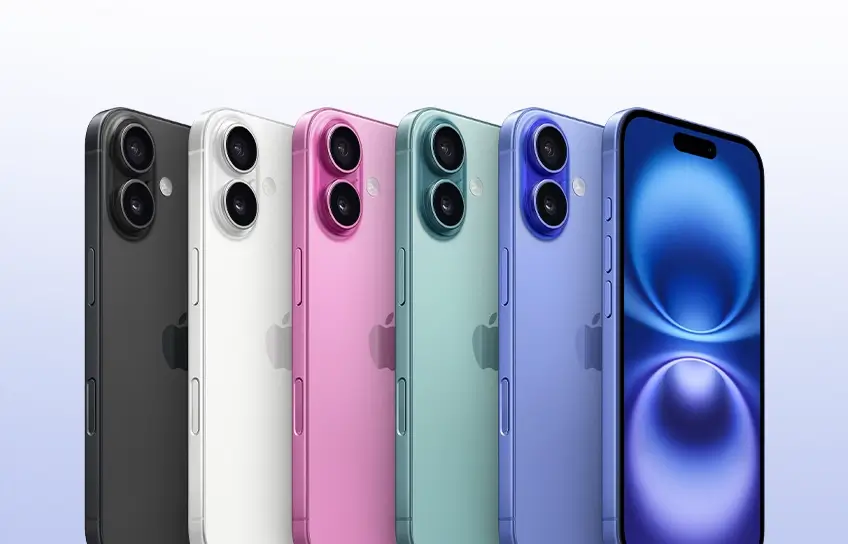
Apple did not reinvent the wheel with the iPhone 16’s design, and honestly, that is perfectly fine. The phone keeps the flat-edge aluminum frame first introduced with the iPhone 12 and pairs it with a Ceramic Shield front glass and a color-infused matte glass back. It is slim at just 7.8mm and weighs a comfortable 170 grams, making it easy to use with one hand throughout the day.
One thing worth mentioning for anyone browsing options is the apple iphone 16 colors available: Black, White, Pink, Teal, and Ultramarine. The Ultramarine and Teal finishes in particular look stunning in person, with a frosted texture that resists fingerprints better than glossy glass alternatives. The phone also carries an IP68 rating, which means it can handle being submerged in up to 6 meters of water for 30 minutes. That is serious durability for an everyday device.
Two notable physical additions make the iPhone 16 feel fresh despite the familiar silhouette. The Action Button on the left edge replaces the old mute switch and can be customized to launch the camera, trigger shortcuts, control your smart home, and more. On the right side, Apple introduced the Camera Control button, a touch-sensitive slider that lets you launch the camera, adjust zoom, and change settings without touching the screen.
Display
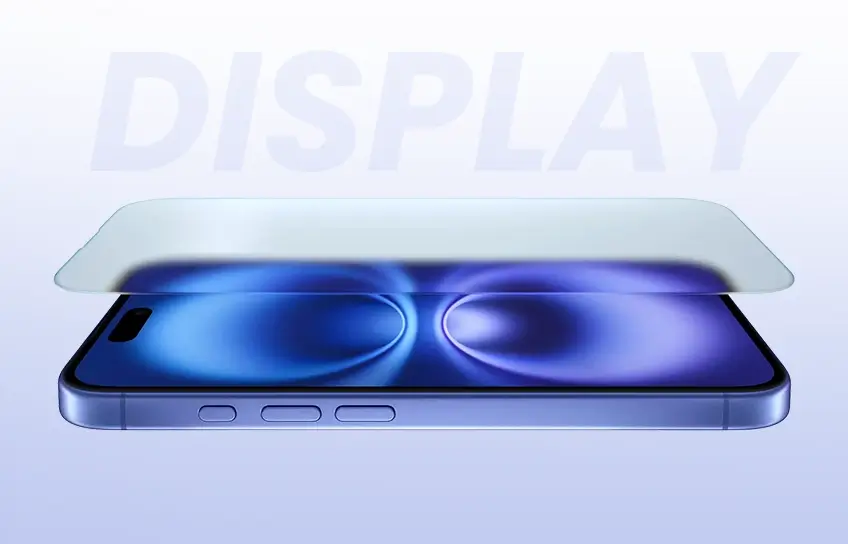
The iPhone 16 sports a 6.1-inch Super Retina XDR OLED panel with a resolution of 1179×2556 pixels at around 460 pixels per inch. Colors are vivid and accurate, blacks are deep, and outdoor visibility is excellent thanks to a peak brightness of 2,000 nits. Whether you are watching videos, scrolling through photos, or reading articles, the screen holds up beautifully.
The one honest criticism that still applies in 2026 is the 60Hz refresh rate. While the iPhone 16 Pro models have had 120Hz ProMotion displays for years, Apple continues to reserve that feature for its premium lineup. Scrolling and animations are smooth enough for most users, but if you are coming from a high-refresh Android device, you may notice the difference. It is not a dealbreaker, but it is worth knowing before you buy.
Performance and Software
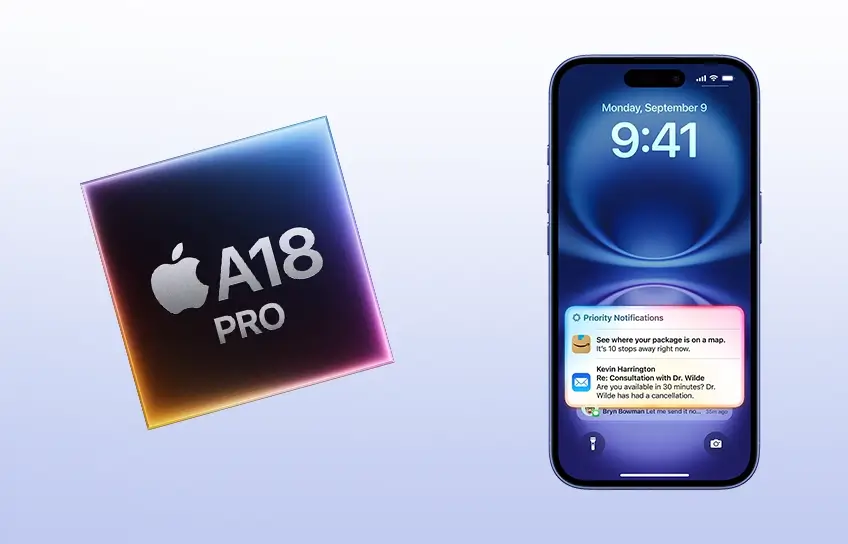
The Apple A18 chip inside the iPhone 16 is a 3nm processor with a hexa-core CPU and a 5-core GPU, paired with 8GB of RAM. When it launched in 2024, it outperformed every Android flagship on the market in most benchmark tests. In 2026, it still holds its own remarkably well. Apps load instantly, multitasking is seamless, and demanding games run without any noticeable lag or throttling.
What has changed significantly since launch is the software. The iPhone 16 launched with iOS 18 and now runs all the way up to iOS 26.2, giving it an impressive lifespan for software support. Apple Intelligence, the company’s suite of AI-powered features, was limited and rolling out in phases back in 2024. By 2026, the full suite is live, including the enhanced Siri, Writing Tools, Image Playground, Genmoji, and smarter notification summaries. The experience that was promised at launch is now the experience you actually get.
For anyone upgrading from an iPhone 13 or older, the performance jump will feel dramatic. Even coming from an iPhone 14, the difference in speed, AI capability, and camera processing is meaningful enough to justify the switch.
Camera
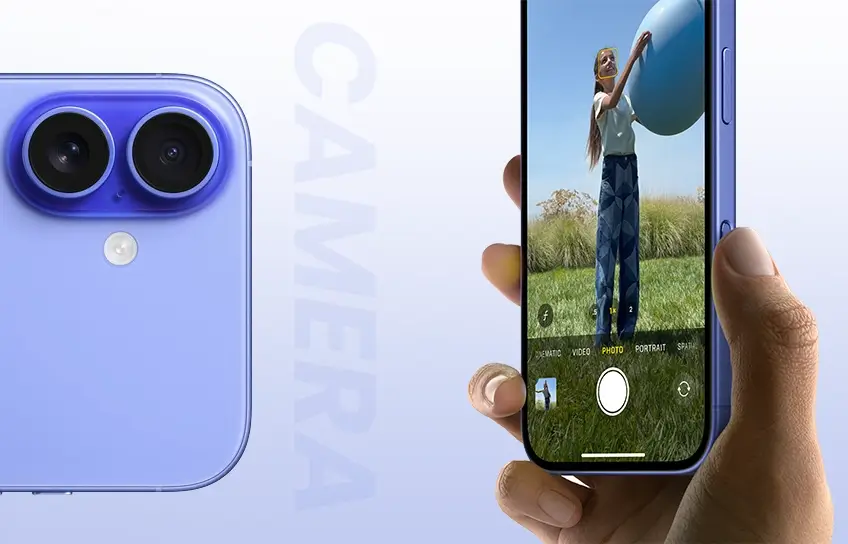
The iPhone 16 uses a 48MP Fusion main camera with an f/1.6 aperture and sensor-shift optical image stabilization, paired with a 12MP ultrawide at f/2.2 that also supports macro photography. The main camera produces sharp, detailed images in good lighting with natural color reproduction. Apple’s computational photography has always been a strength, and the Fusion camera’s ability to blend images for better results continues to impress.
Macro mode was previously limited to the Pro models, so its inclusion on the standard iPhone 16 was a welcome addition. Getting close-up shots of flowers, food, or small objects produces genuinely impressive results. Low-light performance is decent, helped by image stacking and the wide aperture, though it still falls slightly behind what the Pixel 9 Pro or the iPhone 16 Pro can achieve in true darkness.
There is no dedicated telephoto lens here, but the 2x in-sensor crop from the 48MP sensor delivers solid zoom quality without a real loss in detail. For most everyday users who are not printing billboard-sized photos, the dual-camera setup is more than capable. Video recording maxes out at 4K at 60fps and remains one of the best mobile video experiences available.
Battery Life and Charging
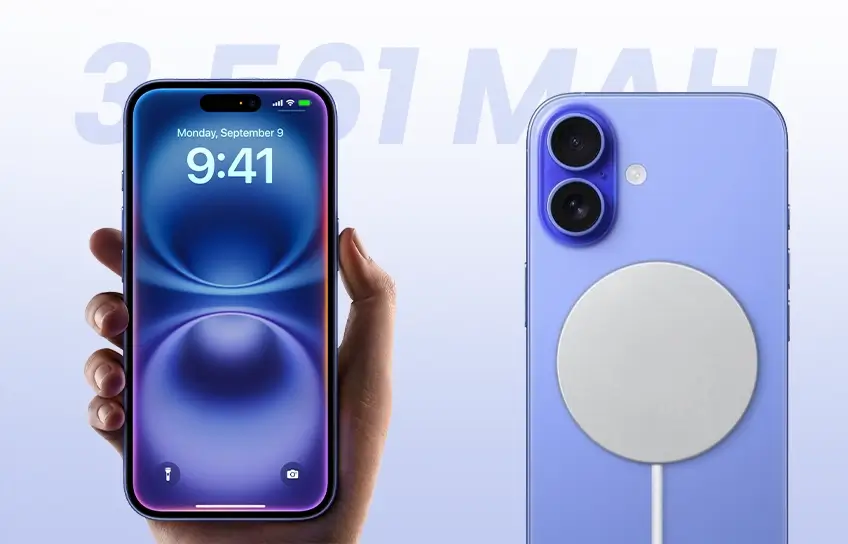
The iPhone 16 carries a 3,561 mAh battery that will comfortably get most people through a full day of regular use. Heavy users who are streaming, gaming, and on calls for extended periods will likely want to plug in before bed. Light to moderate users may occasionally stretch to a day and a half. It is not the longest-lasting smartphone, but it is reliable enough that you will not feel anxious about making it through a workday.
Charging options are flexible. The apple iphone 16 charger situation covers wired PD2.0 charging that reaches 50 percent in around 30 minutes, 25W MagSafe wireless charging, and 15W Qi2 wireless compatibility. Apple still does not include a charger in the box, which means you will need to purchase one separately or use an existing USB-C adapter. If you are already in the Apple ecosystem and have a MagSafe charger, the experience is genuinely convenient.
Pros and Cons
Pros
- Powerful A18 chip with full Apple Intelligence support in 2026
- Excellent dual camera with macro mode and 4K video
- Compact and lightweight at 170g with a premium build
- IP68 water resistance up to 6 meters
- Reliable all-day battery life
- Wide charging support: MagSafe, Qi2, and wired
- iOS 26.2 support means long software life ahead
- Action Button and Camera Control add genuine versatility
Cons
- Still capped at 60Hz, no ProMotion display
- No telephoto lens on the standard model
- Battery life lags behind the iPhone 16 Plus and Pro Max
- No charger included in the box
- Camera Control button placement takes some adjustment
- Low-light photos not quite on par with Pro-level competition
Is the iPhone 16 Worth Buying in 2026?
Who Should Buy It
The apple iphone 16 price has come down significantly since its 2024 launch. You can now find the device starting at around $489 for the 128GB model through major retailers, which represents solid value compared to what it offered at $799 at launch. For anyone upgrading from an iPhone 12, 13, or even 14, the iPhone 16 in 2026 is a genuinely compelling buy. You get modern AI features, a capable dual camera, excellent performance, and years of software support still ahead.
The apple iphone 16 128gb is the entry-level configuration and is perfectly suited for most users. If you rely heavily on your camera and shoot a lot of photos or videos, you might want to step up to the 256GB variant to avoid storage anxiety. The 512GB option is there for power users, but most people will find the base storage more than workable.
If you already own an iPhone 15, the upgrade is harder to justify unless you specifically want Apple Intelligence features or the Action and Camera Control buttons. The iPhone 15 is still a capable phone, and the difference between the two is incremental rather than transformative for everyday use.
Who Should Look Elsewhere
If a fast refresh rate display is non-negotiable for you, the iPhone 16 will disappoint. Android alternatives in the same price range now offer 120Hz as standard. Similarly, if you need serious zoom capability, the iPhone 16 Pro with its 5x telephoto lens is worth the extra investment. And if battery life is your top priority, the iPhone 16 Plus gives you meaningfully more endurance in a similar package.
For historical context, the apple iphone 16 release date was September 20, 2024. It has now been on the market for well over a year, which is precisely why the current price and the maturity of its software make 2026 one of the best times to buy it. You get a phone with a proven track record, a stable OS, and a lower price tag than at launch.
Conclusion
The iPhone 16 is one of those phones that has genuinely gotten better with age. At launch it was a solid but unspectacular upgrade. In 2026, with a lower price, a complete Apple Intelligence rollout, and over a year of proven real-world performance, it has become one of the smartest mid-range flagship purchases you can make in the Apple ecosystem.
It is well-built, fast, capable, and has plenty of software life still ahead of it. If you are on an older iPhone or simply want a reliable everyday smartphone without spending top dollar, this one deserves a serious look.
