


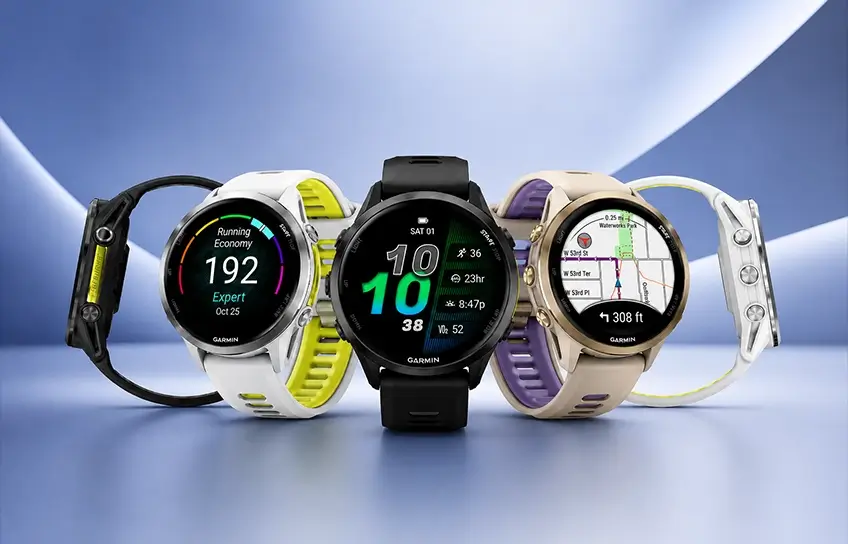
The Garmin Forerunner 970 is the watch every serious runner is talking about right now, and it has earned that attention. It packs a sapphire crystal display, a built-in flashlight, ECG support, and some of the smartest training tools Garmin has ever built into one of its lightest cases. On paper, it looks like the perfect running watch.
In real life, though, things are a bit more layered. The garmin forerunner 970 has been on plenty of wrists for almost a year now, and the feedback from real runners tells a story you should hear before you spend $749. Some new features genuinely change the way you train. A few are locked behind extra purchases that nobody warned you about. And the battery life, well, it is not quite what the spec sheet promises. This post walks you through nine honest things you should know before deciding if this watch belongs on your wrist.
Garmin Forerunner 970 Specifications
| Feature | Details |
| Price | $749.99 / £629.99 / AU$1,399 |
| Release Date | May 2025 |
| Case Size | 47 x 47 x 12.9 mm |
| Weight | 56 grams |
| Display | 1.4-inch AMOLED, 454 x 454 pixels |
| Lens | Sapphire Crystal |
| Bezel | Titanium |
| Heart Rate Sensor | Garmin Elevate Gen 5 with ECG |
| GPS | Multi-band GNSS with SatIQ |
| Battery (Smartwatch Mode) | Up to 15 days |
| Battery (GPS Mode) | Up to 26 hours |
| Storage | 32 GB |
| Water Rating | 5 ATM |
| Connectivity | Bluetooth, ANT+, Wi-Fi |
| Special Features | LED flashlight, speaker, microphone, ECG, skin temperature |
Premium Build and Lightweight Design

The first thing most people notice when they pick up this watch is how light it feels. The Garmin Forerunner 970 weight comes in at about 56 grams, which is surprising for a watch packed with this much technology. The case measures 47mm across, and Garmin paired a titanium bezel with a sapphire crystal lens to give it a sturdy feel without adding bulk.
The sapphire lens is a real upgrade over the older Forerunner 965, which used Corning Gorilla Glass. Sapphire is one of the hardest materials used in watch making, and in long-term testing, the screen has held up to gym sessions, dropped weights, accidental knocks against door frames, and trail tumbles without picking up scratches. If you have ever ruined the screen of a smartwatch in the middle of a workout, you will appreciate this change.
The watch is offered in three color combinations, and the 22mm strap can be swapped if you want a different look. The official garmin forerunner 970 bands include silicone options in carbon grey, soft gold with French grey, and titanium with whitestone yellow accents. While the case sits on the chunkier side compared to lifestyle watches like the Garmin Venu, it still slides under shirt sleeves easily and feels comfortable for all-day wear.
Bright AMOLED Display

Garmin gave the Forerunner 970 the brightest display it has ever put on a watch. The 1.4-inch AMOLED screen is sharp, colorful, and easy to read in direct sunlight or in the dark. Maps look crisp, text is clean, and data fields during a workout are easy to glance at without slowing down.
There is a real benefit to this brightness when you are running outdoors at noon, when most screens struggle. You will not need to shield the watch with your hand or squint to check your pace. The touchscreen is responsive, though some users have noticed slight lag when scrolling through dense menus or panning around maps.
A Small Catch With Brightness
Here is something to keep in mind. The default brightness setting drains the battery faster than needed. If you lower the brightness to about one third, the screen still looks plenty bright in everyday situations, and you can stretch your battery life significantly. This is a simple tweak that most reviews recommend, and it is something Garmin could probably handle better out of the box.
Running Tolerance and Impact Load
Two new garmin forerunner 970 features stand out as genuinely useful: Running Tolerance and Impact Load. These are the kind of tools that change how you train rather than just giving you more numbers to look at.
Running Tolerance suggests a weekly mileage ceiling based on your recent training, your fitness, and how your body has been responding to load. If you are someone who tends to push too hard too soon and end up injured, this is a small voice of caution on your wrist. It does not always get it right, and some seasoned runners feel it sets the bar too low at first, but it is a solid guardrail for most people.
Impact Load is even more interesting. It looks at your run and adjusts the distance based on how hard your body actually worked. A flat 10K on smooth pavement might count as 10K, but a hilly 10K with steep descents might count as 14 or 15K worth of impact. This matches how your legs actually feel the next morning, and it gives you a more honest picture of your training load.
Running Economy Needs the HRM 600
This is one of the most talked-about catches with the Forerunner 970. Two of the marketed new features, Running Economy and Step Speed Loss, only work if you also buy the Garmin HRM 600 chest strap. That strap costs around $170 on its own, which feels like a steep extra ask after spending $750 on the watch.
Running Economy is meant to show how efficiently you run. Step Speed Loss measures how much you slow down each time your foot lands. The data is interesting, but most testers have found that the numbers do not change much over time, and Garmin does not give clear advice on how to actually improve your form based on what you see.
If you already own a compatible chest strap or you do not care about these specific metrics, you can ignore this. But if you were buying the Forerunner 970 specifically for these features, factor in that extra cost before you decide.
Built-In LED Flash

lightIt might sound silly to get excited about a flashlight on a watch, but the LED light on this running gps watch is one of those features you do not realize you needed until you have it. It has multiple brightness levels and a red light mode for use at night.
Runners who head out before sunrise will love it for staying visible. Parents who creep around the house after the kids go to sleep will love it for not waking anyone up. It is also handy on trail runs, late-night dog walks, and unexpected power outages. The light is bright enough to be genuinely useful, not just a gimmick.
Real World Battery Life

The garmin forerunner 970 battery life on paper looks promising, with Garmin claiming up to 15 days in smartwatch mode and up to 26 hours in basic GPS mode. In real life, the numbers depend a lot on how you use the watch.
If you keep the always-on display turned on at high brightness, you will likely be charging every two to four days. If you turn brightness down and let the screen sleep when your wrist drops, you can stretch it to a full week or more, even with regular workouts. For GPS use, expect around 21 to 23 hours when using the most accurate satellite mode, which is enough for most marathons and even a long ultra effort.
Compared to the older Forerunner 965, you actually get slightly less battery life in Everyday smartwatch use, but slightly more during GPS workouts with music. It is a trade-off that comes with the brighter screen and faster sensors. If you need a watch that can go a week without charging while always-on, you may want to look at the Garmin Fenix series instead.
Maps and Navigation

Few running watches handle maps as well as the Forerunner 970. You get full color topographic maps preloaded for your region, with the ability to download free maps for other parts of the world. Trails, roads, points of interest, and elevation are all included.
You can build a route on your phone in Garmin Connect, in apps like Strava or Komoot, and have it sync to your watch automatically. On the wrist, you get turn-by-turn directions, off-course warnings, and helpful features like ClimbPro that break long climbs into clear segments showing how much you have left.
There are some quirks. Map rendering can be slow, especially when zooming in or out, and a few users have reported issues with round-trip routing not always recalculating cleanly. But for everyday navigation, route following, and exploring new trails, the Forerunner 970 is one of the most capable running watches you can wear.
ECG and Health Tracking

When you look at the full garmin forerunner 970 specs sheet, the health side stands out almost as much as the sports side. The watch carries Garmin’s latest Elevate Gen 5 heart rate sensor, which means you get more than just heart rate during runs. The watch can record an ECG to check for signs of irregular heart rhythm, track skin temperature for sleep insights and cycle predictions, and measure blood oxygen levels when you sleep.
Daily features include Body Battery, which gives you a number from 0 to 100 to show how much energy you have left in the tank, and HRV Status, which can hint at how well you are recovering. You also get a Morning Report when you wake up and a new Evening Report before bed, both summarizing your day, suggesting tomorrow’s workout, and giving sleep guidance.
Are these features perfect? No. Sleep stage data is rough across all wearables, not just Garmin. VO2 max and recovery scores are useful as trends but hould not be treated as exact science. Still, the breadth of health data on this watch is genuinely useful when you take it as a long-term picture rather than a daily verdict.
Price and Value
This is the conversation no review can avoid. The garmin forerunner 970 price came in at $749 when it hit shelves, which is about $150 more than the Forerunner 965 launched at. The garmin forerunner 970 release date was May 2025, and that price puts it close to the Garmin Fenix 8, which has bigger battery life and a more rugged build.
So who is this watch actually for? It makes the most sense for serious runners and triathletes who train consistently and want every tool Garmin offers in a lighter package. If you race regularly, follow structured training plans, and enjoy looking at detailed data after every workout, you will get your money’s worth.
If you mostly run a few times a week, do not care about advanced metrics, or just want to track basic fitness, you can save a lot of money by looking at the Forerunner 570, the older Forerunner 965 on sale, or watches from brands like Coros and Suunto. They will not match the depth of features, but they will cover the basics well.
Pros and Cons
Pros
- Bright sapphire-protected AMOLED display
- Industry-leading GPS accuracy
- Lightweight 56-gram titanium build
- Built-in LED flashlight
- Detailed offline topographic maps
- New Running Tolerance and Impact Load metrics
- ECG and skin temperature tracking
Cons
- High $749 price tag
- Running Economy needs $170 chest strap
- Battery life dropped in smartwatch mode
- Only available in 47mm size
- Maps can render slowly
- Some launch software bugs reported
Forerunner 970 vs Other Watches
Forerunner 970 vs Forerunner 965
The Forerunner 970 is the clear upgrade with a brighter screen, sapphire lens, ECG, flashlight, speaker, microphone, and new running metrics like Running Tolerance and Impact Load. The 965 still holds its own with longer smartwatch battery life and most of the same training tools, and it now sells at a much lower price. If you can find the 965 on sale and you do not care about the flashlight or ECG, it is the better value pick. If you want the latest and most capable Forerunner, the 970 wins.
Forerunner 970 vs Forerunner 570
The Forerunner 570 launched alongside the 970 and shares the same heart rate sensor and many training features. The big differences are that the 570 lacks offline maps, ECG, sapphire glass, the LED flashlight, and the new running metrics. It is also lighter, comes in two sizes (42mm and 47mm), and costs $200 less. If you mostl run on familiar routes and do not need maps, the 570 is the smart buy. If you trail run, travel for races, or want every premium feature, the 970 is worth the extra spend.
Forerunner 970 vs Garmin Fenix 8
The Fenix 8 is Garmin’s flagship adventure watch, with diving support, a more rugged build, longer battery life, and multiple case sizes. It costs about $250 more than the 970 in its base form. The 970 is lighter, brighter, more comfortable for daily wear, and better suited for runners who do not need expedition-level features. If you spend most of your time running roads and trails, the 970 is the smarter pick. If you scale mountains, dive, or want the toughest watch Garmin sells, go with the Fenix 8.
Forerunner 970 vs Apple Watch Ultra 3
The Apple Watch Ultra 3 is the better all-around smartwatch with LTE, satellite messaging, a richer app store, and tighter iPhone integration. The Forerunner 970 wins on training analysis, GPS battery life, and depth of running features. If you want a daily smartwatch that also runs well, choose the Apple Watch Ultra 3. If running is your priority and the watch must serve your training first, the Forerunner 970 is the better choice.
Forerunner 970 vs Coros Pace 4
The Coros Pace 4 costs less than half the price and matches the Forerunner 970 on basic GPS accuracy and core running stats. It has a smaller, lighter design and longer battery life. The Forerunner 970 wins on premium build, advanced metrics, full mapping, smart features, and the wider Garmin ecosystem. If you are budget-conscious and want a great running watch, the Pace 4 is excellent. If you want the best of everything, the 970 is in another league.
Final Thoughts
The Forerunner 970 is one of the most capable running watches you can buy right now, and it earns its reputation honestly. It blends a premium feel with serious running tools, a stunning display, and useful health features, all in a watch light enough to wear day and night. At the same time, it is not perfect. The price has climbed, some new features depend on a separate chest strap, and the battery life trade-offs are real.
The best advice is to be honest with yourself about how you train. If you want every tool a running watch can offer and you will actually use them, this is a clear winner. If you only need the basics, there are smarter ways to spend your money. Either way, knowing these nine points puts you in a strong position to make the right choice for your wrist and your goals.
