


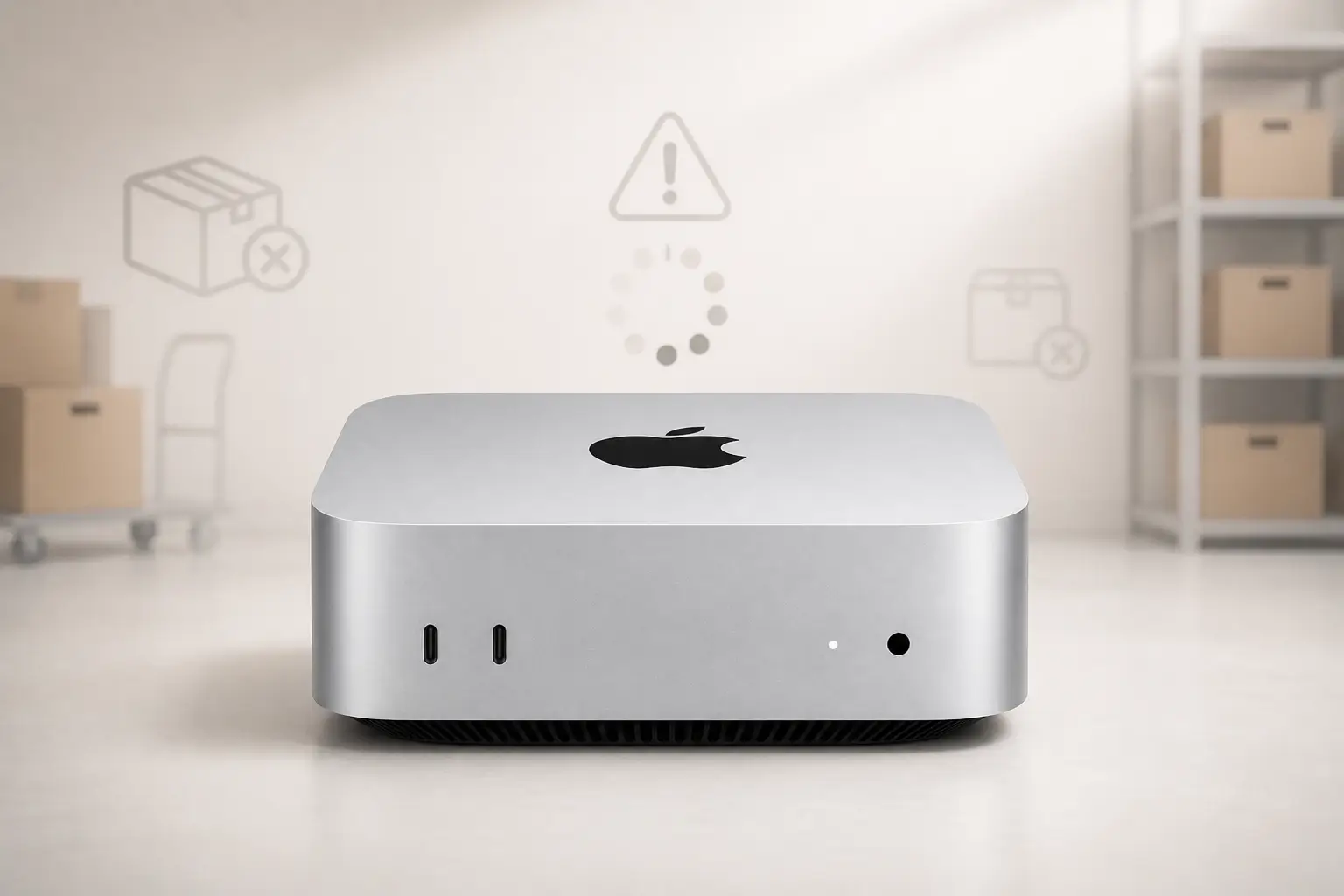
If you were hoping to buy a new Mac mini or Mac Studio soon, you may need to wait longer than expected. Apple has confirmed that supply shortages affecting both desktops are likely to continue for several months. The company points to a sharp rise in demand from users running artificial intelligence tools on their own machines, along with ongoing pressure on the global chip and memory market.
The update came during Apple’s second fiscal quarter 2026 earnings call, where CEO Tim Cook addressed the issue directly. He said the situation will not be resolved quickly, and customers should expect continued delays on many configurations.
Tim Cook Says Demand Caught Apple Off Guard
During the call, Cook admitted that Apple did not predict how fast customers would turn to the Mac mini and Mac Studio for AI work. He told investors that the company underestimated demand for both desktops. Apple now expects it will take time to catch up.
Both of these are amazing platforms for AI and agentic tools,” Cook said. “The customer recognition of that is happening faster than what we had predicted, and so we saw higher than expected demand. He added that the Mac mini and Mac Studio “may take several months to reach supply demand balance.”
The shortage has been building for weeks. Several Mac Studio models with high memory configurations were pulled from Apple’s online store earlier this year, including the version with 512GB of RAM. The base $599 Mac mini has also been removed from Apple’s store. This means the cheapest model now starts at $799, with an M4 chip, 16GB of RAM, and 512GB of storage. A Mac mini ordered today from Apple’s website can take five to six weeks to arrive.
Why AI Users Are Driving the Surge
A big part of the demand comes from a growing trend often called local AI. Instead of running AI tools through the cloud, many developers and small teams now prefer to run them on their own desktops. This gives them better privacy, lower long-term costs, and faster response times.
The Role of Apple Silicon
Apple’s desktops have become popular for this kind of work because of how the chips are designed. Unlike most PCs, where the CPU and GPU use separate memory pools, Apple Silicon uses a unified memory system. This allows large AI models to run more smoothly on a single machine without the need for expensive server hardware.
Tools like OpenClaw have helped fuel this shift. Developers have been buying Mac mini and Mac Studio units in large numbers to run these tools at home or in small offices. Online developer groups have been talking about Mac desktops as a strong alternative to costly AI workstations for months.
Chip and Memory Shortages Add to the Problem
Demand is only one side of the story. Apple is also dealing with wider supply problems across the semiconductor industry. Cook explained that the availability of the advanced manufacturing nodes used to build Apple Silicon chips is constrained, which limits how quickly Apple can scale up production. He noted that the company has less flexibility in its supply chain than it normally would, although he said the iPhone is the product most affected by these limits.
Memory is another concern. Global demand for high-bandwidth memory has climbed sharply because of the AI boom. Cook said Apple paid more for memory chips last quarter and expects prices to keep rising in the coming months. The company is looking at several options to handle the impact, but it has not shared specific plans yet.
A New M5 Mac Mini May Be on the Way
Part of the wait may also be tied to upcoming product changes. Reports suggest Apple is preparing a new Mac mini with an M5 chip later this year. When a refresh is near, ship times often slip as Apple manages older inventory. The starting price of the next Mac mini is not yet clear and will likely depend on memory and storage costs at launch.
A Strong Quarter Despite the Shortages
Even with these supply problems, Apple posted a strong financial result. The company reported $111.2 billion in revenue for the quarter, a 17 percent jump compared to the same period last year. The iPhone led the way with nearly $57 billion in sales, while the services division brought in close to $31 billion. The Mac business grew 6 percent year over year, even with limited Mac mini and Mac Studio stock.
Cook also noted that the new MacBook Neo has seen strong customer interest, helping Apple set a March record for new Mac users. However, the Neo has been easier to find than the desktop lineup, with shipping times of two to three weeks from Apple and same-day stock at retailers like Amazon, Walmart, and Best Buy.
For now, shoppers looking at a Mac mini or Mac Studio should be ready for longer waits. Availability also varies by region, and some buyers may have better luck checking third-party retailers. Apple says it is working to close the gap, but with chip and memory pressure expected to continue, the shortage may stretch well into the second half of the year.
