


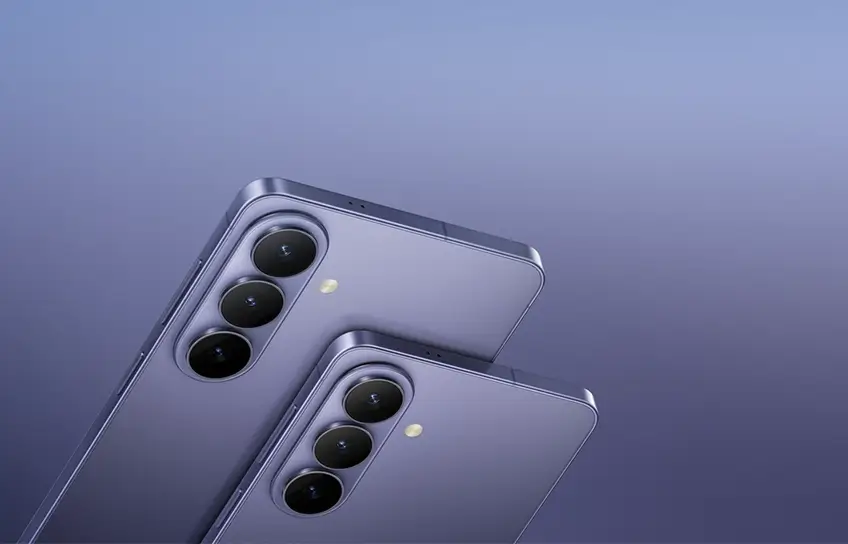
I’ve been using the Samsung Galaxy S26 as my daily phone for the past three weeks, and honestly, my feelings on it are complicated.
On the surface, this phone does almost everything right. It’s stupidly light for a flagship. The screen looks great. It runs fast. Samsung is backing it with seven years of updates, which no other Android brand in this price range can match. For a certain kind of buyer, this phone is close to perfect.
But then you remember you’re paying $900 for camera sensors that are now four years old, charging speeds that budget phones have already surpassed, and a handful of premium display features that Samsung quietly kept for the more expensive models. None of those decisions are accidental. Samsung knows exactly what it’s doing, and the Galaxy S26 sits right at the intersection of “genuinely good phone” and “Samsung coasting.”
If you’re shopping among the top flagship Android phones of 2026 and trying to figure out whether this is the right one for you, here’s everything I found after living with it.
Samsung Galaxy S26: Full Specifications
| Category | Samsung Galaxy S26 |
| Display | 6.3-inch Dynamic AMOLED 2X |
| Resolution | FHD+ 2,340 x 1,080 |
| Refresh Rate | 1 to 120Hz adaptive LTPO |
| Peak Brightness | 2,600 nits |
| Processor (US) | Snapdragon 8 Elite Gen 5 for Galaxy |
| Processor (Global) | Exynos 2600 |
| RAM | 12GB LPDDR5X |
| Storage Options | 256GB / 512GB UFS 4.0 |
| Main Camera | 50MP f/1.8, OIS, 1/1.56″ sensor |
| Ultrawide Camera | 12MP f/2.2 |
| Telephoto Camera | 10MP f/2.4, 3x optical zoom |
| Front Camera | 12MP f/2.2 |
| Battery | 4,300mAh |
| Wired Charging | 25W |
| Wireless Charging | 15W |
| Dimensions | 149.6 x 71.7 x 7.2mm |
| Weight | 167g |
| Water Resistance | IP68 |
| OS | Android 16, One UI 8.5 |
| Software Updates | 7 years |
| Colors | Black, White, Sky Blue, Cobalt Violet, Silver Shadow, Pink Gold |
| Starting Price (US) | $900 |
A Phone That Fits Like Nothing Else
Let me start with the thing that hits you the moment you pick this phone up: it weighs almost nothing.
At 167 grams, the Galaxy S26 feels lighter than phones I’ve owned that cost a third of the price. Picking it up off a table genuinely surprises you the first few times. One-handed use is effortless, every corner of the screen is reachable without repositioning your grip, and sliding it into a jeans pocket feels like putting in a wallet card rather than a brick.
I’ve been comparing it back and forth against a couple of other flagships this month, and the size difference is not subtle. The S26 is noticeably slimmer and lighter in hand. That physical experience matters more than any spec sheet can convey, and for buyers who are tired of carrying a small tablet in their pocket, this phone scratches that itch better than anything else available right now.
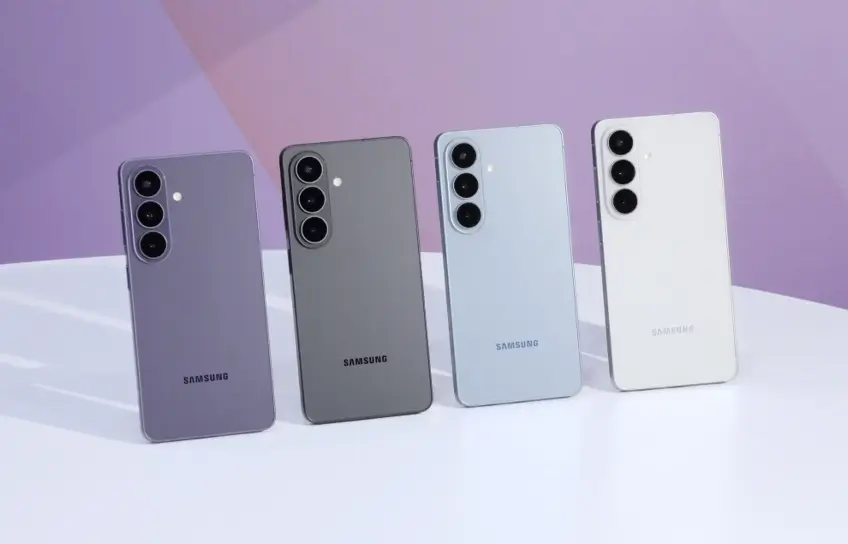
The build quality is exactly what you’d expect from a Samsung flagship. Aluminum frame, glass front and back, solid construction with no flex or creak anywhere. Samsung offers it in Cobalt Violet, Sky Blue, Black, and White through most retailers, with Silver Shadow and Pink Gold available as online exclusives. I’ve been using the Cobalt Violet, which photographs more like a deep blue than a true violet. It looks good without being loud.
One thing I want to flag before moving on: the new pill-shaped camera island on the back looks cleaner than last year’s floating lenses, but it means the phone wobbles when you set it down on a flat surface. It’s not a dealbreaker but it’s mildly annoying when you’re typing on a desk with the phone lying flat. The S25 didn’t do this, and it’s a small trade for the tidier look.
IP68 water resistance is here, which is standard for a phone at this price. You’re covered for everyday splashes, rain, and accidental drops in water.
The Screen Looks Great, Mostly
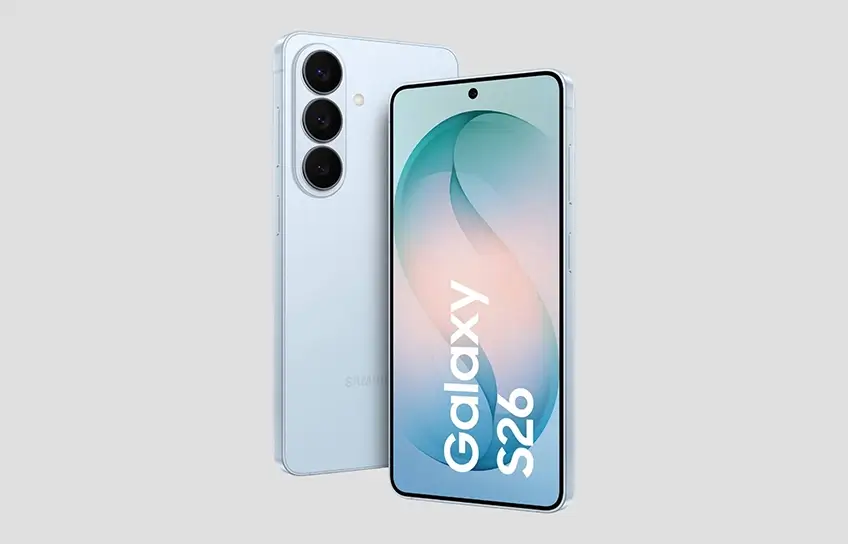
The 6.3-inch Dynamic AMOLED display is one of the better panels I’ve used this year. Colors are vivid without going overboard into that over-saturated Samsung look from a few years back. Watching YouTube, streaming Netflix, or just scrolling through photos looks genuinely enjoyable. The 120Hz refresh rate keeps everything smooth, and the screen gets bright enough outdoors that I haven’t had trouble reading it in direct sunlight on most days.
I want to be precise about the sunlight comment, though. Direct harsh sunlight does expose the lack of anti-reflective coating on this model. Samsung uses Gorilla Armor anti-reflective glass on the Ultra, and you notice the difference when you’re side by side with one under strong light. On the base S26, glare is manageable but it’s there. It’s one of those things you don’t notice when you’re indoors but becomes obvious the moment you step outside on a bright afternoon.
The display runs at Full HD+ resolution, which is a step below the QHD+ you can get on the Plus and Ultra. In three weeks of daily use, it hasn’t bothered me once. Text looks sharp, images look detailed, and I genuinely couldn’t tell the difference without holding it next to a higher-resolution display. It only becomes visible if you’re specifically looking for it.
One more thing worth knowing: Samsung’s ProScaler AI upscaling feature, which sharpens older videos and low-res content in real time, is not available on this model. That’s an S26+ and Ultra exclusive. For most buyers this won’t matter, but if you watch a lot of older YouTube content or stream lower-quality video, it’s a feature worth knowing you’re not getting.
Four Years of the Same Cameras
I’ll be direct here. The camera system on the Galaxy S26 is the weakest part of the package for $900 in 2026.
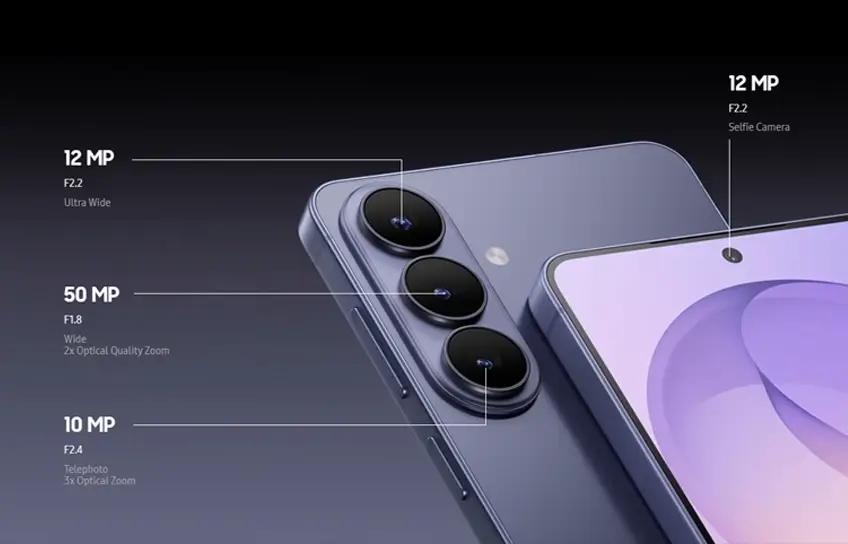
The rear setup is a 50MP main sensor, a 12MP ultrawide, and a 10MP 3x telephoto. These are the same sensors Samsung has been shipping in the base S-series since 2022. I want to be fair and say they’re not bad cameras. In good lighting, I got sharp, well-exposed photos with natural-looking colors. Samsung has tuned the color science this year and the results are warmer and more balanced than what I remember from older Galaxy phones.
Where It Starts to Crack
But the limitations show up fast once conditions get harder. Low-light photos are decent up to a point, then fall apart with noise in the shadows and blooming around bright sources like streetlights. The 3x telephoto works well at exactly 3x, but push it digitally beyond that and detail drops quickly. I tried shooting a subject at 10x and the result was soft enough that I’d never actually share it.
The bigger issue is context. Other phones at this price point have moved on. Sticking with hardware this old while charging $100 more than last year is a decision that’s hard to defend when you’re out shooting and you can see the gap.
What Samsung Actually Got Right
What Samsung did improve is the AI editing inside the Gallery app. Photo Assist lets you remove objects, reduce reflections, adjust lighting, and now accepts natural language prompts. I typed “remove the scaffolding on the left” into one photo and it worked on the first try. That kind of editing used to require a desktop app, and having it this accessible on a phone is genuinely impressive.
The Horizon Lock video feature is also worth highlighting. It keeps the horizon level even if you rotate the phone significantly while recording. I tested it chasing my dog around the garden and it held up better than any stabilization I’ve tried on a phone camera. For anyone who shoots handheld video regularly, that’s a real addition.
For heavy telephoto work or serious low-light photography, though, the Samsung Galaxy S26 Ultra with its periscope 5x lens is a different class of camera phone. The $399 price jump becomes easier to justify the more you care about zoom range.
Performance That Never Gets in the Way
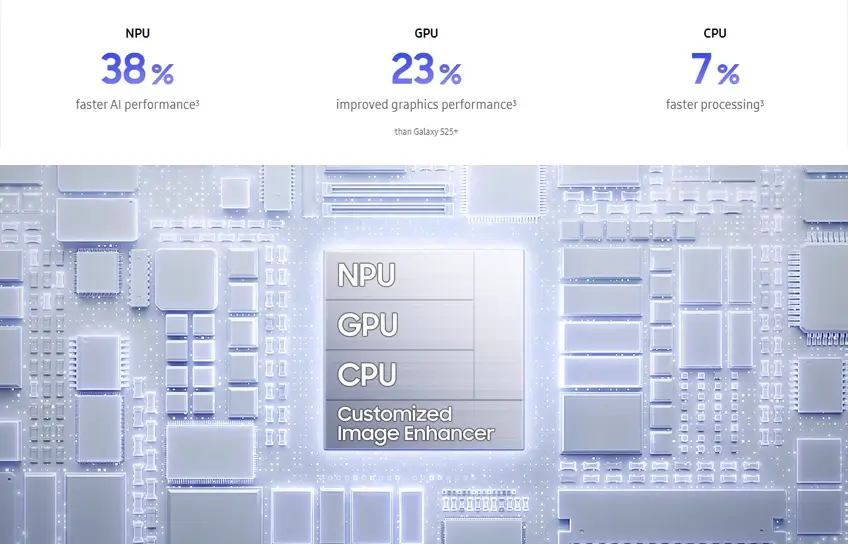
The Snapdragon 8 Elite Gen 5 in the US model handles everything I threw at it without complaint. Apps open instantly, switching between tasks is seamless, and the phone never felt like it was working hard during any normal day of use.
Gaming is where you notice the chip’s capability most clearly. I ran several hours of demanding games and performance stayed consistent. The phone does get warm during extended gaming sessions, noticeably warm on the back panel, but it never reached a point where it throttled or became uncomfortable to hold. It’s worth mentioning that Samsung only upgraded the vapor cooling chamber on the Ultra this year, so the base S26 manages heat the same way the S25 did. Under normal use it runs cool. Under gaming pressure it runs warm. That trade-off feels reasonable given the size.
A note for international buyers: markets outside the US and China receive the Exynos 2600 chip instead of the Snapdragon. In day-to-day tasks the difference is imperceptible. Where it shows up is during sustained heavy loads like long gaming sessions. The Snapdragon holds a measurable edge there. If you’re buying a grey market import specifically to get the Snapdragon variant, I wouldn’t call it necessary unless you’re a competitive mobile gamer.
The jump to 256GB base storage this year is one of the most practical upgrades Samsung made. I was already brushing against the ceiling on my old 128GB phone and haven’t thought about storage once in three weeks. That’s how phone storage should feel.
One UI 8.5
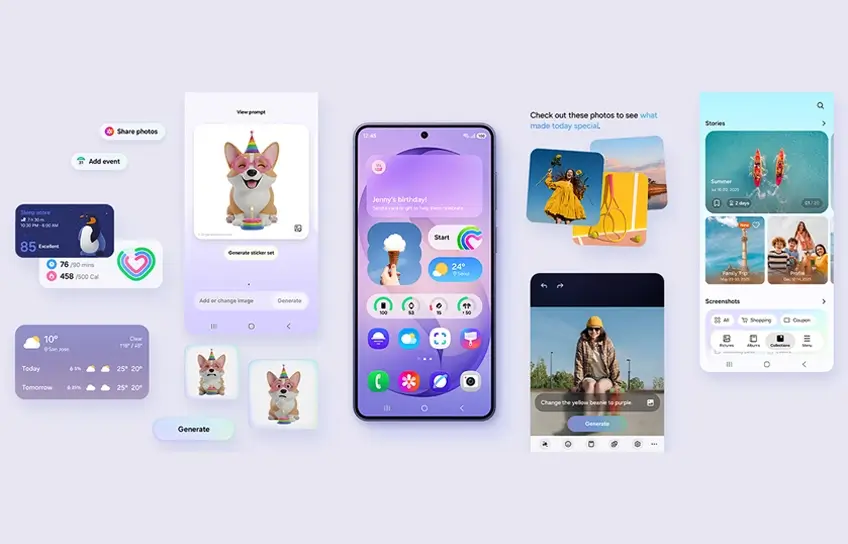
One UI 8.5 on Android 16 is the most polished version of Samsung’s software I’ve used. It’s responsive, the customization options are deep without being overwhelming, and the fingerprint scanner under the screen is fast enough that I barely notice the unlock step anymore.
Seven years of OS and security updates means this phone will stay current until 2033. That’s a meaningful commitment that changes how you think about paying $900. Spread across seven years, you’re looking at roughly $130 per year of supported, up-to-date use. That math makes the price tag easier to sit with.
On the AI side, results are genuinely mixed. Here’s my honest breakdown after three weeks:
- Circle to Search is the one I use most. Long pressing to search anything on screen without leaving the app is something I reach for several times a day now. It works reliably.
- AI Select has gotten faster. Selecting something on screen to translate or edit it feels smooth in a way it didn’t on older Samsung phones.
- Now Nudge is the flagship new feature, and I want to like it more than I do. It’s supposed to pop up contextual suggestions based on what’s on your screen. In practice it appeared far less often than expected and twice directed me somewhere completely wrong based on misreading what I was looking at. Check back in a few months once Samsung has tuned it further.
- Photo Assist text prompts work better than I expected, as mentioned in the camera section.
- Now Brief morning summaries are fine. They’re not transformative but they’re not annoying either.
The Galaxy S26 also finally lets you set Google Gemini or Perplexity as your primary assistant, replacing Bixby entirely. That alone is worth celebrating.
Battery Life Is Fine. Charging Speed Is Not.
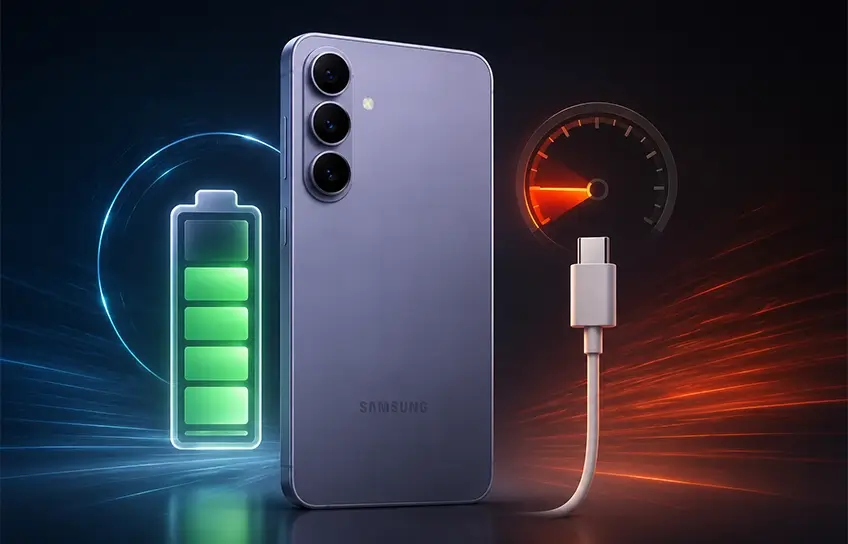
The 4,300mAh battery comfortably gets me through a full day with typical use. Calls, social media, some navigation, streaming over lunch, light gaming in the evening. It reaches 10pm with capacity remaining. That’s a solid result for a phone this compact and thin.
But 25W wired charging is where my patience with this phone runs out.
I came back from a long walk one evening at around 20 percent battery. I had to leave again in forty minutes. In that window the S26 recovered maybe 18 percent. Enough to function, not enough to feel confident. My last phone charged faster than this. Phones that cost $400 less charge faster than this. In 2026, 25W on a $900 flagship is not a feature gap, it’s a choice Samsung made to protect sales of the S26 Plus and Ultra, and it’s the most frustrating part of owning this phone.
Wireless charging tops out at 15W. There’s no MagSafe compatibility in the hardware itself, so if you want magnetic wireless charging you need to buy a Samsung case with a magnetic ring built in. That should not be an add-on purchase at this price.
Who Should Actually Buy the Samsung Galaxy S26
Here’s the straight answer by where you’re upgrading from.
| Current Phone | My Recommendation | Why |
| Galaxy S22 or older | Buy it | The performance, battery, and storage jump is large enough to feel transformative |
| Galaxy S23 | Buy it | Meaningfully better battery, noticeably faster chip, and seven-year update window from here |
| Galaxy S24 | Think carefully | Camera hardware is identical, performance gains are modest, charging is unchanged |
| Galaxy S25 | Skip it | You already have this phone in every way that matters |
| iPhone or Pixel user | Depends | You gain display refresh rate and update longevity, lose on charging and computational photography |
If you’re coming from a mid-range device or an older Samsung Galaxy A-series phone, the upgrade feels dramatic. The performance gap between the A-series and the S26 is genuinely noticeable in daily use.
One thing worth knowing before you check out: Samsung offers up to $380 in trade-in credit through its own store. At maximum trade-in value, the effective price drops to around $520. That completely changes the value conversation compared to the $900 sticker price, and it’s the first thing I’d check before buying anywhere else.
For buyers who want a slightly larger screen, faster 45W charging, and ProScaler included, the Samsung Galaxy S26+ sits at $1,099. The $200 difference is easier to justify than it looks once you add up what you’re getting. And if you’re on a tighter budget and a compact Android is the goal, the Samsung Galaxy A37 5G is worth a look before committing to flagship pricing.
Final Words
The Samsung Galaxy S26 is still the best compact flagship Android phone you can buy in 2026. No other phone fits this much performance into a frame this light and this thin. The display is excellent, One UI is polished, and seven years of updates make the long-term value argument stronger than the price tag suggests.
What holds it back is a combination of four-year-old camera hardware, the slowest charging speed in its category, and display features that Samsung deliberately saved for more expensive models. None of those are surprises, and none of them are accidental.
Buy it if you want the best compact Android experience and are upgrading from an S23 or older. Consider the S26+ if charging speed and ProScaler matter to you. And if you already own an S25, save your money and wait for next year.
