


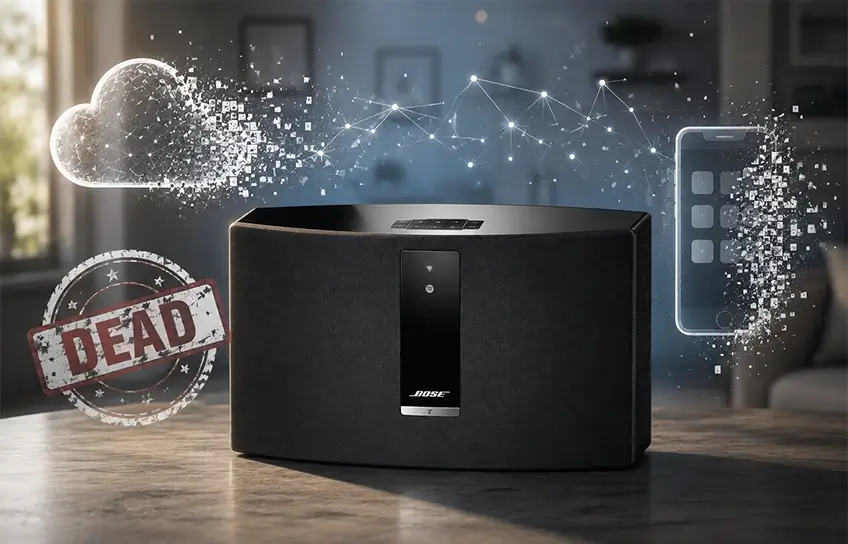
For over a decade, it sat in living rooms, kitchens, and bedrooms around the world, filling spaces with music at the tap of a button. On May 6, 2026, that chapter closed for good. Bose pulled the plug on its SoundTouch cloud platform, ending the smart features that once made these speakers worth their premium price tag. The hardware is still sitting on shelves and walls, but the ecosystem that gave it purpose is gone forever.
This is not just a story about one product being retired. It is a story about what happens when the technology you paid for stops being yours to keep.
A Platform Twelve Years in the Making, Gone in One Day
Bose SoundTouch launched in 2013 as the company’s answer to the growing demand for wireless multiroom audio. It competed directly with Sonos and similar platforms, offering users a clean, integrated way to stream music across multiple rooms from a single app. For years, it held its ground as a reliable, premium option for home audio enthusiasts.
But technology moves fast, and cloud infrastructure does not maintain itself. By October 2025, Bose officially announced that the platform’s backend could no longer be sustained. Modern streaming standards had moved well beyond what SoundTouch was built on, and continuing to support it had become impractical.
An initial shutdown deadline of February 2026 was pushed back following strong pushback from users, but the extension only delayed the inevitable. May 6 became the final date, and this time there was no reprieve.
What Owners Woke Up to on May 6
When the shutdown took effect, Bose simultaneously released a final update to the SoundTouch app. The update was designed to shift the platform from cloud-dependent operation to local network control, preserving as much functionality as possible without Bose’s servers in the picture.
What Still Works
The surviving features are genuinely useful. Bluetooth, AirPlay, and Spotify Connect all continue to function normally. Basic playback controls including play, pause, skip, and volume remain intact. Speaker grouping for multiroom audio still works across compatible devices on the same home network. For users who primarily stream from third-party apps, the day-to-day experience may not feel dramatically different on the surface.
What Is Gone and Will Not Return
The losses, however, cut deeper than the surface. Presets, one of the platform’s most used and most loved features, are completely gone. The ability to browse and launch music services directly from within the SoundTouch app has been removed. Stereo pairing for the SoundTouch 10 speaker has been discontinued.
Most significantly, Bose confirmed that no further software or security updates will ever be issued for any SoundTouch product. The platform is frozen exactly as it stands today, and it will never move forward again.
How SoundTouch Owners Are Reacting
The reaction from the SoundTouch community has been a mix of frustration and resignation. Across Reddit threads and Bose support forums, longtime users are processing not just the loss of features but the loss of confidence in the brand itself.
One Reddit user put it plainly, saying they had no interest in spending money on another Bose system that could face the same fate in a few years. Another wrote that the shutdown had made them rethink buying into any closed smart speaker ecosystem again, regardless of the brand. The concern is not really about presets or app controls anymore. It is about the pattern this represents.
That sentiment is understandable. SoundTouch owners paid premium prices for a product that was marketed as a complete, intelligent audio platform. What they have now is a local speaker system that depends entirely on third-party apps to deliver a fraction of its original experience. The hardware survived. The promise did not.
Bose Is Not the Only One With This Problem
It would be easy to single out Bose here, but the honest truth is that SoundTouch is part of a much larger and growing problem across the smart audio industry.
Sonos users lived through their own version of this when a deeply troubled app overhaul left previously reliable multiroom systems unstable for months. Customers who had invested thousands of dollars in Sonos hardware found themselves unable to depend on basic features they had used for years. The company eventually worked to address the issues, but the trust it lost in that period has not fully recovered.
The uncomfortable pattern is becoming clear. Cloud-connected speakers do not age the way traditional speakers do. A passive bookshelf speaker from twenty years ago still works exactly as it did on day one. A smart speaker ages on the company’s timeline, not yours. When the company decides to move on, your features go with them.
What This Should Mean for Anyone Buying Speakers Today
The SoundTouch shutdown is a lesson that arrives too late for current owners but right on time for everyone else. Before investing in any cloud-dependent audio product, it is worth asking a simple question: what happens to this device if the company changes direction in five years?
Bose handled this situation with more care than many companies do. The final app update preserved local functionality, the shutdown was communicated months in advance, and the company even released open-source technical documentation to allow independent developers to build SoundTouch-compatible tools going forward. Those are not small gestures.
But none of that changes the fundamental reality. A product that was sold as a smart, integrated, cloud-powered audio platform is now a basic local speaker running on borrowed time, with no security updates and no path forward into Bose’s newer ecosystem.
The speakers are still on. The platform they were built on is not. And for the people who loved SoundTouch at its best, that difference is everything.
