


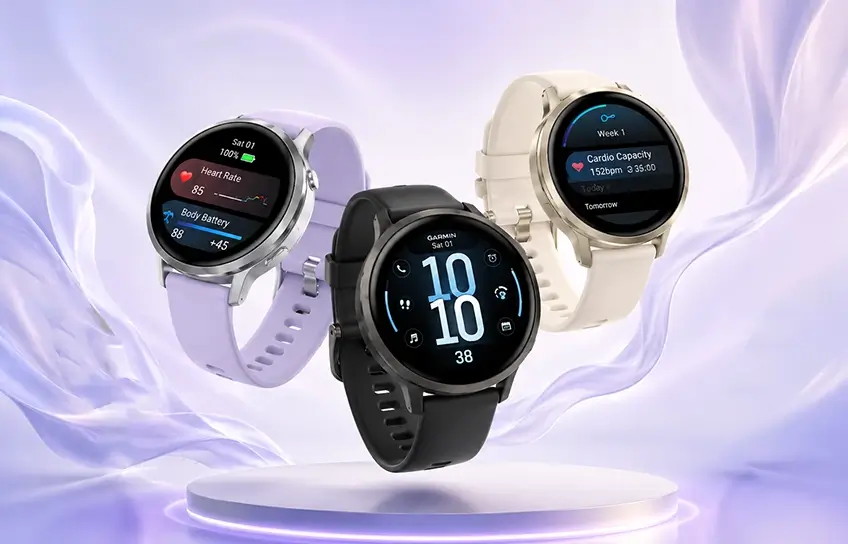
My old smartwatch died on day two. Every single week, same story. I’d wake up on a Tuesday morning, check my sleep score, and see the dead battery notification instead. I started leaving it on the charger overnight just to actually have data in the morning, which defeated the entire point of wearing a sleep tracker.
That is the problem the Garmin Venu 4 solves first, before anything else. Nine days of real battery life in my three weeks of testing. Not the twelve Garmin claims on the box, but nine. Still, nine days is the kind of number that changes your relationship with a watch. You stop thinking about charging. You stop taking it off. The data actually becomes continuous, which makes it useful in a way that two-day battery watches never really are.
Everything else, the stainless steel case, the 1,300-nit display, the ECG, the dual-band GPS, the LED flashlight, comes after that. But battery life is where the Garmin Venu 4 wins the argument before the conversation even starts. At $549.99, here is whether the rest of it earns the price.
Garmin Venu 4 Specifications
| Specification | Venu 4 41mm | Venu 4 45mm |
| Price | $549.99 | $549.99 |
| Dimensions | 41 x 41 x 12mm | 45 x 45 x 12mm |
| Weight with band | 46g | 56g |
| Display | 1.2-inch AMOLED | 1.4-inch AMOLED |
| Resolution | 390 x 390px | 454 x 454px |
| Peak brightness | 2,000 nits | 2,000 nits |
| Case material | Stainless steel | Stainless steel |
| Lens | Corning Gorilla Glass | Corning Gorilla Glass |
| GPS | Dual-band L1+L5, SatIQ, GPS, GLONASS, Galileo, BeiDou, QZSS | Same |
| Battery, smartwatch mode | Up to 10 days | Up to 12 days |
| Battery, always-on display | Up to 3 days | Up to 4 days |
| Battery, GPS mode | Up to 13 hours | Up to 20 hours |
| Charging time | Up to 2 hours (full charge) | Up to 2 hours (full charge) |
| Water resistance | 5ATM / 50m | 5ATM / 50m |
| Heart rate sensor | Elevate Gen 5 optical | Same |
| Additional sensors | SpO2, ECG, skin temp, barometric altimeter, compass, accelerometer, ambient light | Same |
| Storage | 32GB | 32GB |
| Connectivity | Bluetooth, Wi-Fi, NFC | Same |
| Smart features | Speaker, mic, Garmin Pay, offline music | Same |
| Sport modes | 80+ | 80+ |
| OS compatibility | Android 9.0+, iOS 16+ | Same |
Price and Availability
The Garmin Venu 4 launched on September 22, 2025 at $549.99 in the US, £469.99 in the UK, and AU$949 in Australia. That price applies to both the 41mm and 45mm sizes. Most watch brands charge more for the larger size. Garmin does not here, which is worth noting.
Both sizes come in four colorways each. A leather band bundle is available for an extra $50 for something that transitions more cleanly from a gym session to a dinner table.
Here is where the Venu 4 sits against the competition on price:
- Apple Watch Series 11 starts at $399, $150 cheaper
- Samsung Galaxy Watch 8 starts at $299, $250 cheaper
- Google Pixel Watch 4 starts at $349, $200 cheaper
- Garmin Forerunner 570 sits at exactly $549.99, same price
The $100 jump over the Venu 3 at launch is real and it stings a little. What you get for that extra money is a full stainless steel case, a brighter display, dual-band GPS, and a flashlight. Whether that trade makes sense depends entirely on how you actually use a watch every day.
Design and Build Quality
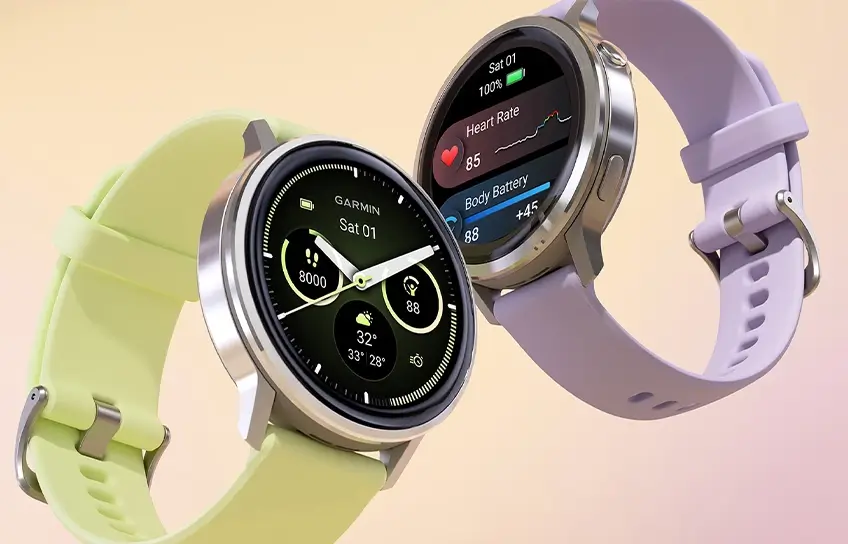
Pick up the Venu 4 and the first thing you notice is that it feels serious. The Venu 3 body was polymer. This one is full stainless steel, case and bezel. Holding both back to back, the Venu 4 feels like the grown-up version. It is the difference between a watch that looks premium and one that actually is.
The case is 12mm thick, which is worth knowing before you buy. Thicker than an Apple Watch Series 11 at 9.7mm, and you can feel that on the wrist. Not uncomfortable, but present. I wore it overnight for three weeks straight and never woke up wanting it off.
Two buttons handle everything physical. Garmin’s Forerunner and Fenix lines use five. The Venu 4 uses two, with the touchscreen doing most of the navigation work. The first two or three days coming from a button-heavy Garmin feel slightly fumbly. By day five it is natural. The buttons sit flush with the case, which keeps the profile clean and stops them from snagging on a sleeve.
Water resistance is rated at 5ATM, meaning submersion to 50 metres. I wore it through pool swims and showers throughout testing without any issues. The touchscreen occasionally activates during a shower but swim tracking mode locks it out to prevent that during actual water workouts.
The silicone band is comfortable for daily wear and sleep. On smaller wrists the 45mm version can sit slightly loose even on the tightest notch, which is worth knowing if you have a finer wrist. The 41mm fits more naturally in that case.
Three colorways that stand out in person: Slate with black band, Lunar Gold with bone silicone, and Silver with grey silicone. The silver option is the closest thing to a dress watch Garmin makes right now. I wore it to a job interview. Nobody mentioned it was a fitness watch.
Display
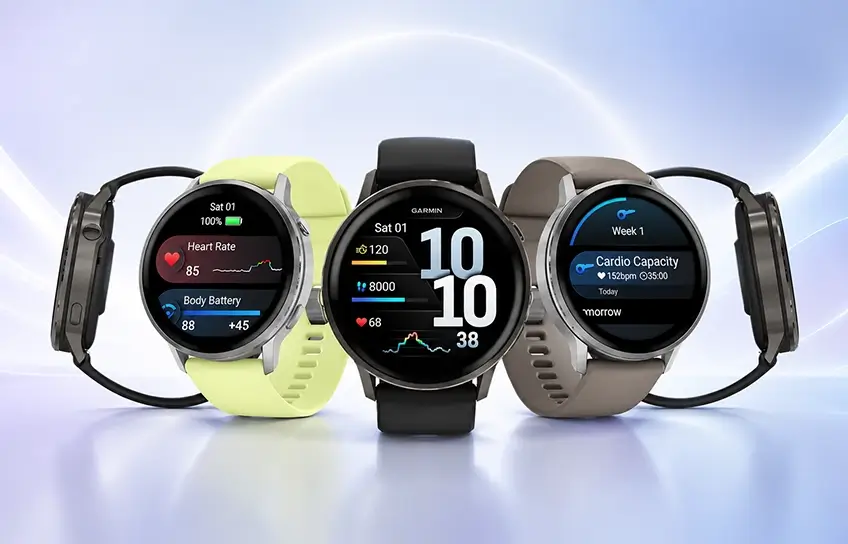
The display is one of the two biggest upgrades from the Venu 3. The Venu 4 peaks at 2,000 nits, matching the Forerunner 570 and 970. The Venu 3 topped out at 1,000 nits. That improvement is genuinely visible in daily use, not just on a spec sheet.
I tested it standing in direct midday sun with no shade and could read it without cupping my hand around the screen. That was never true of older Venu models and it is a real quality-of-life improvement for outdoor workouts.
Display specs by size:
- 41mm: 1.2-inch AMOLED, 390 x 390 pixels
- 45mm: 1.4-inch AMOLED, 454 x 454 pixels
Both are sharp, vibrant, and responsive to touch. Always-on display mode is available on both sizes and looks genuinely good in use. Switch it on and battery life drops significantly. Most people will leave it off most of the time.
The bezels are slightly thick by current standards. Not a dealbreaker, but the Apple Watch Series 11 and Galaxy Watch 8 look sleeker edge to edge on the wrist. Garmin clearly chose battery life and sensor depth over a thinner frame.
Feature Breakdown
Software Upgrade
The biggest change in this generation has nothing to do with hardware. The Venu 4 now runs the same unified Garmin OS as the Fenix 8 Pro and Forerunner 570. Previous Venu models sat in their own software lane. Features that Garmin pushed to its performance watches first would reach the Venu months later, sometimes never at all.
That is finished. Training Readiness, Training Load, Load Ratio, race predictors, heat and altitude acclimation, and structured triathlon support all land here on day one, the same as on Garmin’s most expensive watches.
Body Battery
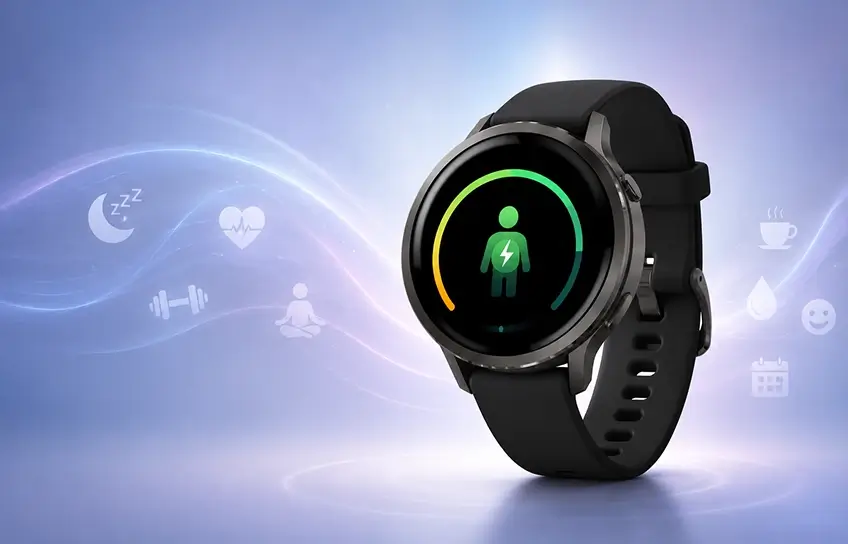
Body Battery scores your energy from 5 to 100 using HRV, stress, sleep quality, and physical activity data. The scale:
- 76 to 100: strong reserves, good time for hard training
- 51 to 75: moderate energy, manageable workouts are fine
- 26 to 50: low, stick to easy movement
- 5 to 25: rest is the only right call here
I checked Body Battery every morning before deciding whether to run or walk. On mornings below 35, I skipped the tempo session. Above 78, I pushed harder. After two weeks of doing that consistently, my training decisions stopped being based on feel and started being based on data. The habit stuck.
Lifestyle Logging
Lifestyle Logging lets you record over 40 daily behaviors directly on the watch: caffeine, alcohol, meals, naps, stress, cold plunges, screen time, mood. Garmin Connect then shows how those behaviors correlate with your sleep score, HRV, Body Battery, and stress over time.
Honest version: I logged consistently for 16 of 21 days. The five days I missed were busy days and travel days. The prompts help but they are not persistent enough to pull you back when you ignore them.
When I did log consistently, the findings were specific. Two coffees after 2pm correlated with a 9-point average drop in my next-morning sleep score. Late meals within 90 minutes of bed pushed overnight HRV down noticeably. Alcohol on back-to-back nights dropped Body Battery recovery by around 15 percent compared to clean nights. None of it was surprising. All of it was useful to see confirmed numbers rather than guesswork.
Three things to know before relying on it:
- Sleep Alignment needs three weeks of baseline data before showing personalized circadian rhythm guidance. The first three weeks are setup, not payoff
- Health Status is still in beta. It flags when overnight metrics drift outside your personal normal range. Useful but occasionally flags noise
- Correlation reports live inside Garmin Connect on your phone, buried two to three taps deep. For a feature Garmin is actively promoting, it should be far easier to find
ECG and AFib Detection
The ECG app screens for atrial fibrillation or normal sinus rhythm using a Lead I equivalent reading. Four things to know:
- For users 22 years and older only
- Not available in all regions, check garmin.com/ECG for your country
- It screens for AFib, it does not diagnose. Any unusual result still needs a physician
- Requires the latest Garmin Connect app to function
Evening Report
About 90 minutes before your scheduled bedtime, the watch shows a summary of upcoming alarms, calendar events, and a next-day workout suggestion based on how your body handled today. It takes about 15 seconds to read. On nights when it flagged low recovery and suggested an easy session, I actually adjusted my morning plan instead of deciding impulsively when I woke up. It is a small feature that changes behavior more reliably than most of the bigger ones.
Strength Training
The Venu 4 counts reps and sets automatically during strength workouts. Across four gym sessions covering bench press, squat, and dumbbell rows, rep counting was accurate about 85 percent of the time. Slower, controlled movements tracked cleanly. Faster movements with partial range of motion occasionally missed a rep or added one. That is a known optical sensor limitation, not specific to the Venu 4.
The muscle group breakdown in Garmin Connect after each session was genuinely useful. It flagged which muscles were worked and whether any were being overtrained or undertrained relative to the rest of the week. For anyone training without a structured program, that weekly picture is a real guide.
The built-in rest timer is the feature I used every single session. Finish a set, log it on the watch, rest countdown starts automatically. It kept me honest about rest periods in a way that checking a phone between sets never did.
Music
The Venu 4 stores music onboard and supports Spotify, YouTube Music, and Amazon Music for offline playback. Download playlists through Garmin Connect over Wi-Fi, then play directly to Bluetooth headphones without your phone. I downloaded a 50-song Spotify playlist and used it through three solo gym sessions. No issues. The on-watch interface is basic: skip, pause, volume. That is all you need mid-set.
Polar, Suunto, and Coros cannot match this at the same price. If training without your phone while still having music matters to you, this is one of the Venu 4’s clearest practical advantages.
Performance and Accuracy
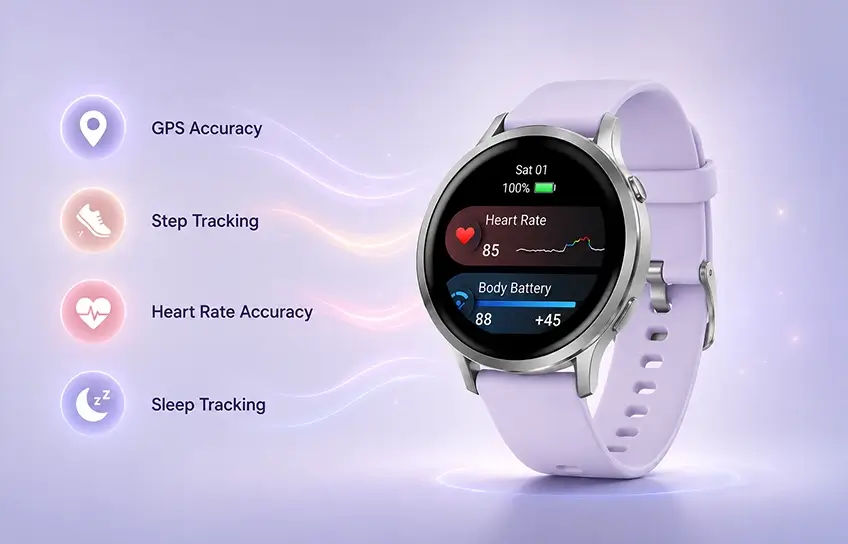
Step Tracking
I ran a step accuracy test across two separate 2,000-step walks using a manual counter as the reference.
| Device | Test 1 | Test 2 |
| Garmin Venu 4 | 2,001 | 2,018 |
| Apple Watch Series 11 | 1,982 | 1,994 |
| Samsung Galaxy Watch 8 | 1,976 | 1,989 |
| Oura Ring 4 | 1,937 | 1,942 |
The Venu 4 was the closest across both tests. The Oura Ring 4 undershot by 58 to 63 steps per walk. For daily use the precision across all four devices is more than enough, but the Venu 4 landing at the top is a good sign.
Heart Rate Accuracy
I compared the Venu 4 against a Polar H10 chest strap during a 35-minute tempo run. The Polar H10 recorded a 158 bpm average. The Venu 4 recorded 153 bpm. A 5 bpm gap across a full run is within the accepted range for optical wrist sensors. For most people training to heart rate zones that is close enough to be useful.
One honest limitation: during two HIIT sessions I noticed the heart rate reading lagged by about 15 to 20 seconds at the start of intense intervals before catching up. This happens with optical wrist sensors during rapid heart rate changes across all brands. Worth knowing if HIIT is your primary training style.
GPS Accuracy
Dual-band GPS with SatIQ performed well across all my testing. On a trail run through dense forest, the GPS track in Garmin Connect was clean with no significant drift. On the same route previously with a single-band watch, the track showed visible gaps and logged a shorter total distance. The improvement is real and meaningful for trail running and urban workouts where satellite signal gets interrupted.
Sleep Tracking
I wore the Venu 4 alongside an Oura Ring 4 for seven consecutive nights and compared the core sleep metrics each morning.
| Night | Venu 4 Duration | Oura Ring 4 Duration | Difference |
| Night 1 | 7h 12m | 7h 04m | +8 min |
| Night 2 | 6h 38m | 6h 49m | -11 min |
| Night 3 | 7h 44m | 7h 33m | +11 min |
| Night 4 | 6h 52m | 7h 01m | -9 min |
| Night 5 | 8h 03m | 7h 55m | +8 min |
| Night 6 | 7h 21m | 7h 14m | +7 min |
| Night 7 | 6h 59m | 7h 08m | -9 min |
Average difference across seven nights: 9 minutes. Sleep onset and wake times were within 10 minutes across all seven nights. That is solid performance.
The Venu 4 scored sleep more generously on bad nights compared to the Oura Ring 4. The Oura Ring 4 felt harsher and more accurate when sleep was poor. For daily training and recovery decisions, the Venu 4 data is accurate enough to trust. If you want the harshest, most granular sleep breakdown available, a dedicated sleep tracker is still the better tool for that specific job.
Garmin Connect App Experience
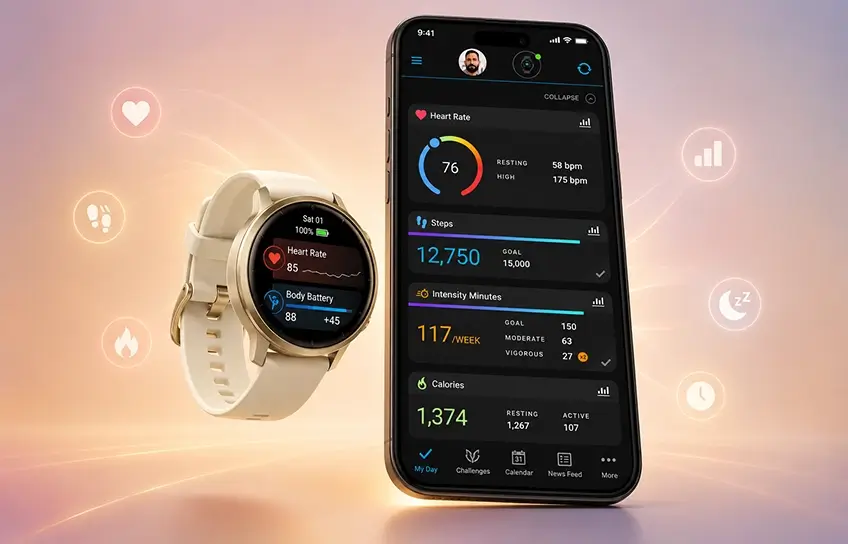
Garmin Connect is where most of the depth lives and it is a noticeably better app than it was two or three years ago. Pairing was fast. Similarly, post-workout syncing happened within seconds. Additionally, Strava integration worked without any manual steps after the initial setup.
The morning report is the feature I used every single day. Sleep score, Body Battery, HRV status, and a suggested workout intensity are all in one place. It takes about 20 seconds to read. Over time, those three weeks became a daily habit that changed how I planned my mornings more than any individual metric did on its own.
The widget layout on the watch itself took a few days of adjustment. The rounded bubbles and swipe-based navigation feel unfamiliar at first if you are coming from a Forerunner or Fenix. However, by day five it is natural. By day ten you stop noticing it at all.
The Evening Report is underrated. It appears about 90 minutes before your scheduled bedtime and shows alarms, calendar events, and a next-day training suggestion. As a result, on nights I actually read it, I went to bed with a clearer plan for the morning instead of deciding impulsively when I woke up.
Android and iPhone users get different experiences worth knowing about. For instance, Android users can reply to texts from the watch, manage calls, and mirror Google Maps turn-by-turn directions. In contrast, none of those extras are available on iOS. Instead, iPhone users get notifications and call management but without the reply and map features.
One frustration that has no good excuse: Lifestyle Logging correlation reports are buried two to three taps deep inside Garmin Connect. Garmin is actively promoting this feature. It should be on the home screen of the app. It is not.
Battery Life
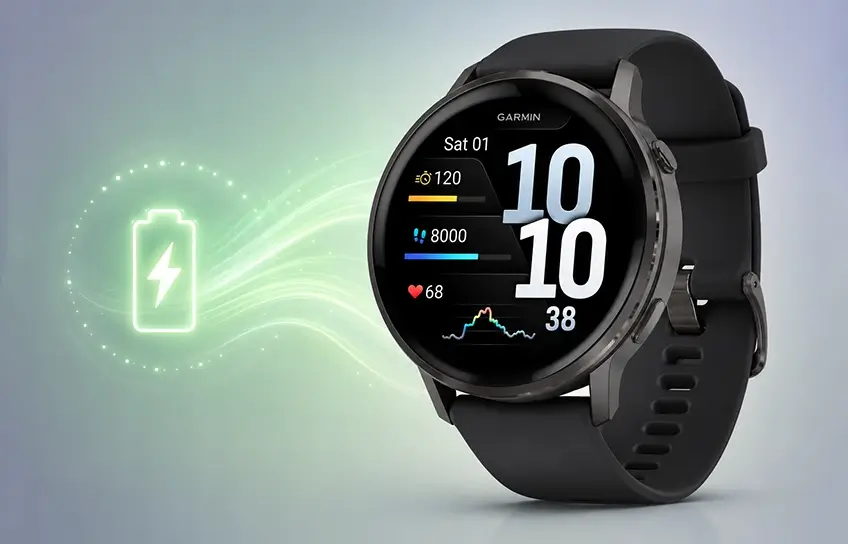
Garmin rates the 45mm at 12 days in smartwatch mode. In three weeks of testing with always-on display off, Bluetooth on, sleep tracking running, and one to two GPS workouts per week averaging 45 minutes each, I averaged 9.2 days before the low battery warning. Slightly below the official rating and completely in line with real daily use.
Turn on the always-on display and that drops to around four days on the 45mm, three days on the 41mm. Still better than any Apple or Samsung watch. Still not a daily charge situation.
GPS mode is rated at 20 hours for the 45mm and 13 hours for the 41mm. In testing, GPS battery drain ran at roughly 4 percent per hour, which lines up with the 20-hour claim for the larger model. A marathon runner would use around 4 to 5 percent during a race. The Venu 4 handles that comfortably.
| Mode | Official Rating 41mm | Official Rating 45mm | My Real-World Result (45mm) |
| Smartwatch mode | Up to 10 days | Up to 12 days | ~9.2 days |
| Always-on display | Up to 3 days | Up to 4 days | ~3 to 4 days |
| GPS mode | Up to 13 hours | Up to 20 hours | Confirmed |
| Full charge time | Up to 2 hours | Up to 2 hours | Under 1 hour to ~90% |
One thing that has no defense: the proprietary charging cable. Every other accessory in my bag uses USB-C. The Venu 4 uses a Garmin-specific clip. Forget it on a trip and you are stuck. The watch charges fast, around 90 percent in under an hour, but the cable is a genuine everyday annoyance in 2026.
Garmin Venu 4 vs. the Competition
Think of it this way. The Apple Watch is a smartphone extension that also tracks fitness. The Venu 4 is a health and fitness computer that also handles smartphone notifications. If you want the first thing, buy an Apple Watch. If you want the second thing, the Venu 4 is the best version of it at this price.
Where the Venu 4 wins:
- Battery life is not even close. Apple Watch Series 11 lasts around 36 hours. The Venu 4 ran 9.2 days in real testing. You stop thinking about charging
- Fitness depth. Training Readiness, Body Battery, Lifestyle Logging, and 80-plus sport modes with no subscription
- GPS accuracy. Dual-band with SatIQ outperforms single-band watches in cities and under tree cover where signals bounce
- Outdoor display. 2,000 nits is readable in direct sunlight without shading the screen
- Music. Offline Spotify, YouTube Music, and Amazon Music to Bluetooth headphones. Polar, Suunto, and Coros cannot match this
Where Apple Watch and Galaxy Watch are still ahead:
- LTE cellular. The Venu 4 has no cellular option
- App ecosystem. WatchOS and Wear OS have thousands more third-party apps than Garmin Connect IQ
- Voice assistant. Apple and Google both support raise-to-speak. On the Venu 4 you press a button and navigate a menu. It works but feels a generation behind
- iPhone integration. iMessage, Handoff, Apple Pay. If you rely on any of these from your wrist, the Venu 4 does not replicate them
| Feature | Garmin Venu 4 | Apple Watch Series 11 | Samsung Galaxy Watch 8 | Garmin Forerunner 570 |
| Price | $549.99 | $399 | $299 | $549.99 |
| Battery, smartwatch | Up to 12 days | ~36 hours | ~40 hours | Up to 11 days |
| Battery, GPS | Up to 20 hours | ~16 hours | ~30 hours | Up to 18 hours |
| Display brightness | 2,000 nits | ~2,000 nits | ~2,000 nits | 2,000 nits |
| LTE | No | Yes | Yes | No |
| ECG | Yes | Yes | Yes | No |
| Flashlight | Yes | No | No | No |
| Offline music | Yes | Yes | Yes | No |
| Full-color maps | No | No | No | No |
| Lifestyle Logging | Yes | No | No | No |
| Physical buttons | 2 | 1 + Digital Crown | 1 | 5 |
| Subscription needed | No | No | Some features | No |
For users who want full topographic maps, rugged build quality, and expedition-grade durability, the Garmin Fenix 8 Pro is the step up. The Venu 4 sits cleanly below it in Garmin’s lineup without feeling like a compromise for the people it is built for.
41mm vs. 45mm: Which One Should You Buy?
| Details | Venu 4 41mm | Venu 4 45mm |
| Display | 1.2 inches | 1.4 inches |
| Battery, smartwatch mode | Up to 10 days | Up to 12 days |
| Battery, always-on display | Up to 3 days | Up to 4 days |
| Battery, GPS mode | Up to 13 hours | Up to 20 hours |
| Weight with band | 46g | 56g |
| Colorways | 4 options | 4 options |
| All features identical? | Yes | Yes |
| Best for | Smaller wrists, office-first use | Active users, long GPS activities |
Every feature is identical across both sizes. The differences are display area, battery duration, and weight only.
Simple rule: if you regularly track GPS activities longer than two hours, running, cycling, long hikes, the 45mm battery headroom is worth the extra weight. If you wear this watch to the office and want something that sits discreetly on the wrist, the 41mm wins on profile and fit.
For anyone considering whether the Venu 4 is the right step up from an entry-level device, the Garmin Forerunner 165 Music is worth comparing before committing to $549.
Who Should Buy or Who Should Skip the Garmin Venu 4?
Buy it if you:
- Want serious health tracking without a subscription. Body Battery, Lifestyle Logging, ECG, Sleep Alignment, Training Readiness, and 80-plus sport modes all come included. No monthly fee, no locked features
- Are tired of charging your watch every night. Nine-plus days of real-world battery life changes how you think about wearing a watch. You stop taking it off
- Train across multiple activities. Running, cycling, swimming, HIIT, strength, hiking. The Venu 4 covers all of it with accurate GPS and meaningful post-workout data
- Want a watch that works at a desk and on a trail. The stainless steel build and clean design hold up in professional settings. I wore it to a job interview. Nobody looked twice
- Train without your phone. Offline Spotify, YouTube Music, and Amazon Music direct to Bluetooth headphones with no phone needed
Skip it if you:
- Need LTE. No cellular version exists. If you run phone-free and want emergency connectivity or streaming without a device, look at Apple Watch Ultra 3 or Samsung Galaxy Watch Ultra instead
- Do serious backcountry navigation. Breadcrumb navigation on a blank screen is all you get. No topographic detail, no trail names. For real terrain guidance, the Garmin Fenix 8 or Coros Apex 4 are better tools
- Are upgrading from a Venu 3. The Venu 3 covers roughly 85 percent of the same health tracking at around $200 less right now. Unless Lifestyle Logging, the unified OS, or the flashlight specifically appeal to you, the upgrade is hard to justify on numbers alone
- Live inside third-party apps. Garmin Connect IQ is functional but thin compared to watchOS or Wear OS. If daily app integrations matter to your workflow, Apple or Samsung handles that better
- Are a dedicated competitive runner. At the same $549.99, the Garmin Forerunner 570 gives you five physical buttons far easier to use mid-stride in rain or cold, a barometric altimeter, and deeper running-specific training metrics
Final Verdict
Three weeks in, the Garmin Venu 4 is still on my wrist. That is the simplest verdict I can give. The proprietary charger is annoying every time I use it. There is no LTE. Lifestyle Logging takes weeks to pay off and the reports are buried in the app. The navigation is too basic to rely on anywhere genuinely unfamiliar.
But nine days between charges, a morning report that changed how I trained, and real numbers confirming what I had only suspected about my sleep kept me wearing it every single day. It is the best fitness smartwatch of 2026 for people who train seriously, want their health data without a subscription, and need a watch that looks right in a meeting and on a trail.
